
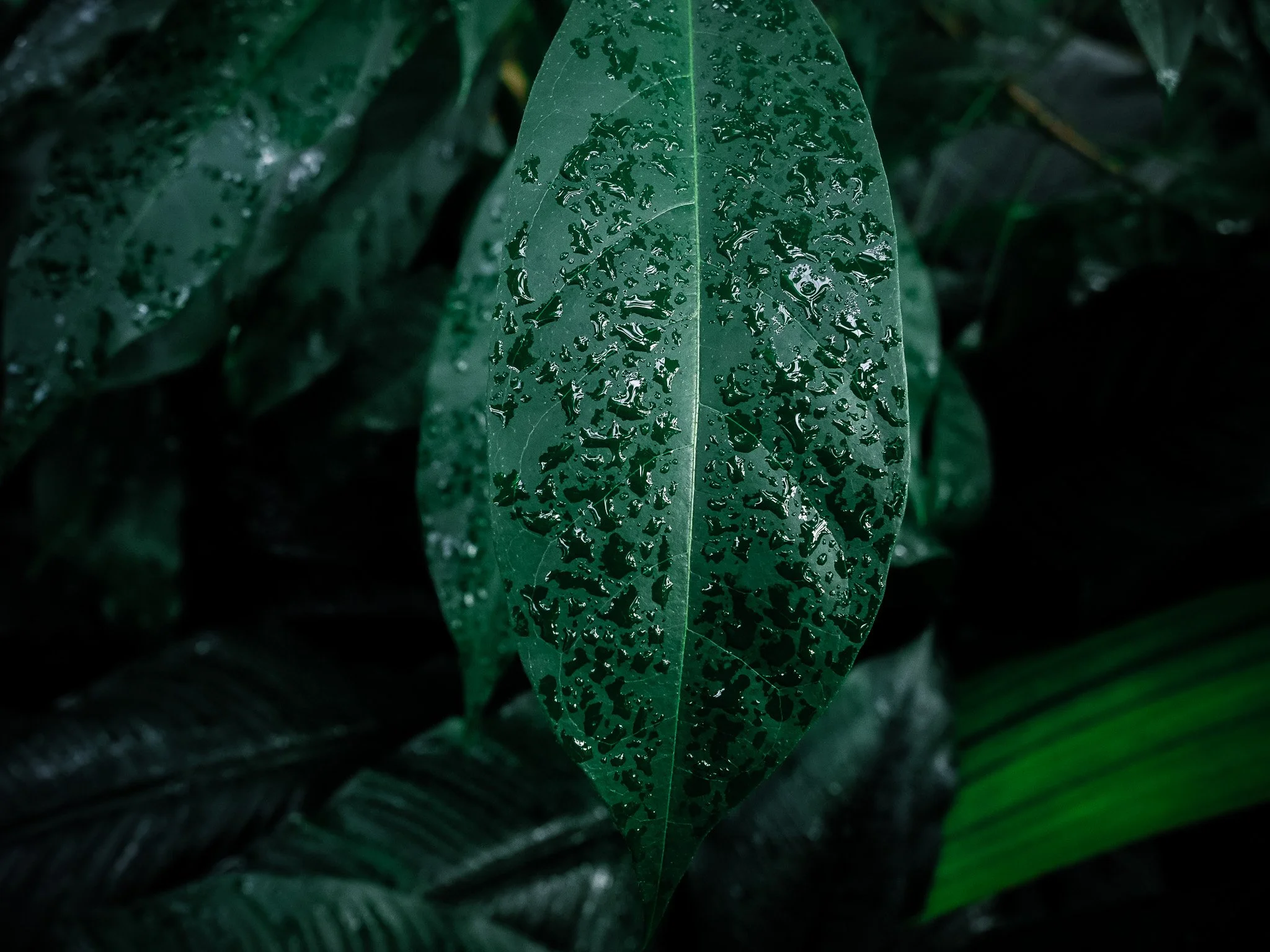
When the world turns green again!
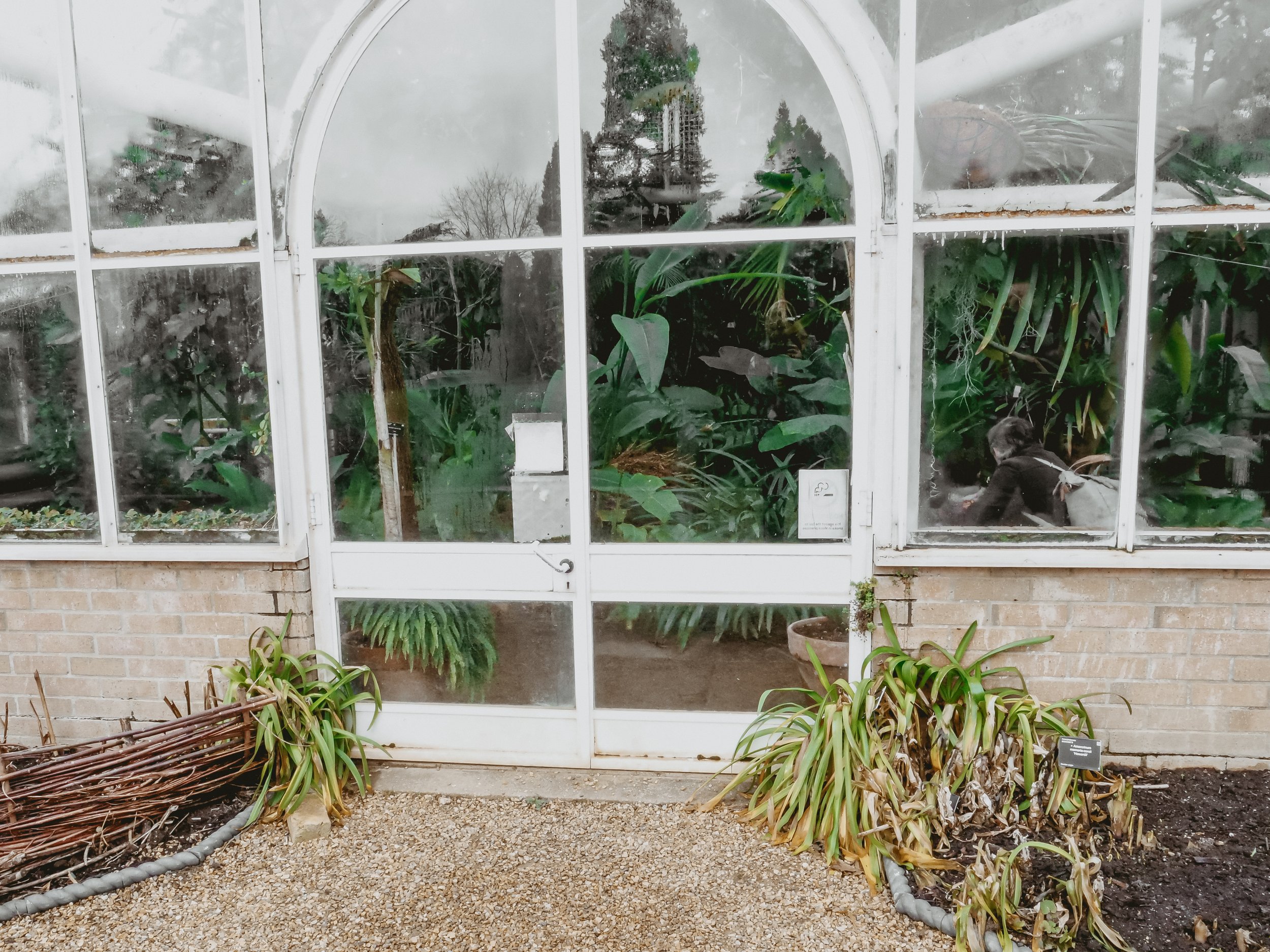
Months of dry skies had left the garden looking shy, and then the rain arrived — suddenly every leaf was a tiny, gleaming jewel, gossiping in emerald tones.


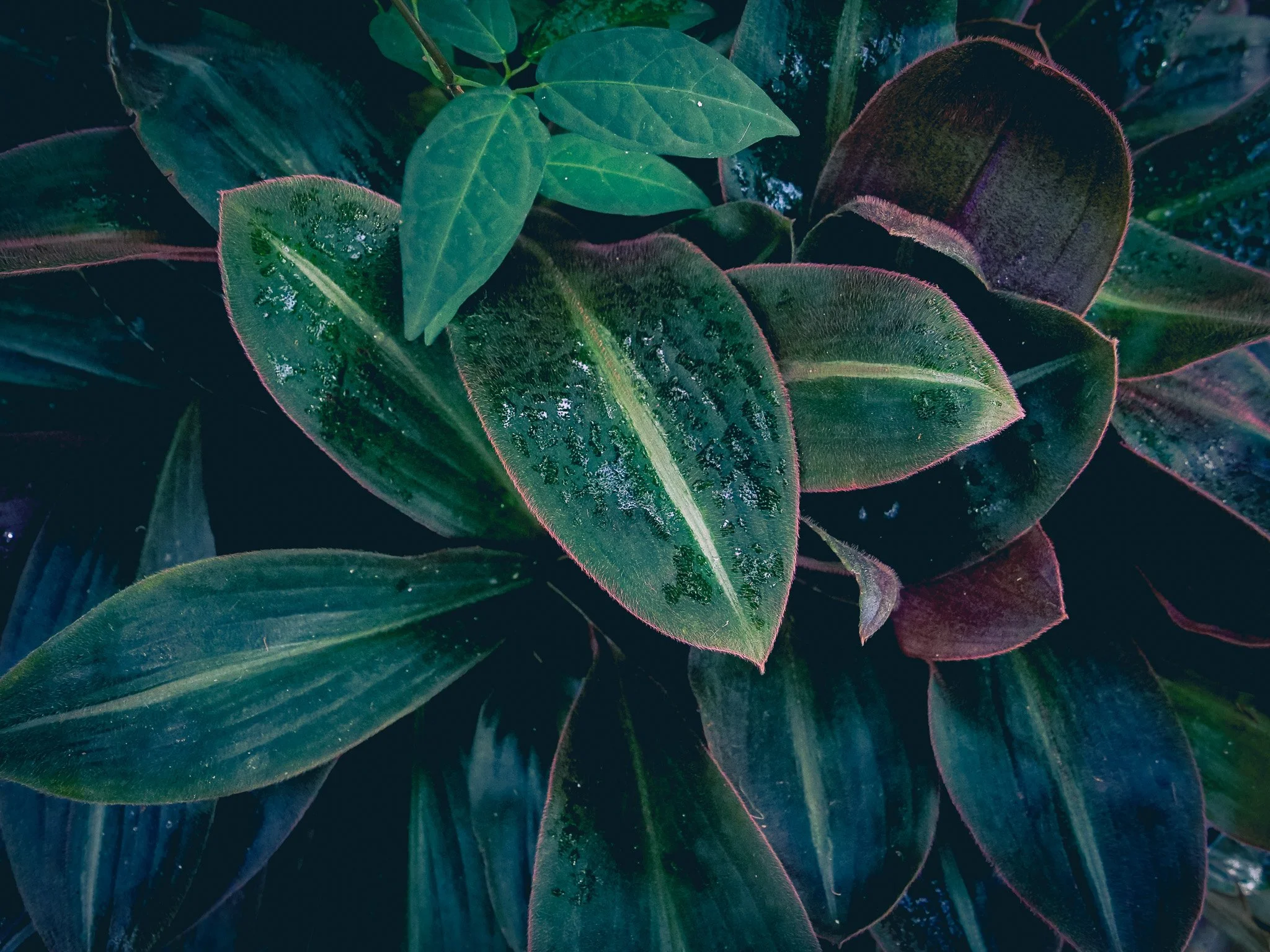

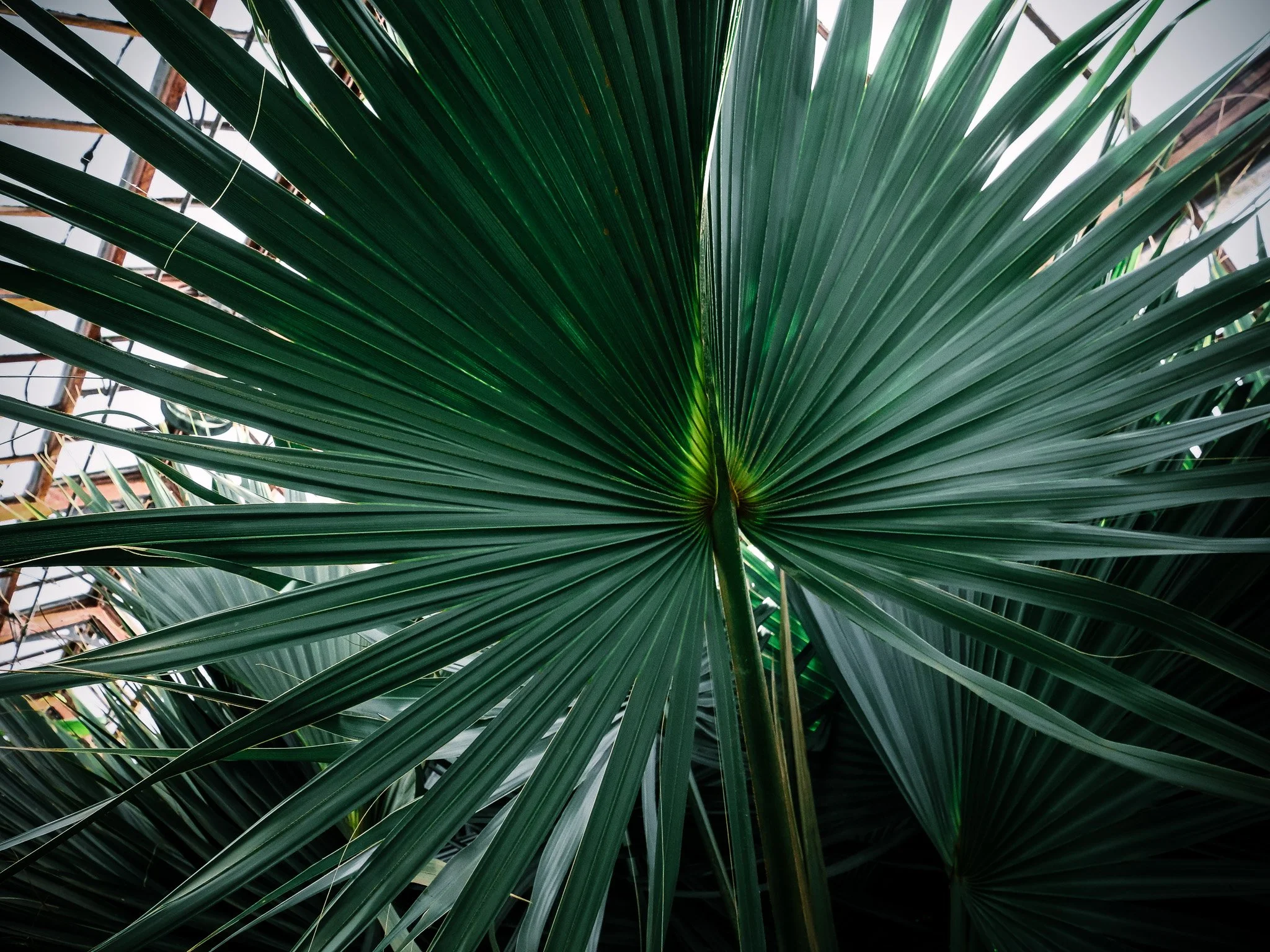



After months without rain, the first drops feel like a homecoming. The earth sighs, the air thickens, and suddenly, everything seems to drink. Greens deepen overnight — moss is plotting its next explosion of green, leaves glisten, even pavements catch the light like tiny mirrors. Dust, which has been quietly blocking sunlight from fuelling photosynthesis, is finally washed away. It’s the same dust that dulls a camera lens; once gone, suddenly the world snaps into focus.
That same sense of renewal sits at the heart of Jungle Floor Creative. Whether I’m unrolling one of our potting mats or polishing a leaf with a plant cloth, I’m reminded that care is what brings colour back to life. The mats aren’t just practical — they’re little jungles in miniature, a patch of added colour to help you refresh your plants during growing season or help protect surfacing from the added moisture you get from owning House Plants.
A Sanctuary Of Rare Plants, Vibrant textures and endless photographic inspiration.
✨ When the World Turns Green Again: A Jungle Floor Creative Wander Through Cambridge’s Glasshouses
There’s a special kind of green that appears only after months without rain — that first wash of freshness when the world finally gets a drink. I noticed it before I even reached the glasshouses: leaves glowing like they’d just come back from holiday, colours punched up from sage to emerald as if someone gently cleaned the world’s lenses.
It reminded me of my photography kit.
And my plants.
And how both behave badly when they’re dusty.
Dust blocks sunlight for them, and clarity for me.
So when the rain finally came, the leaves showed off.
They photosynthesised like they’d been waiting for their moment.
And honestly? Same.
🌿 Enter the Tropical Glasshouse: Where Humidity Has Opinions
The moment I stepped into the tropical humidity, my camera lens fogged over instantly — a warm, steamy reminder that even photographers need a moment to acclimatise. It felt poetic. Outside, the rain had just washed months of grime from the leaves so they could drink in the light again… and here I was wiping my lens clean so I could see the world in full colour.
As the fog lifted, the plants sharpened into view in slow motion:
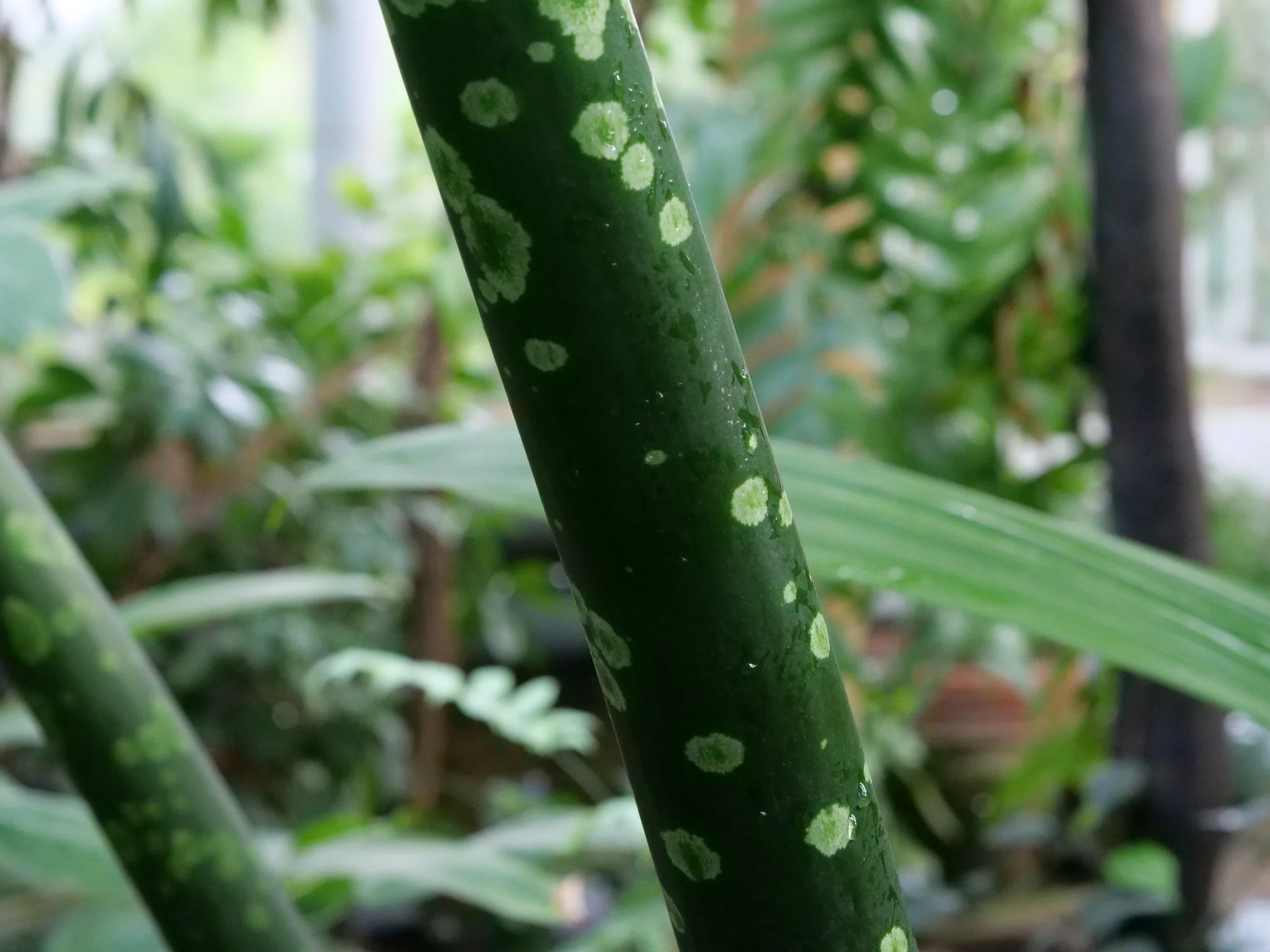
giant leaves the size of many faces, glossy fronds bringing in new growth. The Stems in this place were in variety with chunky, spiky, bendy and speckled. A spectrum of lush greens that only happen when light finally gets through.
In the tropical house, every shade of green has a job.
Red and blue do the heavy lifting for photosynthesis.
Green gets bounced back and becomes the colour we adore.
Yellow and far-red slip quietly between the leaves, telling them when to stretch, when to climb, when to open, when to rest — the plant’s whispered time-keeping system.
Here, that whisper becomes a chorus.
Thick stems tower overhead like botanical architecture; Monstera roots loop gracefully; Alocasia stand like glossy umbrellas showing off their freshly washed spots. It’s impossible not to look up, camera ready, heart full.
Photography Meets the Jungle Floor Toolkit
Trips like this aren’t just visual treats — they’re portfolio builders. Every step revealed another composition begging to be captured: the glint of moisture on a palm, a curl of new growth catching the light, shadow patterns carving shapes on the path.
And somewhere between photographing and gawking, I realised how much my creative worlds overlap.
My Jungle Floor scoops — those oddly satisfying little soil sculptors — behave exactly like my camera does:
A scoop frames soil the way a lens frames a scene.
The curved edge mimics the soft curl of a leaf catching highlight.
Repotting is just composition with compost.
Cleaning a leaf with the Jungle Floor Plant Cloth feels oddly similar to polishing a fogged lens: suddenly the colour changes you pulled back into focus, and the world makes sense again.
Creativity is creativity, whether it’s in soil or pixels.
And yes, my Potting mat was waiting at home for the inevitable “inspired repotting session” that follows any botanical adventure.
🌵 Survival in Silvers and Sage: The Arid Glasshouse
Step from the tropical house into the arid one and the whole mood shifts. Gone is the lush chatter of emeralds; instead, muted greens, silvers, and dusty olives stretch like shy dancers under a spotlight.
This is the world of CAM plants — Crassulacean Acid Metabolism, if you want the fancy name.
Survival sorcery, if we’re being honest.
They breathe at night when it’s cool.
They sip moonlight and shadow.
They tuck carbon dioxide away like a secret.
Then, by day, they use stored magic to photosynthesise in slow, patient silence.


Their waxy coatings and shimmering glazes aren’t just pretty — they’re shields. They lock in water and scatter light, shifting greens into pearlescent silvers like they’re dressed for a desert masquerade.
Dust gathers here too, the silent mischief-maker. It blocks sunlight, slows growth, mutes the magic. But once brushed away?
The plants inhale light again, and the colours return — crisp, subtle, enchanting. Thats why cacti and succulents like to be soaked when watered..
For a photographer, it’s heaven: harsh shadows, sculptural shapes, geometry everywhere. The kind of place where even the cacti feel dramatic.


🪴 Greens That Tell Stories
What struck me most in both houses is how alive the greens felt. Not just colour — but information. Light is a language, and plants speak it fluently.
In the tropical house, the humidity unveiled their gloss like they’d been polished.
In the arid house, the muted colours hummed with quiet resilience.
It all loops back to clarity — for them and for me.
🌱 Jungle Floor Creative: Where Light, Soil & Story Meet
This whole adventure reminded me why I create what I create.
Clean tools, clean leaves, clean lenses.
More light gets in.
More colour comes out.
More story shows itself and more growth happens. The more chances you have to enjoy the plants in your jungle.
Whether it’s:
✨ capturing a Monstera’s silhouette through a steamy lens
✨ brushing dust from a cactus to reveal its true silver
✨ using a Jungle Floor scoop to tuck roots in neatly
✨ or unrolling my potting mat for a post-trip inspired repotting session
— it’s all the same rhythm.
A gentle, green-driven choreography of noticing, shaping, and celebrating growth. And I had photos to prove it.
Sunlight is a complex mix — and plants evolved for it.
Natural sunlight contains every colour in the visible spectrum, plus infrared and ultraviolet.
Plants don’t waste this variety:
Blue light drives early growth, leaf development, and chlorophyll production.
Red light fuels flowering and fruiting stages.
Green, yellow, and even some far-red wavelengths contribute to balancing energy and regulating plant responses (like leaf orientation and shade avoidance).
UV light triggers protective pigments, thickens leaves, and enhances colour intensity — that’s why plants grown in filtered natural light often look more vibrant than those under purely red/blue LEDs.
Getting the right grow lights is important, and here are a few things I’ve learned along the way.
When you’re shopping for full-spectrum lights, take a moment to dig into the product details. Don’t rely solely on what influencers — or even I — recommend. Research for yourself and explore the options available to you and your space.
It’s also worth diving into the world of PAR and PPFD. These terms can sound intimidating at first, but understanding them helps you figure out what your lights are actually doing for your plants.
Before you buy a bulb or panel, look at how effective it will be for the specific plants you’re growing and the environment you already have. Every home setup is different, and the right choice depends on your conditions.
Measuring the light around your plants can make a huge difference. Tools like Photone are incredibly helpful — the app gives you a clear understanding of your favourite genera and their light requirements. You can even use the calculator to work out your ideal PAR zone.
And because I always want the most accurate readings, I recommend investing in a diffuser for your phone. A regular lux meter can’t tell you what a PAR meter can, and the diffuser helps Photone give much more reliable results.
UK Follower lastly my recommendation for the best grow lights are grow gang Pianta and Claria you can try for 90 days if your not happy they will provide you with a completely free return.
Cozy & Thriving: Jungle Floor Creative’s Guide to Winter Plant Care
(aka The Great Indoor Glow-Up Guide)
🌿 Your Houseplant Jungle: Thriving Through the Winter Months
Winter’s sneaking in — the sun’s a part-timer, the nights are long, and your plants are probably muttering things like, “Excuse me, why is it so dark and chilly all of a sudden?”
Don’t panic, plant friends. With a few Jungle Floor Creative tweaks, your indoor jungle can stay lush, lively, and lovely all through the frosty months.
We’re diving into the four essentials: Light, Warmth, Watering, and Feeding.
☀️ How Do You Increase Light in Winter?
Winter light is… shy. It peeks in low and soft, leaving your plants reaching dramatically like they’re auditioning to join S club 7
Here’s how to help them get the most light:
Rotate regularly so all sides get what little light there is.
Clean the glass and the leaves — dust blocks precious light. Grab your Jungle Floor Plant Cloth and give each leaf a spa moment so it can photosynthesise properly.
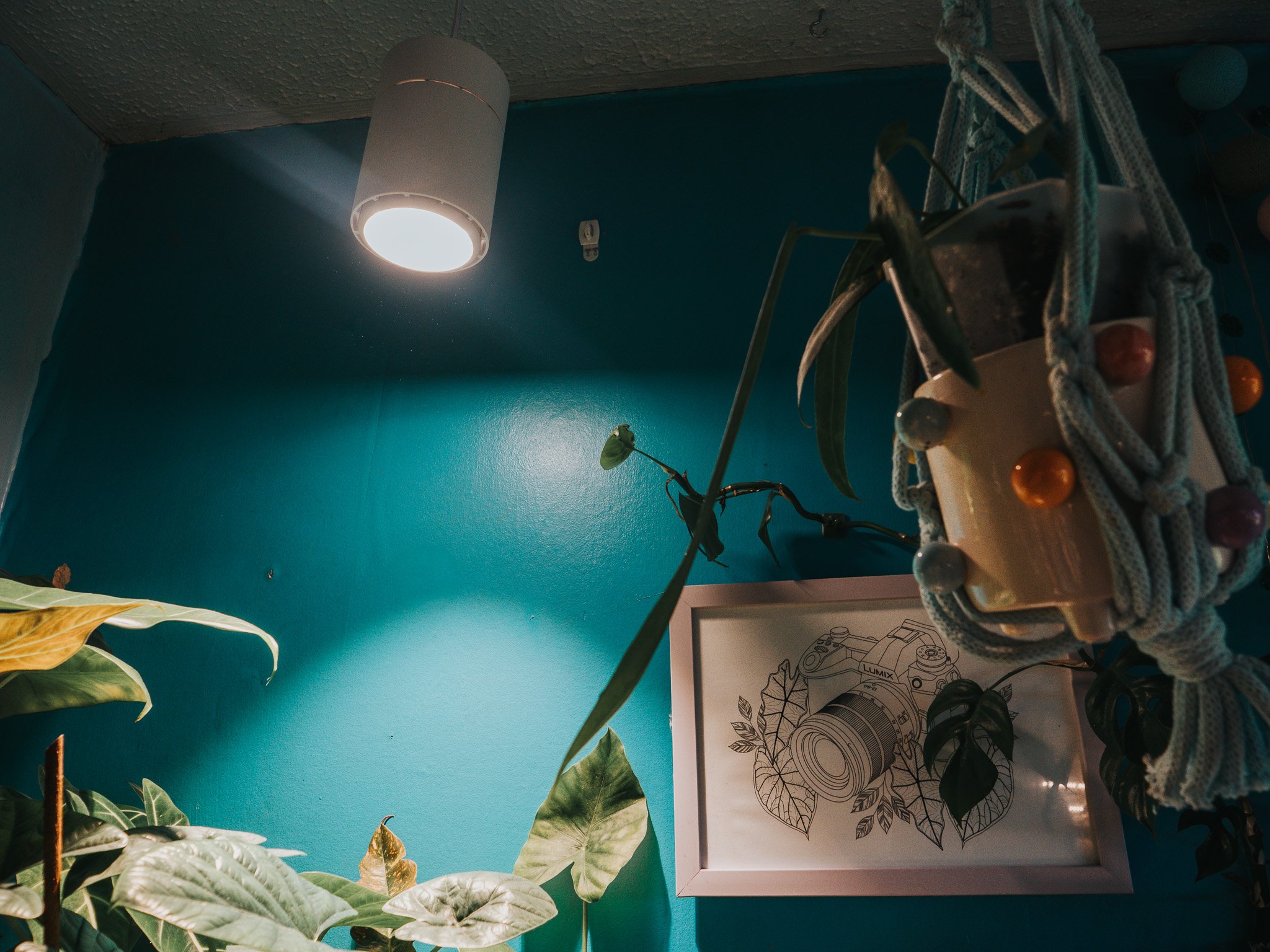
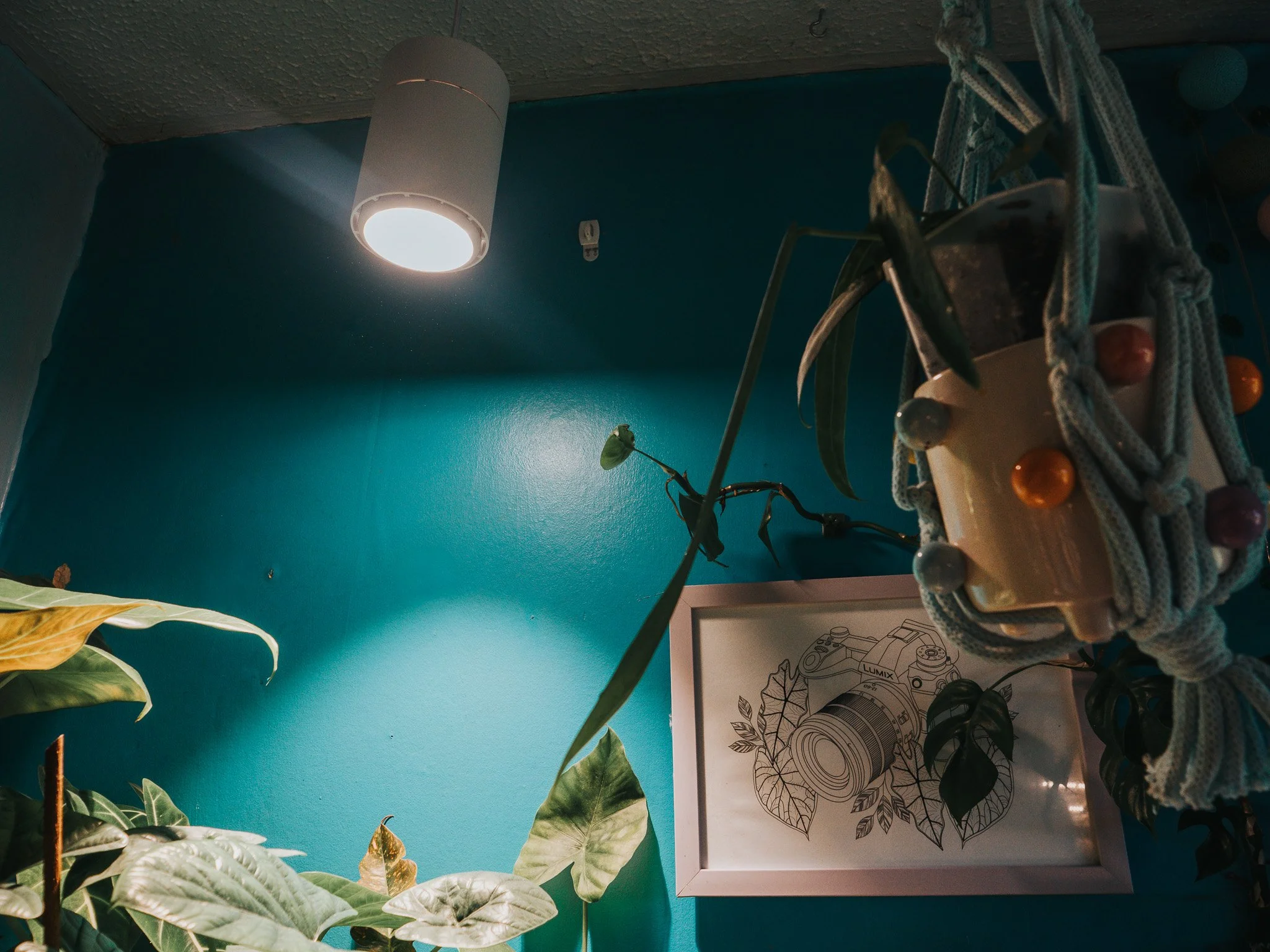
Add a grow light — I love the Claria Grow Light Pendant from Grow Gang. It looks gorgeous, gives full-spectrum LED light that mimics natural daylight, and lasts for ages. Perfect for dark corners or moody winter lighting.
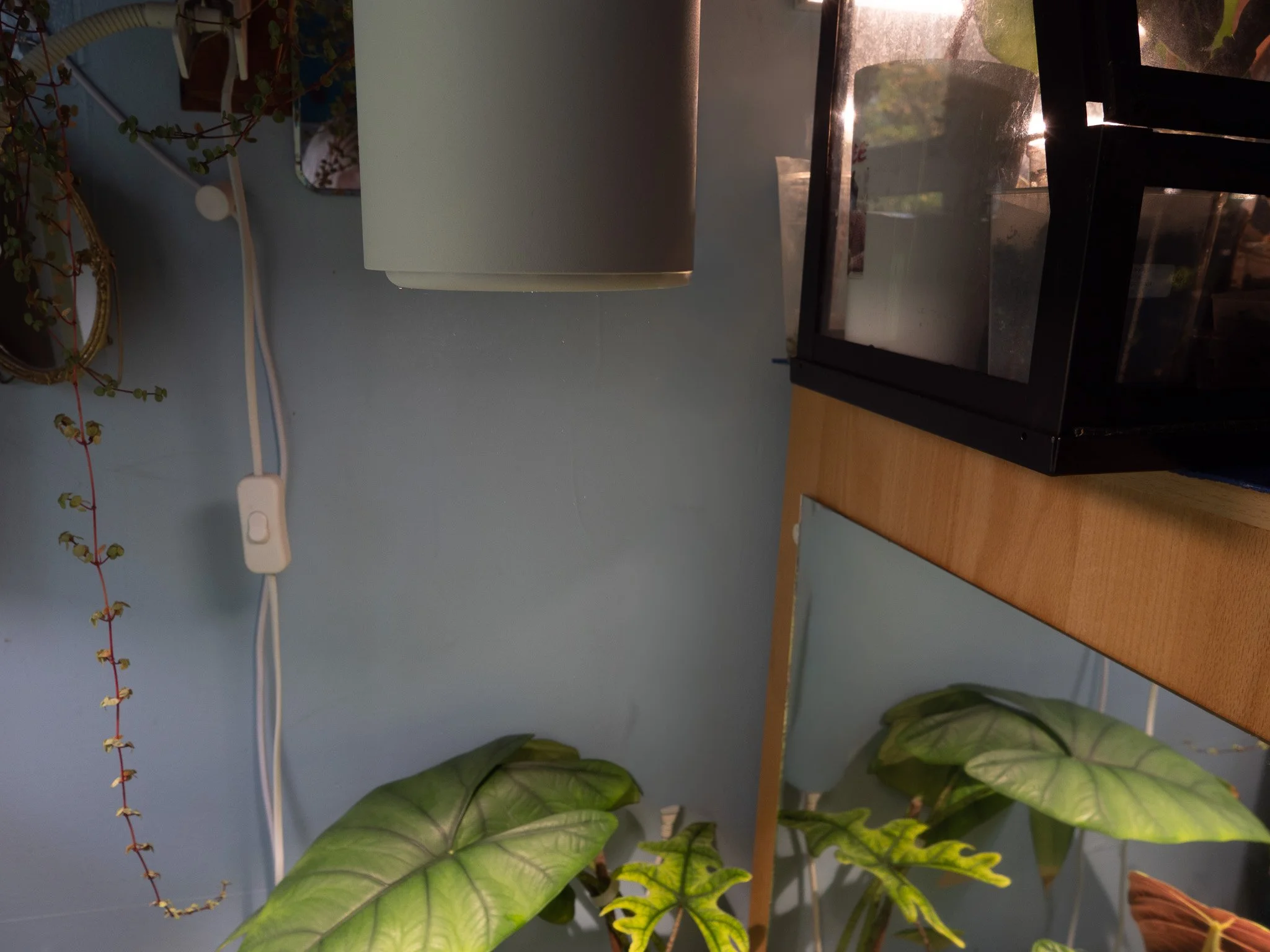
Add a some mirrors - this will help to increase light and you can find some interesting shaped ones out there.
💡 Tip: Keep your light 30 cm–1.25 m above your plants (depending on their light needs) for a warm, gentle glow that won’t scorch or stretch your leafy friends.
🔥 How Do You Keep Plants Warm Without Drying Them Out?
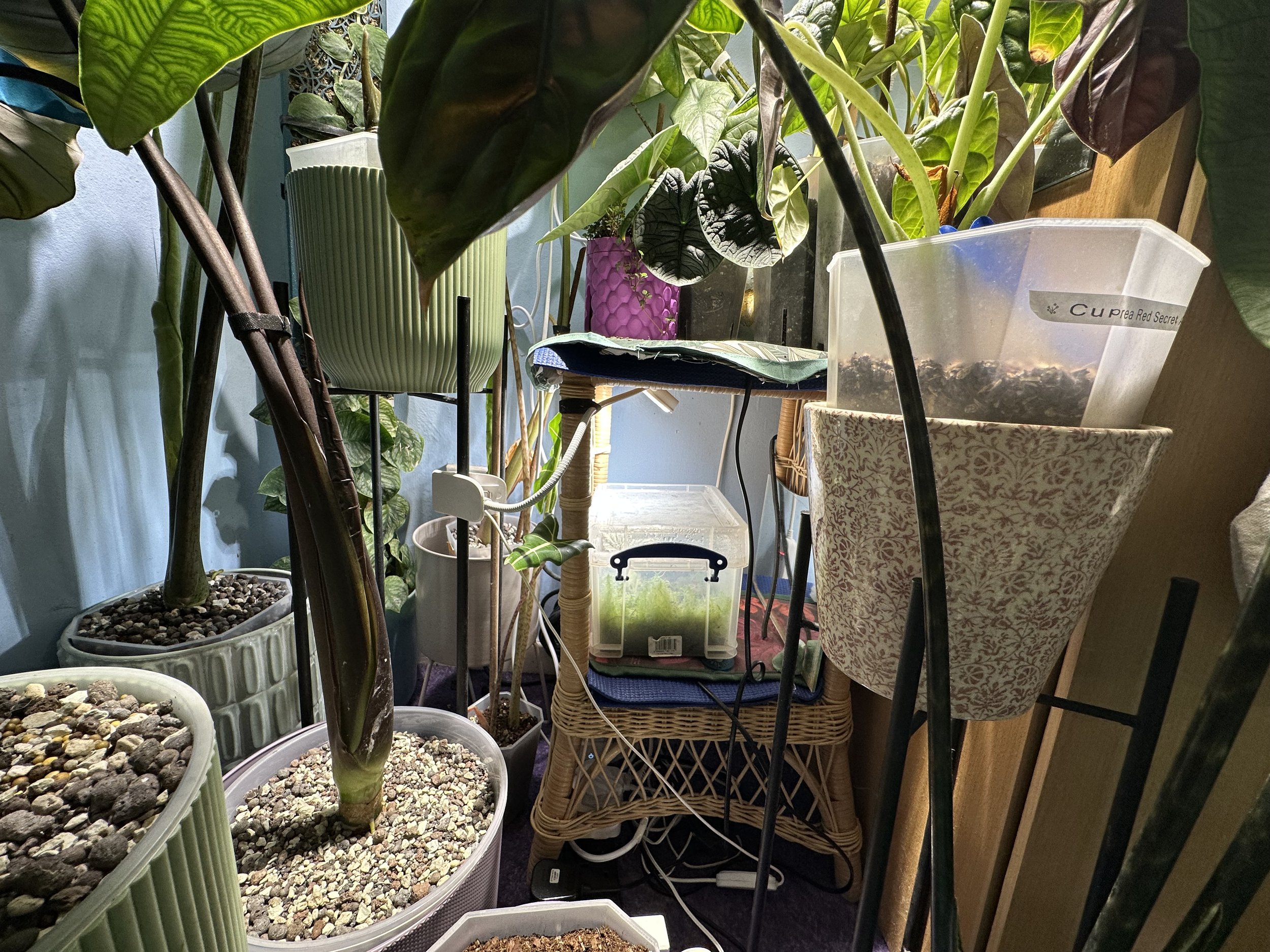
Radiators and window ledges might feel warm, but they’re also chaos: dry air, wild temperature swings, and sad crispy leaves. Let’s go for steady warmth instead.
Your plants’ roots love consistency. The trick? Create a cosy heated setup that keeps warmth gentle and safe, while looking stylish on your shelf.
Here’s your Jungle Floor-approved setup:
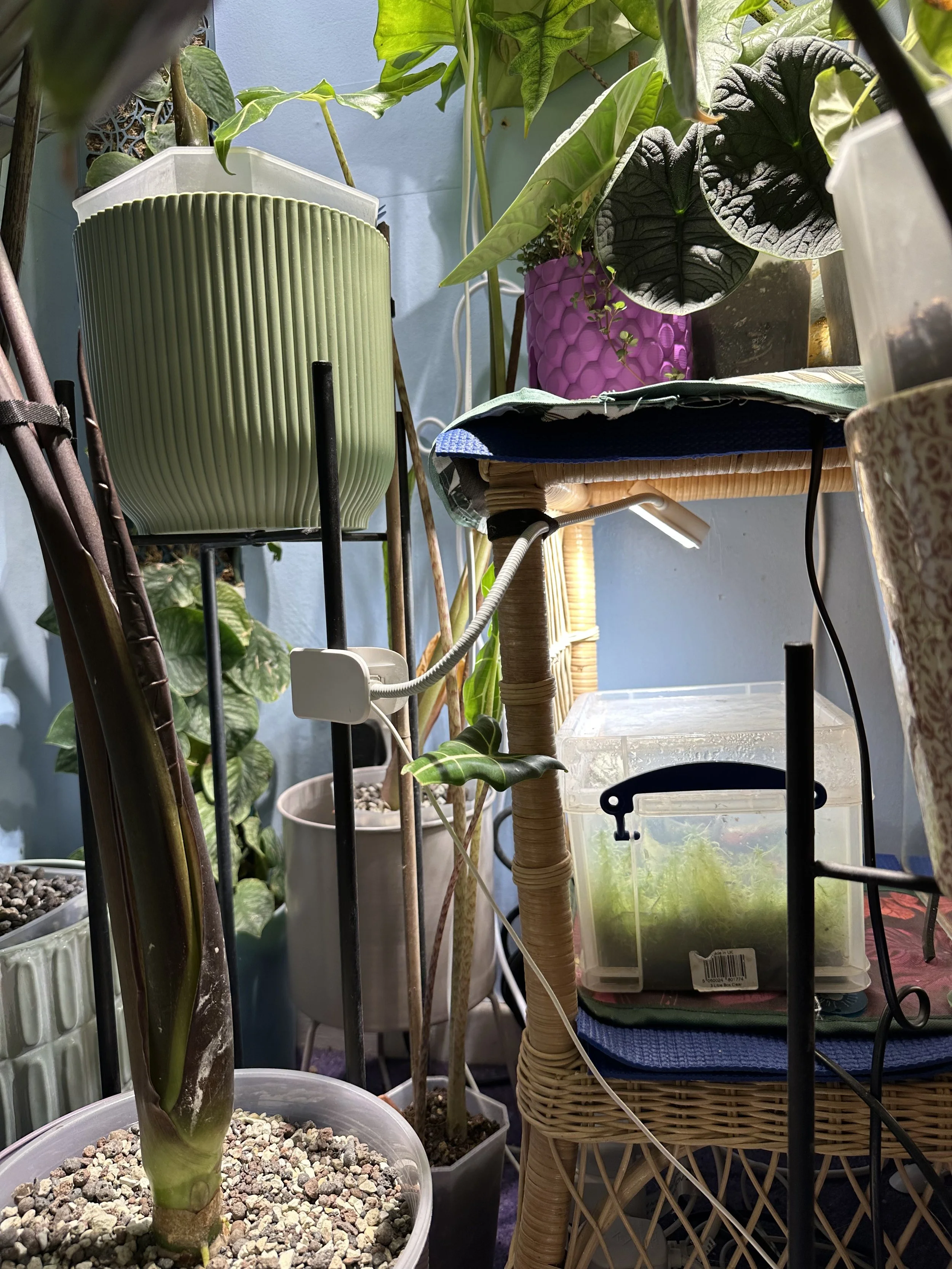
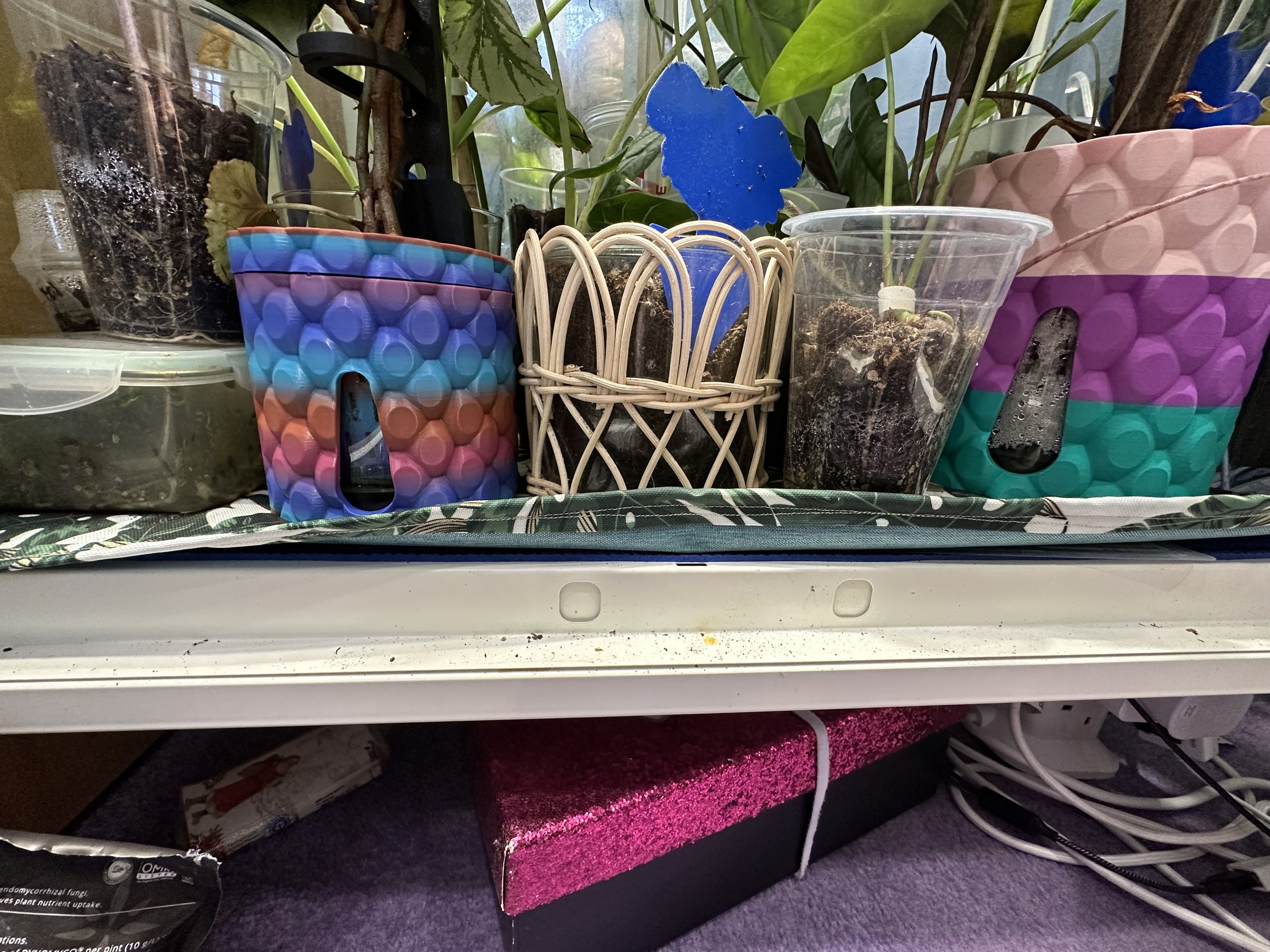
Start with a foam layer — protects your shelf surface and helps retain gentle warmth.
Place your reptile heat mat on top — provides steady, low-level warmth that tropical roots adore.
Finish with your Plant Shelfie — this is where your plants actually sit. It protects the shelf, lets air circulate, and adds a gorgeous finishing touch to your winter jungle display.
💡 Why this setup? Heat mats shouldn’t touch wood directly. The foam insulates and protects your surface, and the Plant Shelfie acts as the stylish, functional “final layer” for your pots.
little ways you can keep your plants warm over winter:
Other than the method suggested above, heres some simple ways you can keep your plants warm.
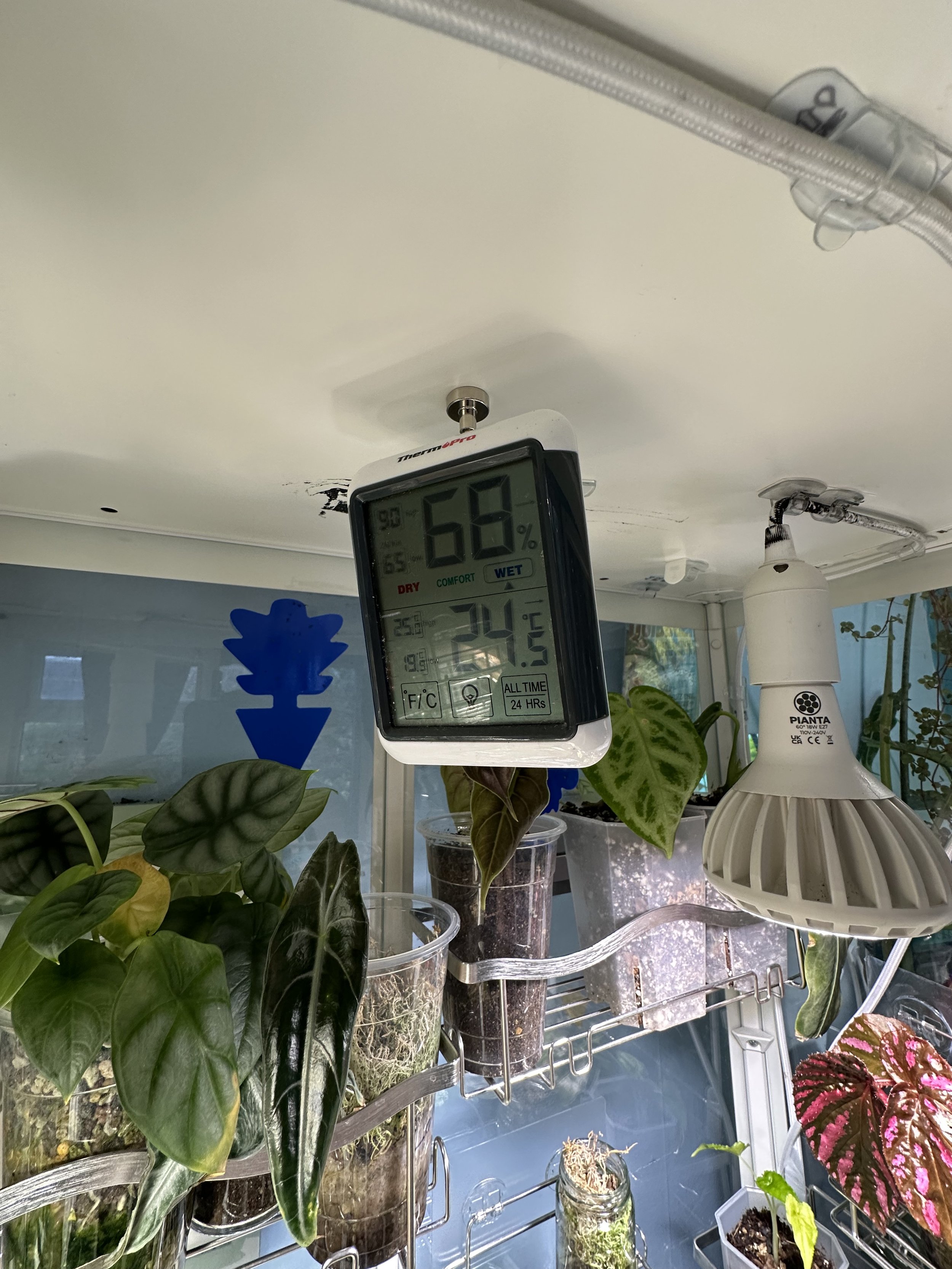
Having hydrometer will help you to know your plants growing environment
Put any plants on the floor up onto a surface were possible.
keeping them away from doors and windows to prevent drafts ( mental picture, a plant wearing a scarf shivering by the door).
Move plants off the window sill if the glass gets cold or draughty — being pressed against icy panes is no plant’s idea of fun.
Group plants together will not only help increase humidity but it will also help them to share there warmth.
Placing them onto a towel or a foam mat.
Increasing humidity, Using a warm humidifier or putting plants on to pebble trays with warm water in them.
Take plants into the warm shower with you.
Putting you plants into a cabinet.
💧 How Do You Adjust Watering for Winter?
Plants sip, they don’t chug, in winter. Growth slows, so too much water can spell trouble.
Check the soil first — only water when it’s dry an inch down.
Use room-temperature water (cold water = root shock).
Cut back on misting unless your home is very dry; too much humidity can invite fungus gnats.
If you’re using heat mats, the soil may dry a bit faster, so keep an eye out and adjust your watering rhythm.
🫶 Pro move: Combine watering day with leaf-cleaning day. That way, your plants get hydration inside and out.
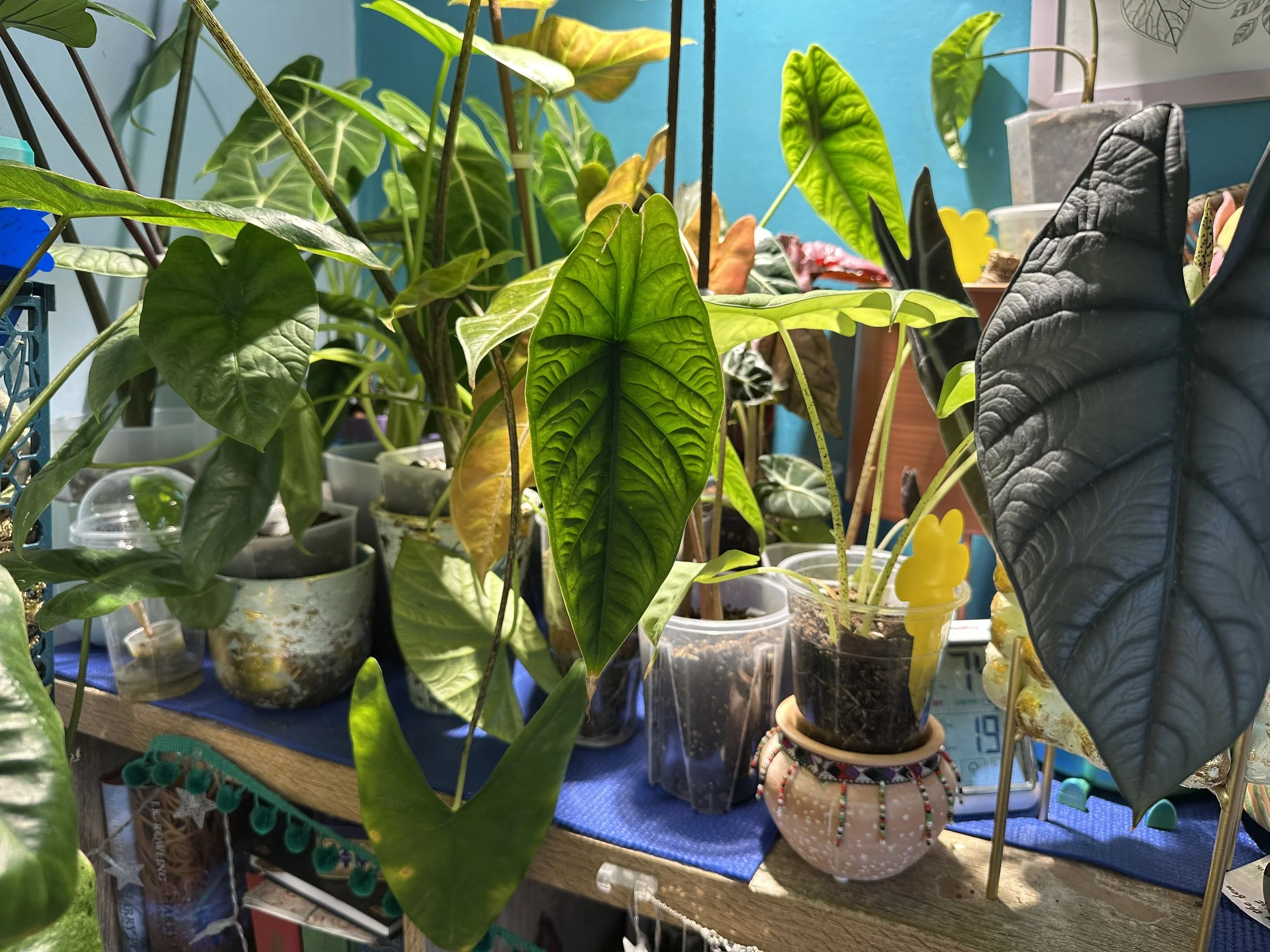
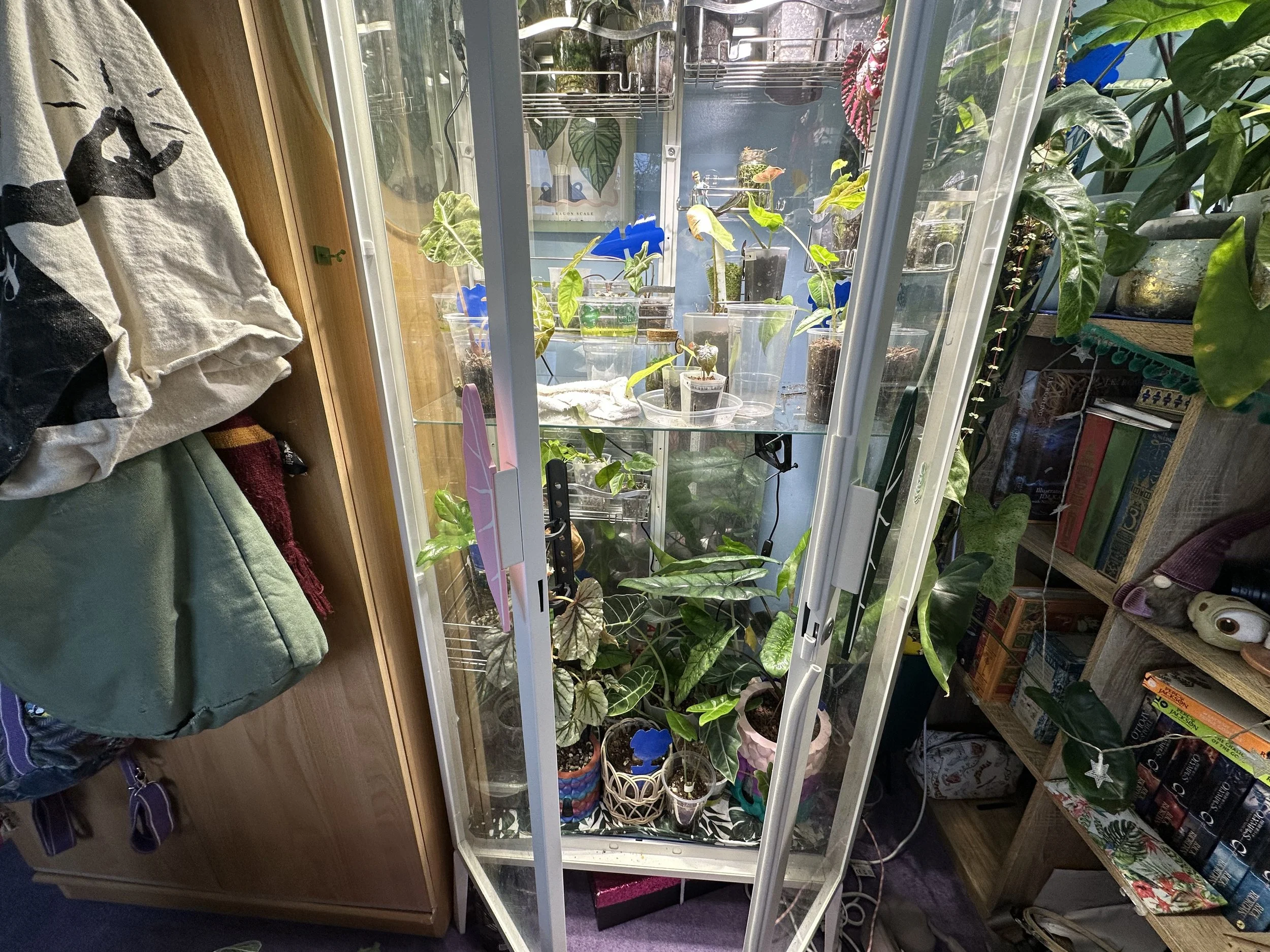
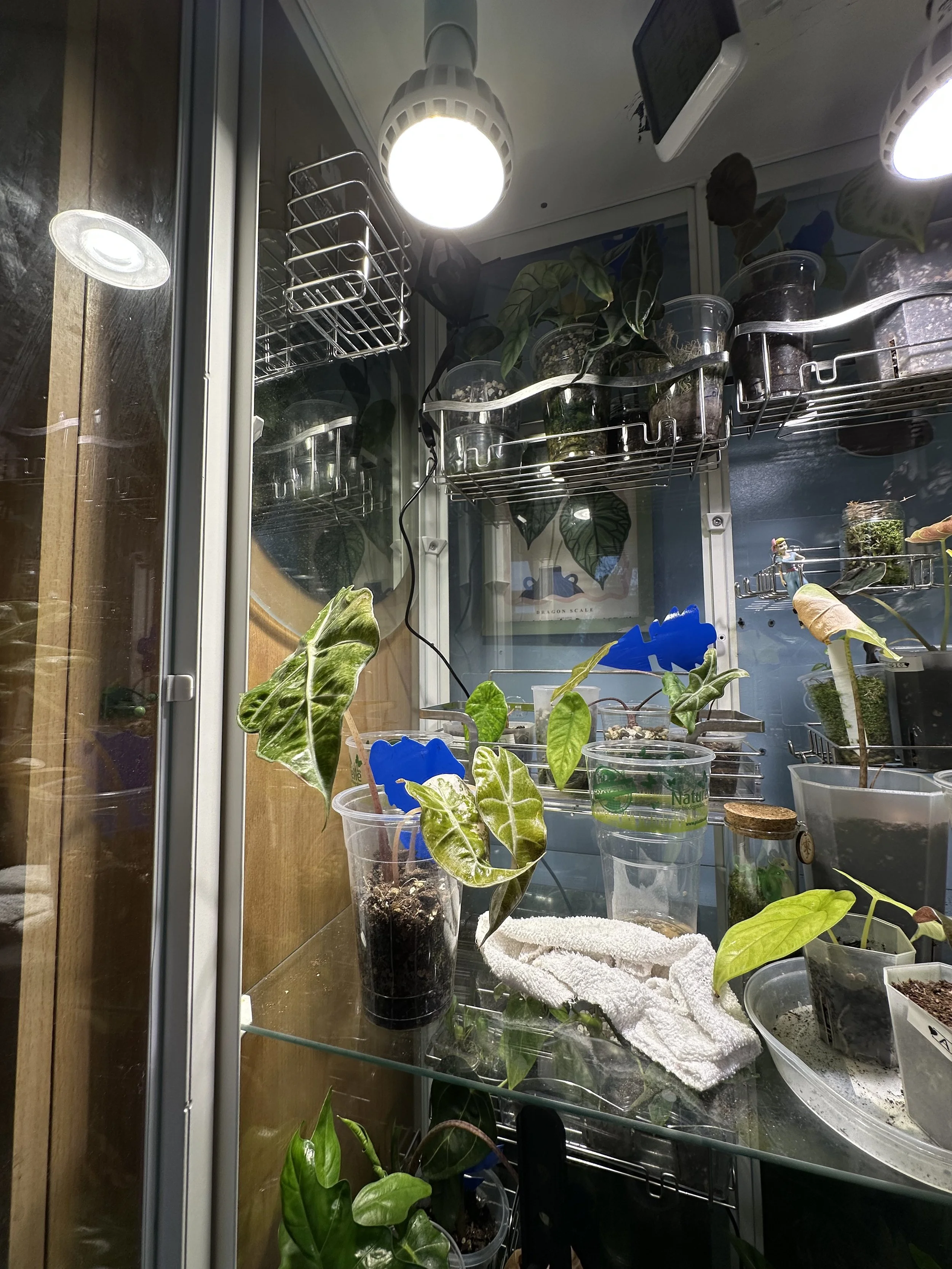
🌱 Do You Feed Plants in Winter?
Mostly… no. Think of winter as the plant world’s nap time. Growth slows; energy goes to maintenance, not new leaves.
Pause or halve feeding until spring, when new growth reappears.
If a plant is still growing (hello, overachievers), a tiny drop of diluted seaweed feed can be fine — gentle nourishment, not a full feast.
🌊 Psst: Check out our Benefits of Seaweed post to learn why it’s such a plant superhero!
✨ A Little Jungle Floor Winter Routine
Make winter care your cosy ritual:
Lay down your Jungle Floor Potting Mat before watering or repotting — saves your table and makes cleanup easy.
Keep your Plant Cloth nearby for quick dust-offs and shine sessions.
Use your foam + heat mat + Plant Shelfie combo to keep plants warm safely.
Pop your Claria Grow Light on a timer to give your plants a reliable “day” even when the sun’s being lazy. (look out for jungle discount on the bottom of the page when you open this link: Claria Grow Light
And most importantly — check in. Take five minutes once a week to rotate, wipe, water, and admire your leafy gang. That little bit of attention goes a long way.
🌿 Final Thought
Winter doesn’t have to mean a sleepy, sulky jungle. With the right mix of light, warmth, hydration, and love — plus your Jungle Floor setup (foam → heat mat → Plant Shelfie = perfection) — you’ll keep your green family thriving until spring struts back in.
So grab your cosy socks, make something warm to drink, and enjoy your plants basking in their gentle winter glow. They’re thriving — because of you. 💚
Taking Care of My Potting Mat


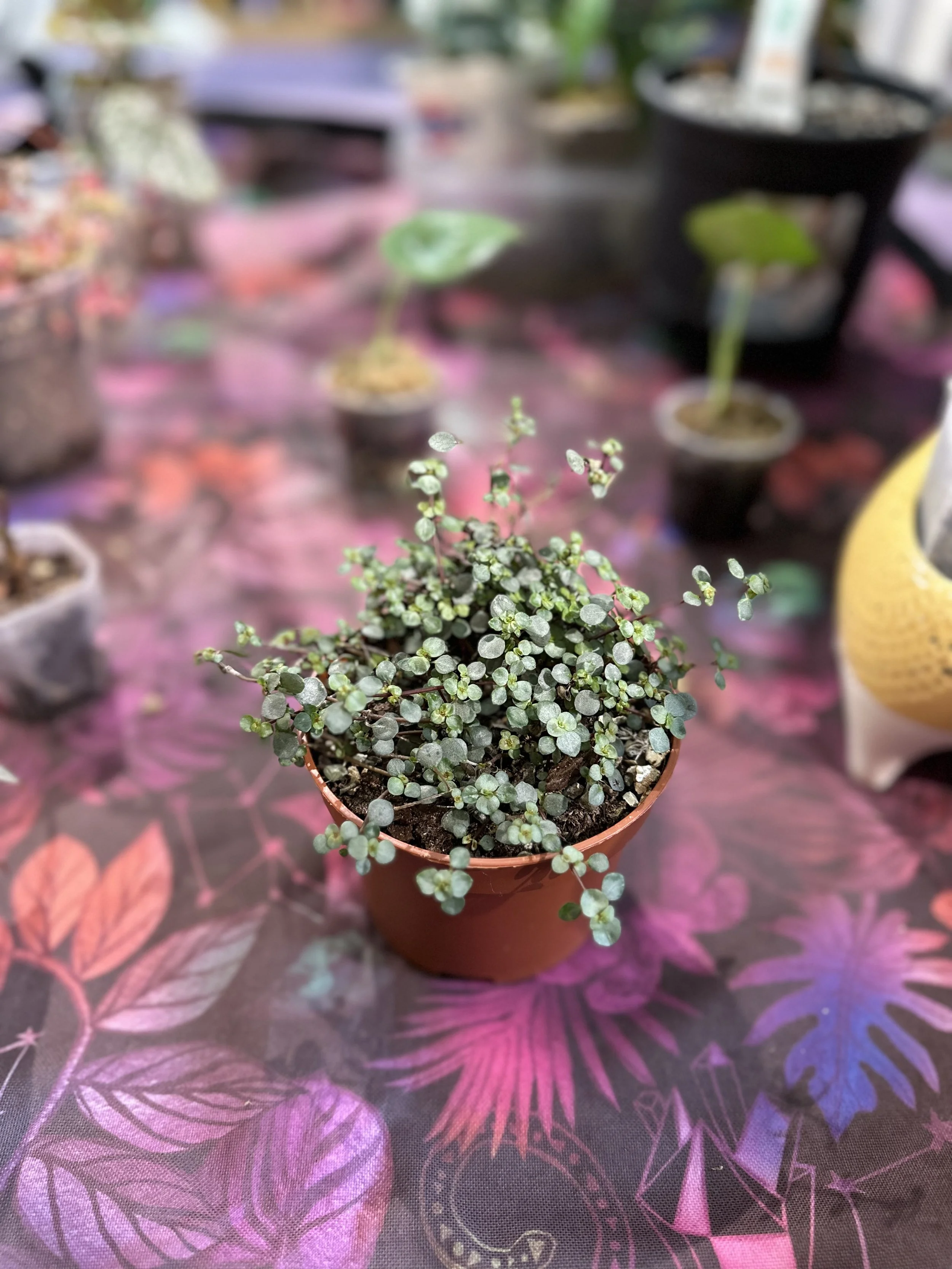
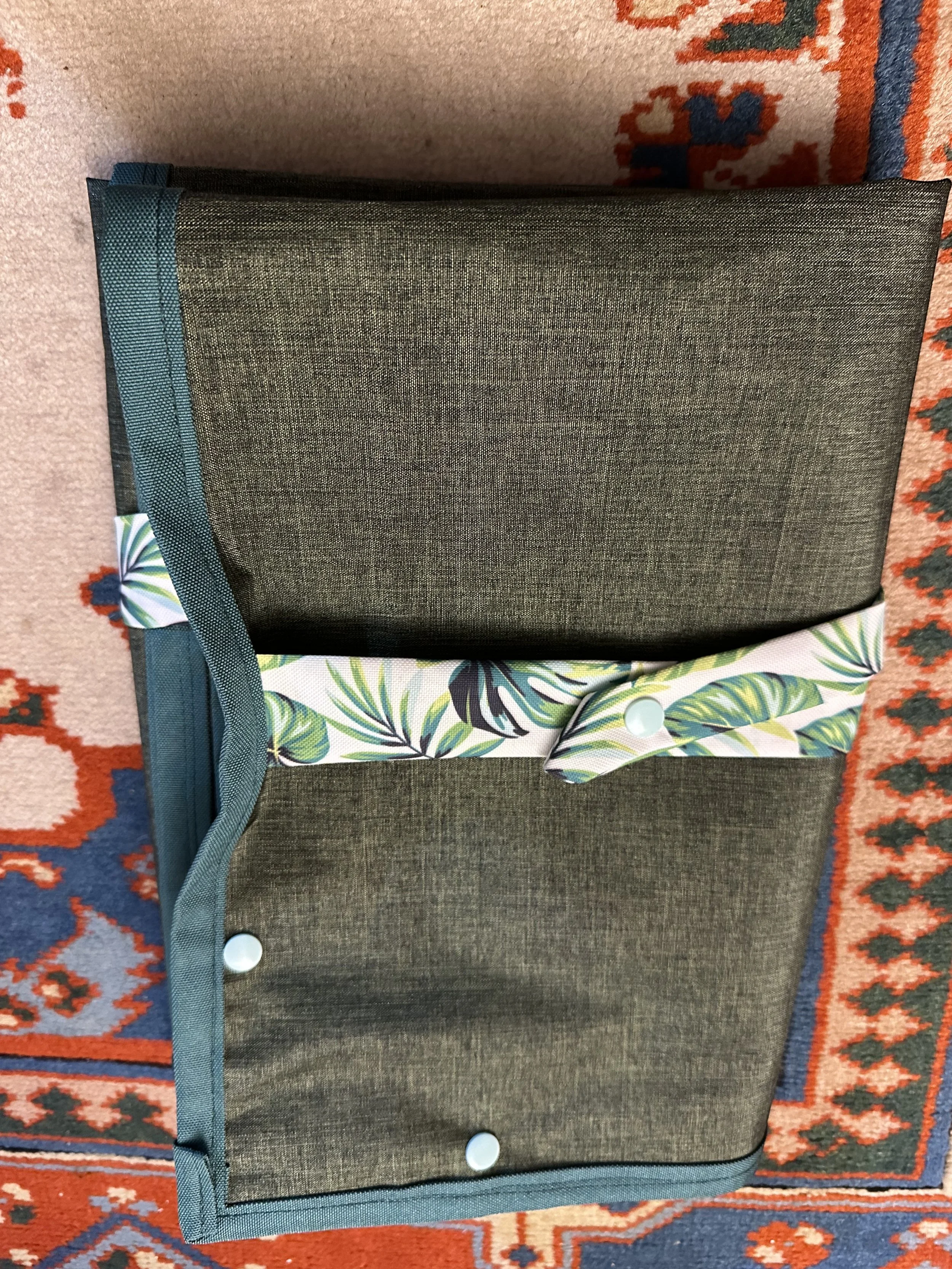
How to Take Care of Your Jungle Floor Repotting Mat
Every Jungle Floor Creative repotting mat is made to order — designed with care, crafted by hand, and printed with playful, plant-loving patterns to make your indoor gardening sessions a little more joyful. With a variety of unique designs, we hope each mat inspires you to repot with creativity, confidence, and (a little) less mess.
Our mats are water-resistant (very nearly waterproof!) — perfect for catching spilled soil, drips of water, or runaway LECA. But just like your plants, they need a bit of care now and then. Whether you’re someone who lets the dirt settle or likes to keep your tools spotless, a quick clean can help your mat look fresh and last longer.
Below are our easy, mess-free steps to help you care for your Jungle Floor Creative repotting mat — so it's always ready for your next planty project.
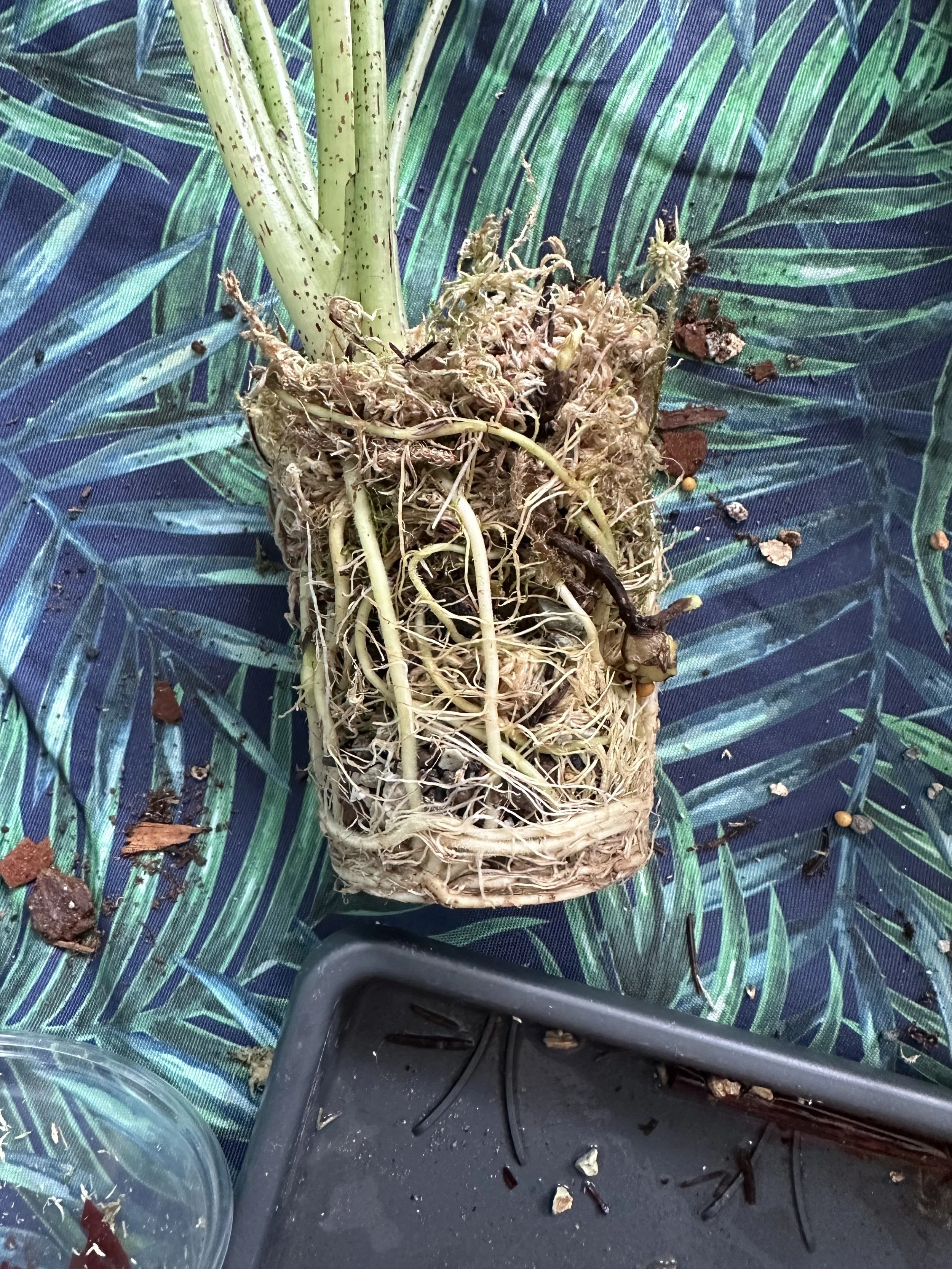
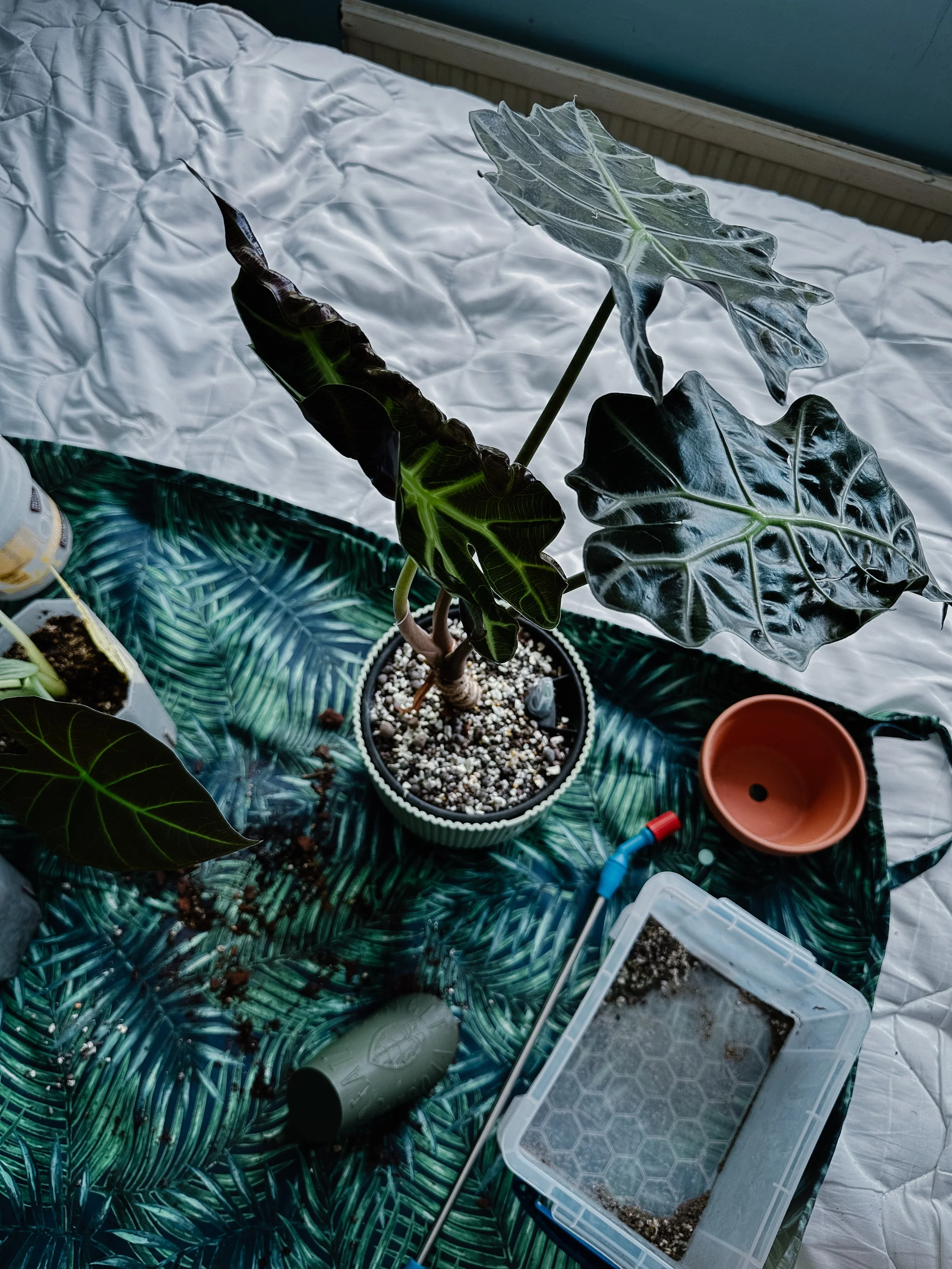
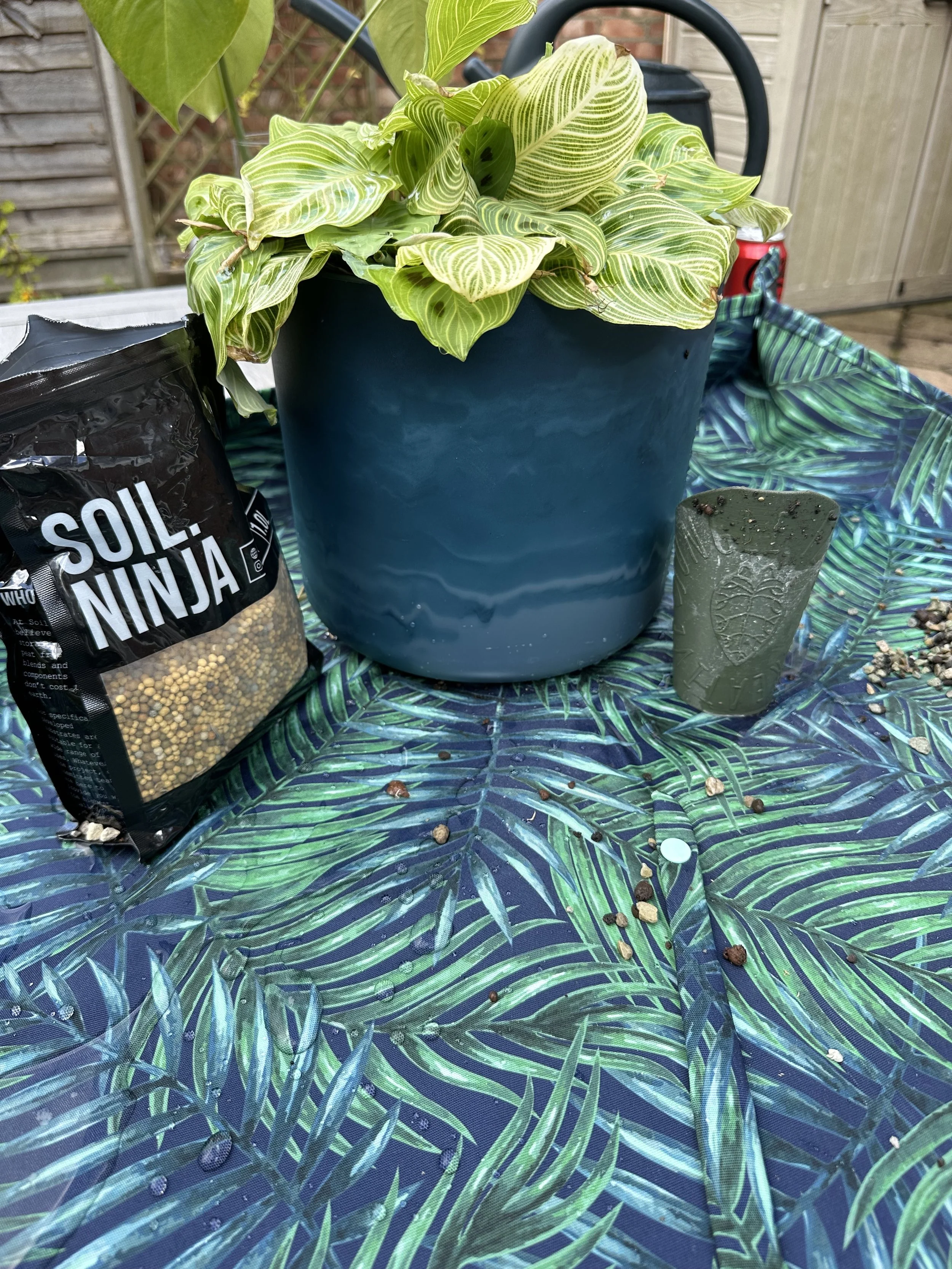
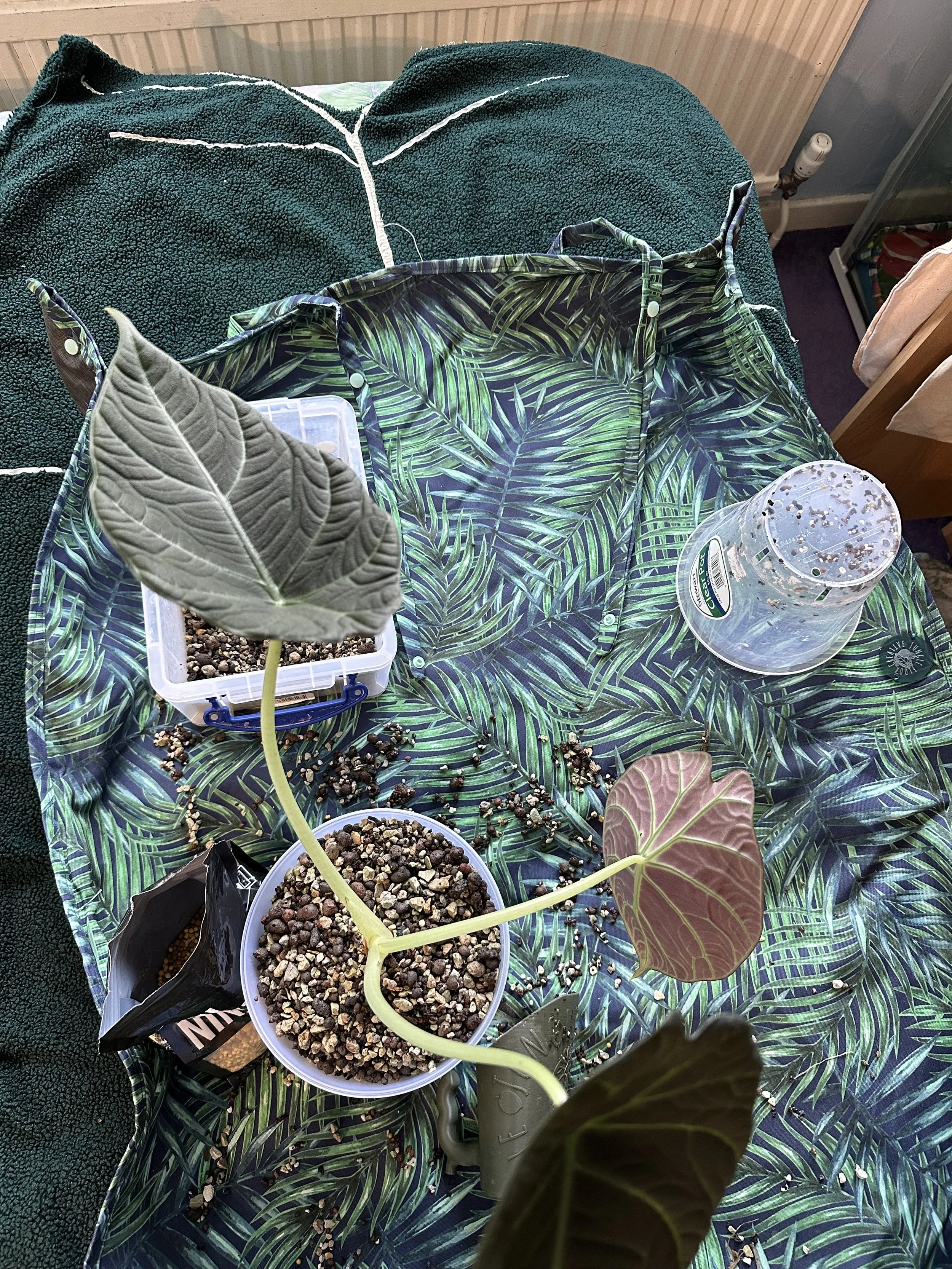
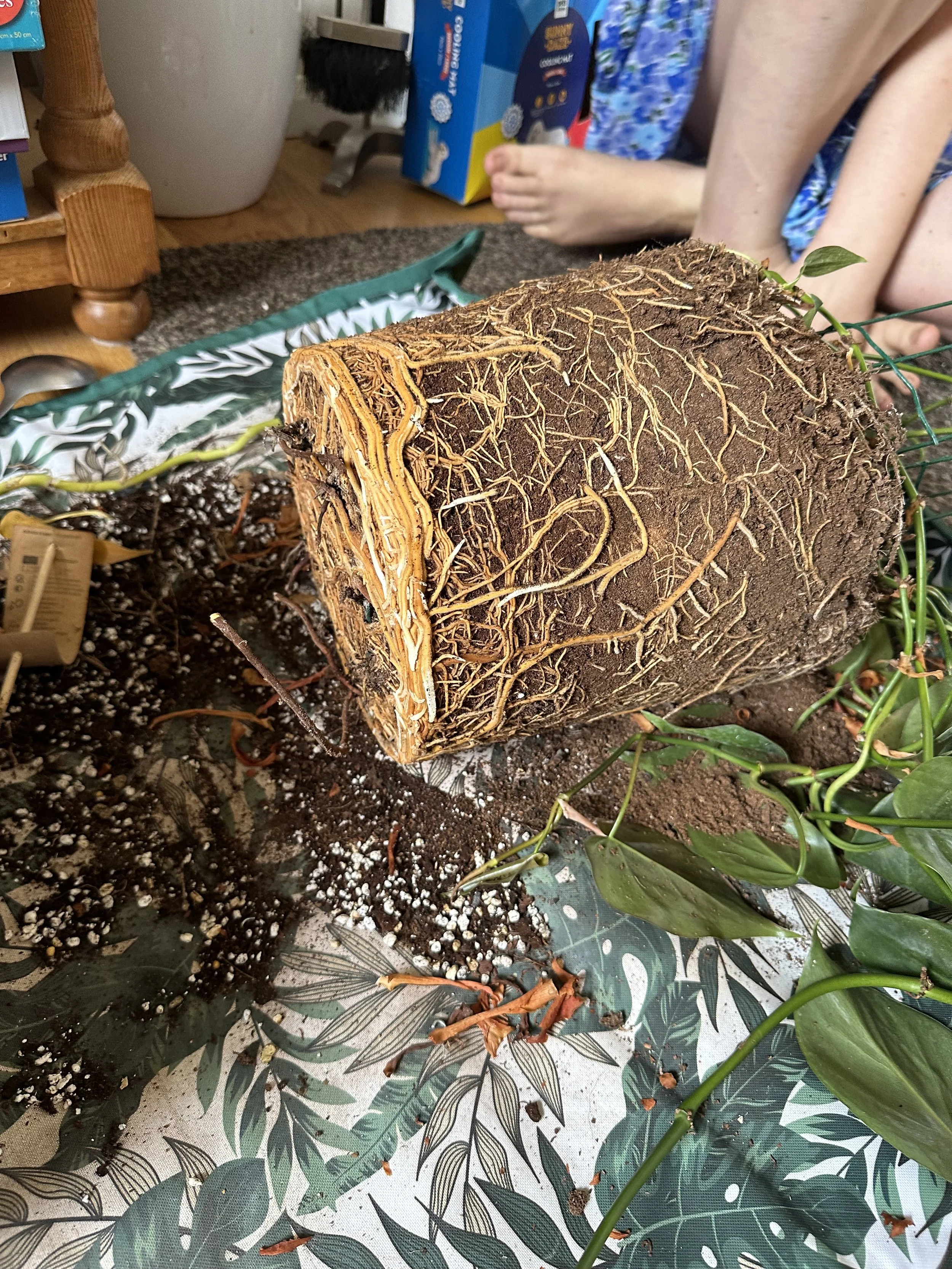
How to Take Care of Your Repotting Mat (The Fun, Mess-Free Way!)
Your Jungle Floor Creative repotting mat is made to handle all the messy magic of plant care — but giving it a little love after each use will keep it in top shape for years to come. Here's how to clean, dry, and store your mat like a pro:
1. Shake Off the Mess
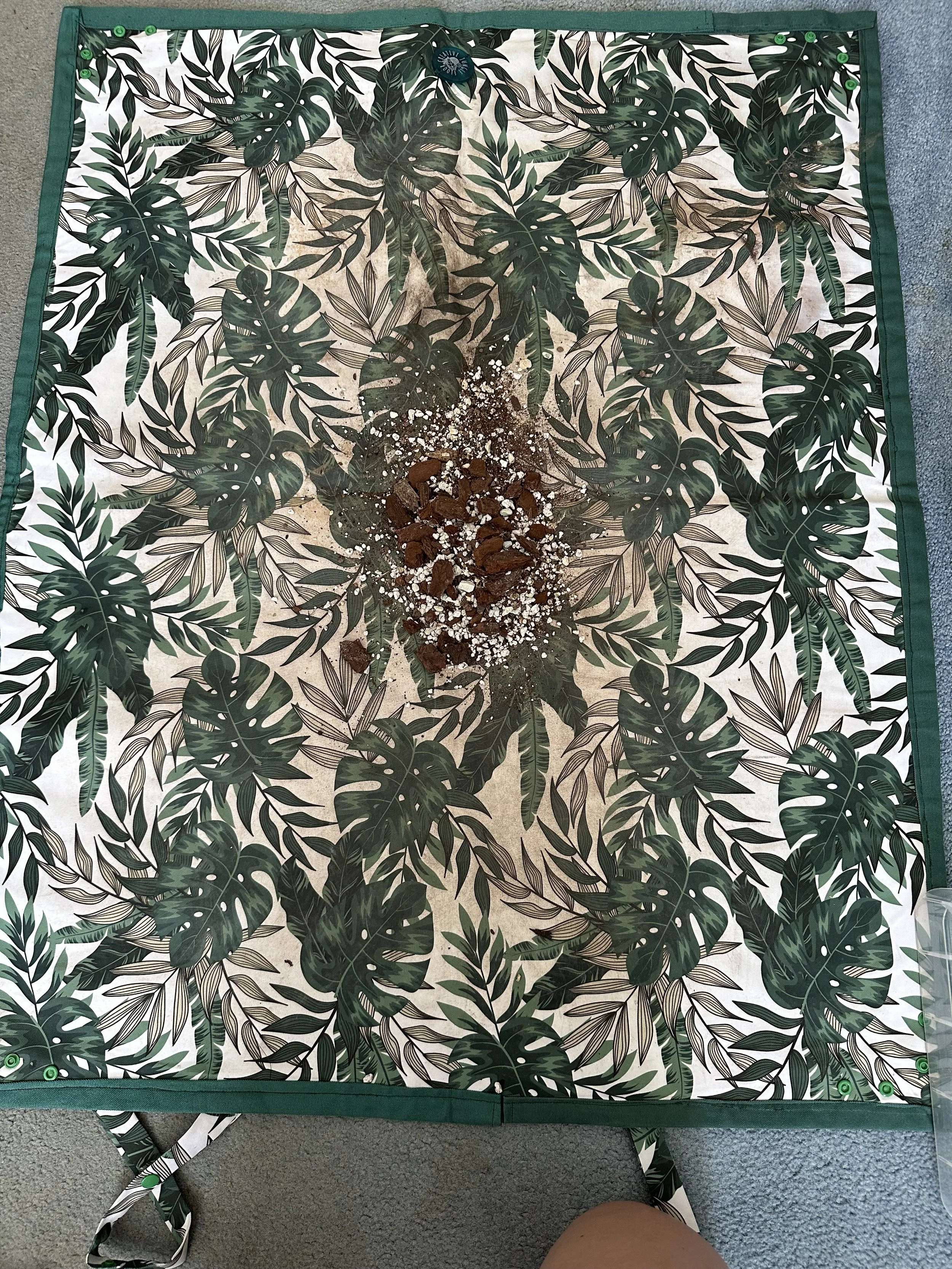
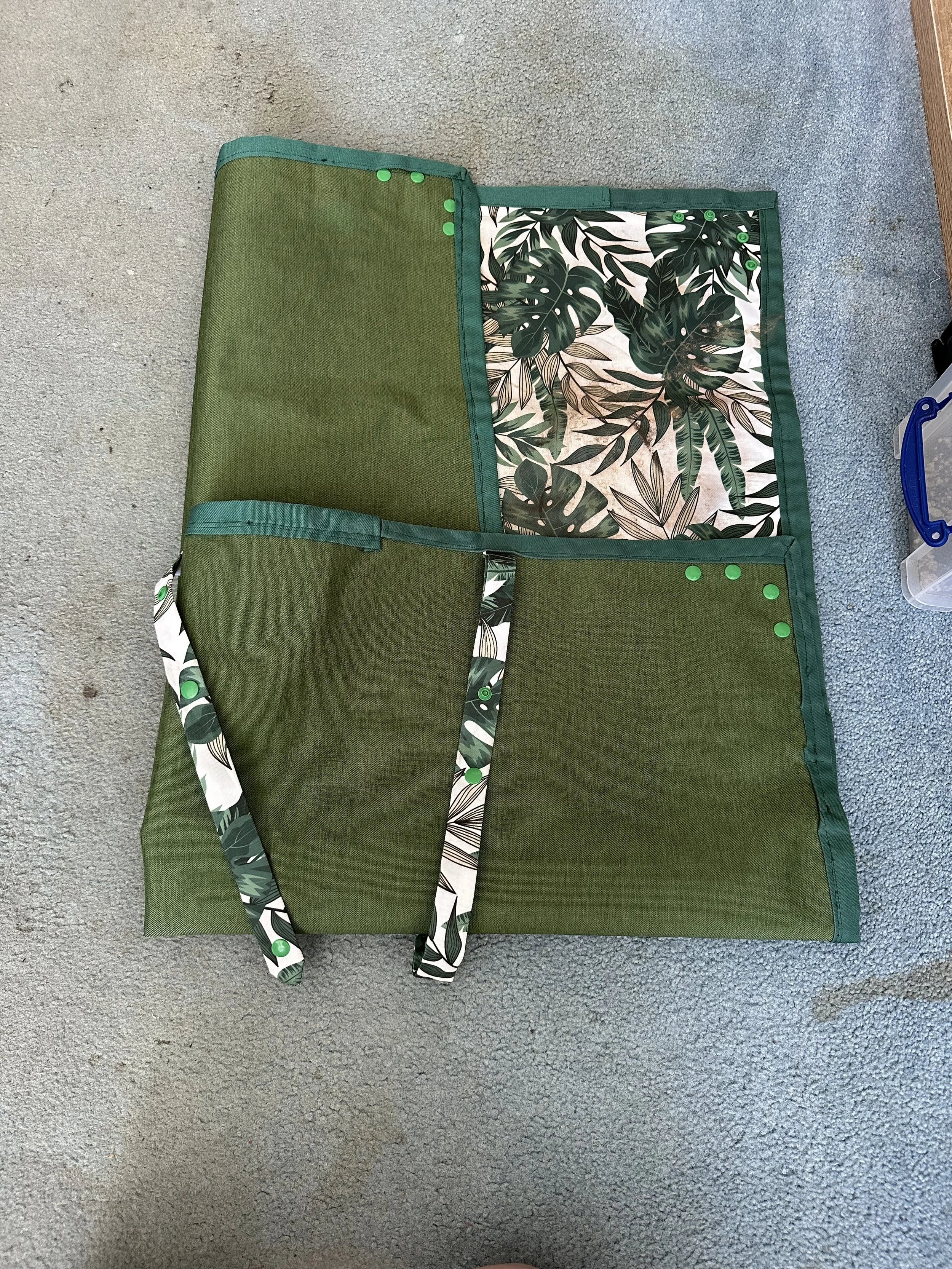
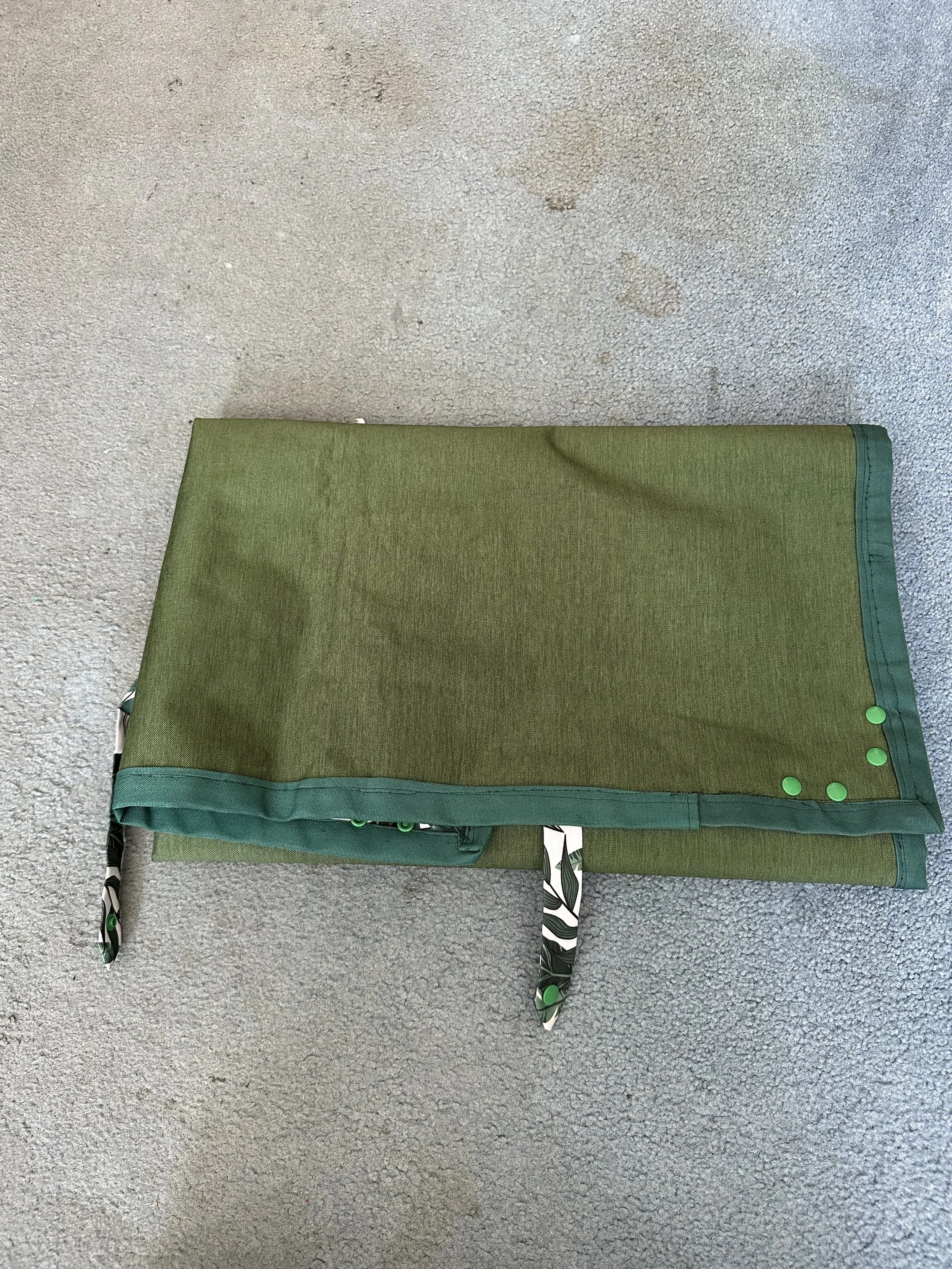
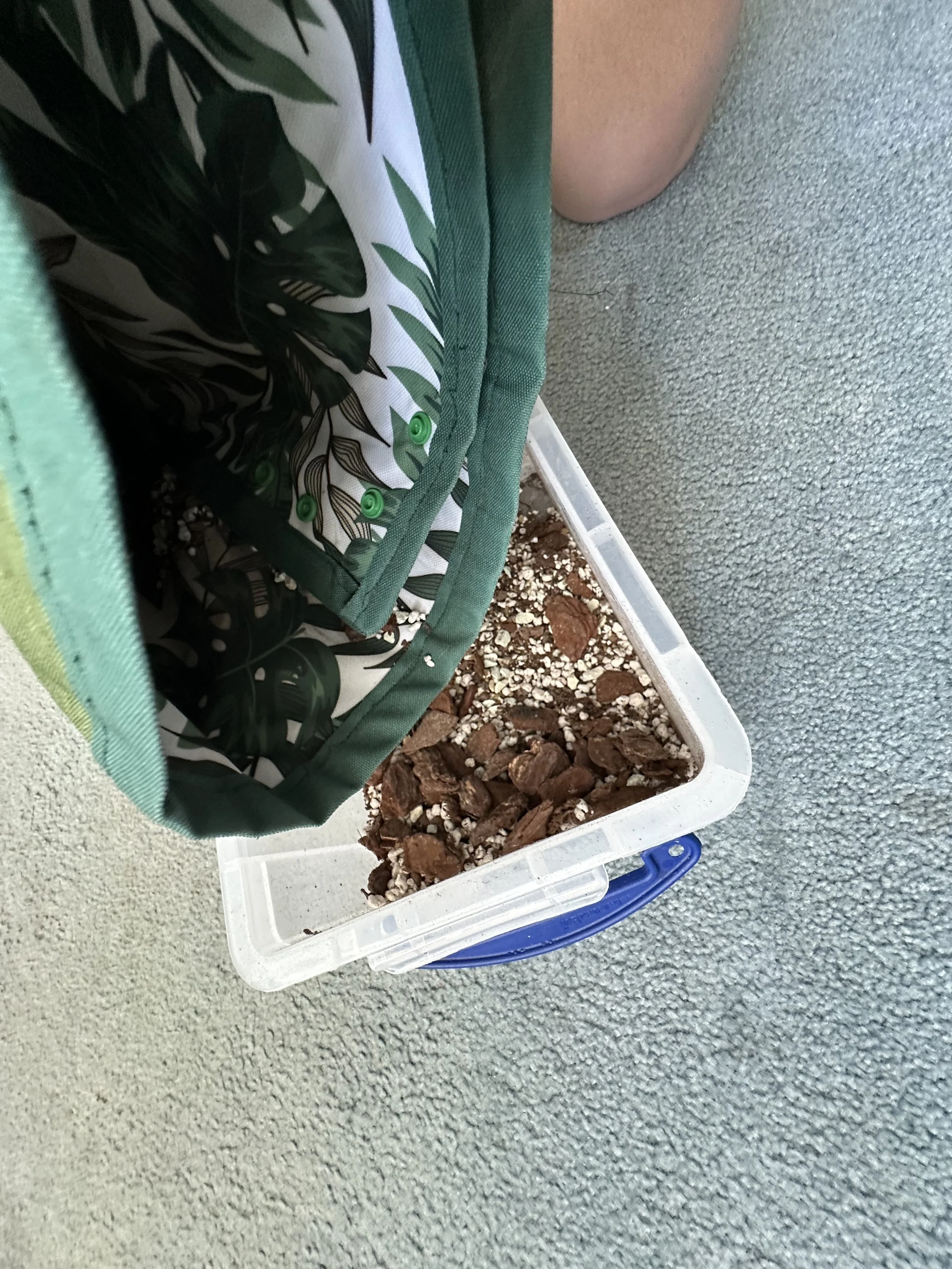
When you're done repotting, lift the edges of the mat so all the leftover soil, perlite, and water collect in the center. Then fold the bottom edge up, followed by the left and right sides — like you’re wrapping a leafy little burrito.
Take it outside or to a bin and empty it out (your garden will thank you).
2. Brush or Hose It Down
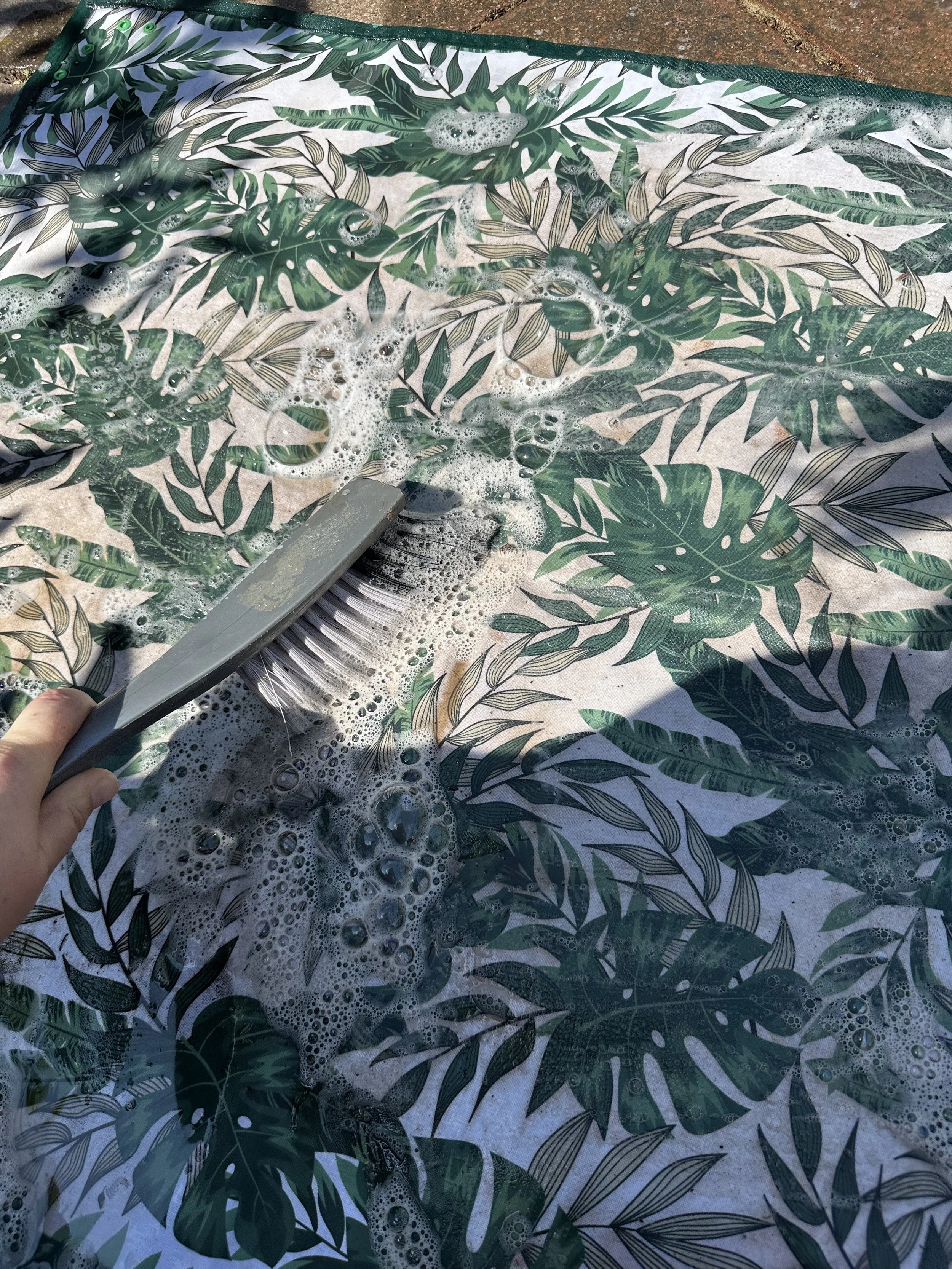
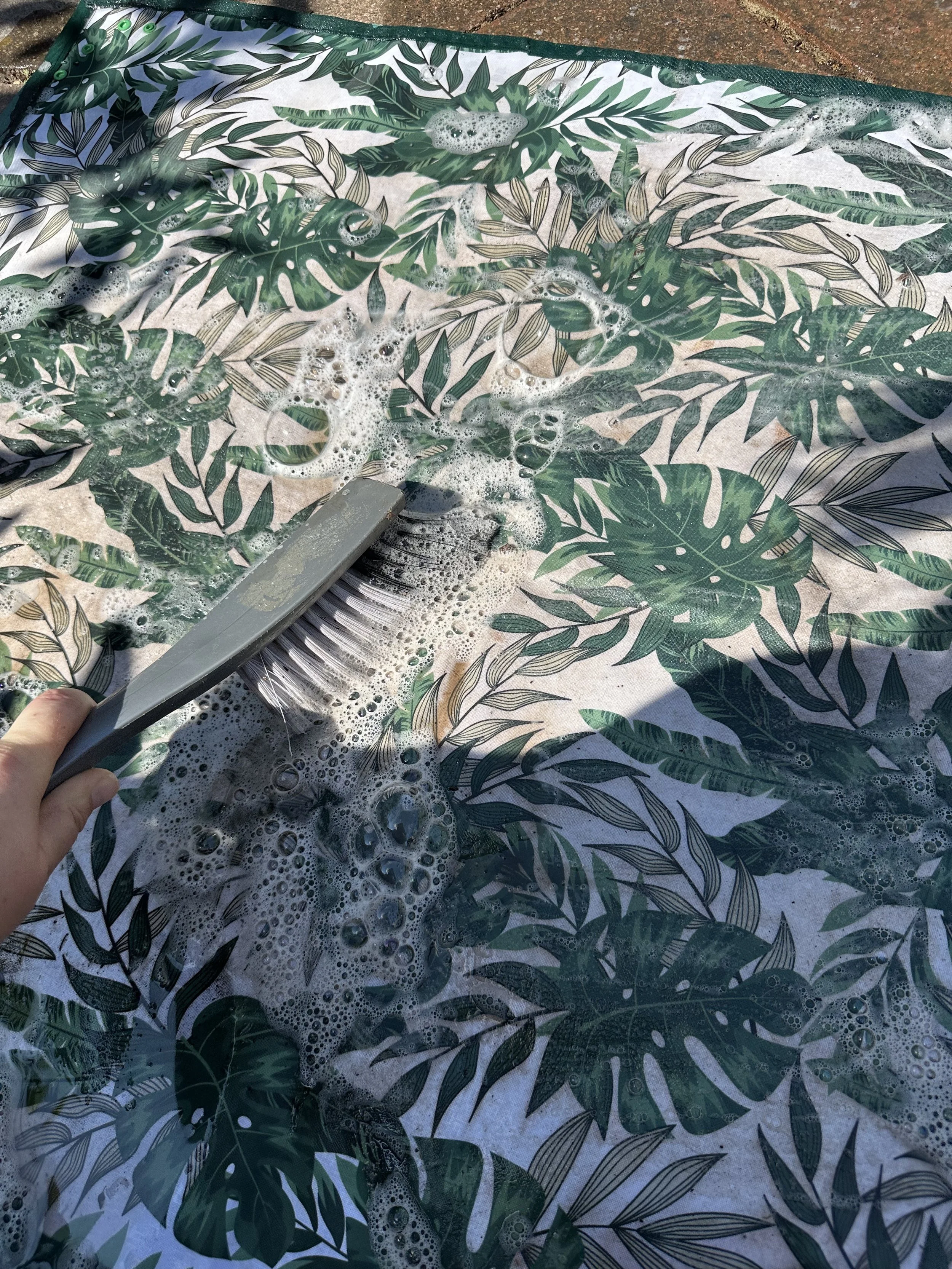
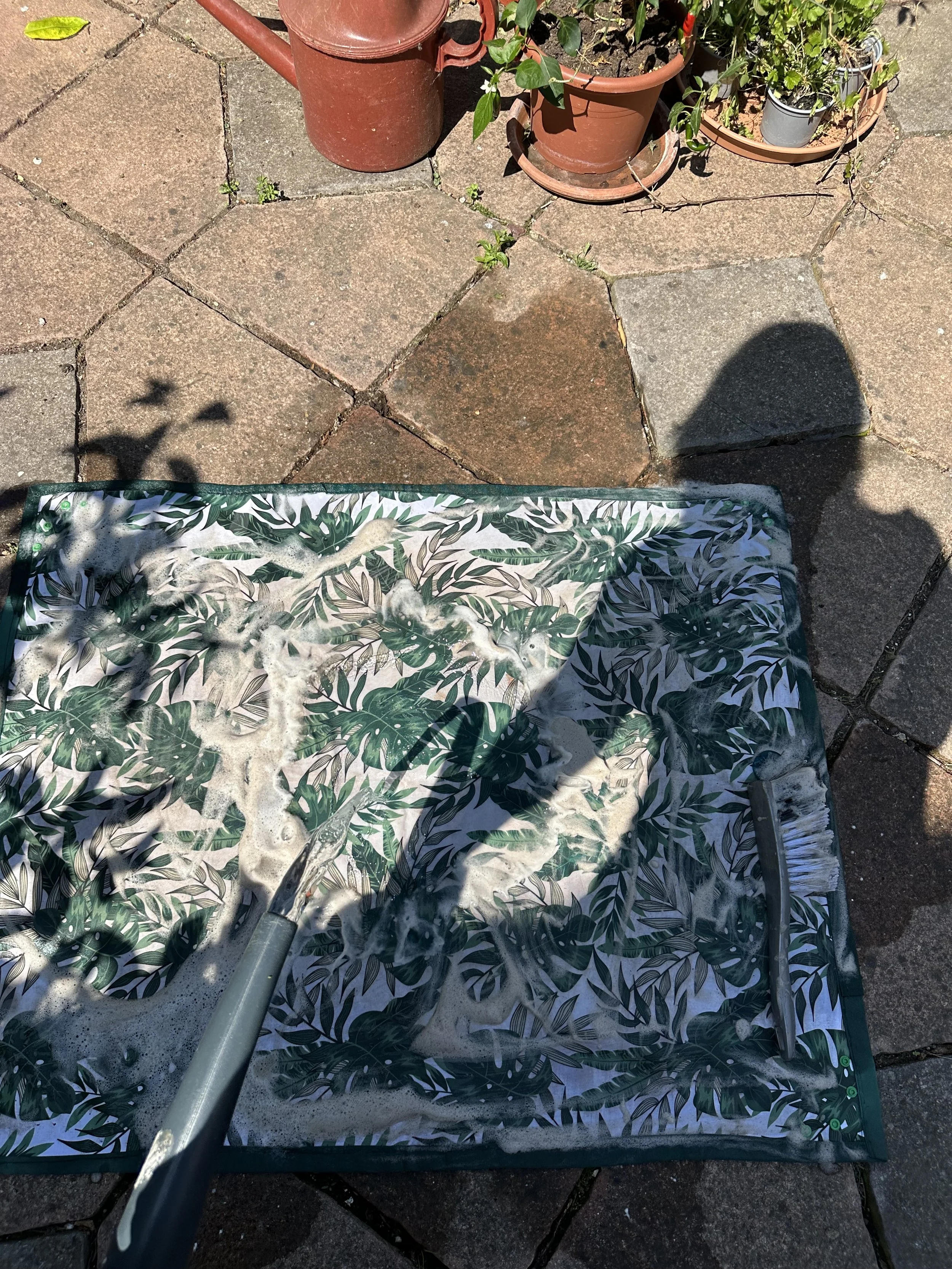
Lay the mat flat and give it a good scrub with a rough brush or a damp cloth. For extra dirty days, a quick blast with the hose works wonders! This helps remove any leftover soil or plant debris from your indoor gardening session.
3. Soapy Suds and a Wipe-Down
Spray the mat with water and add a little bit of washing-up liquid. Wipe it clean with a soft cloth — gentle but effective.
4. Hang It to Dry
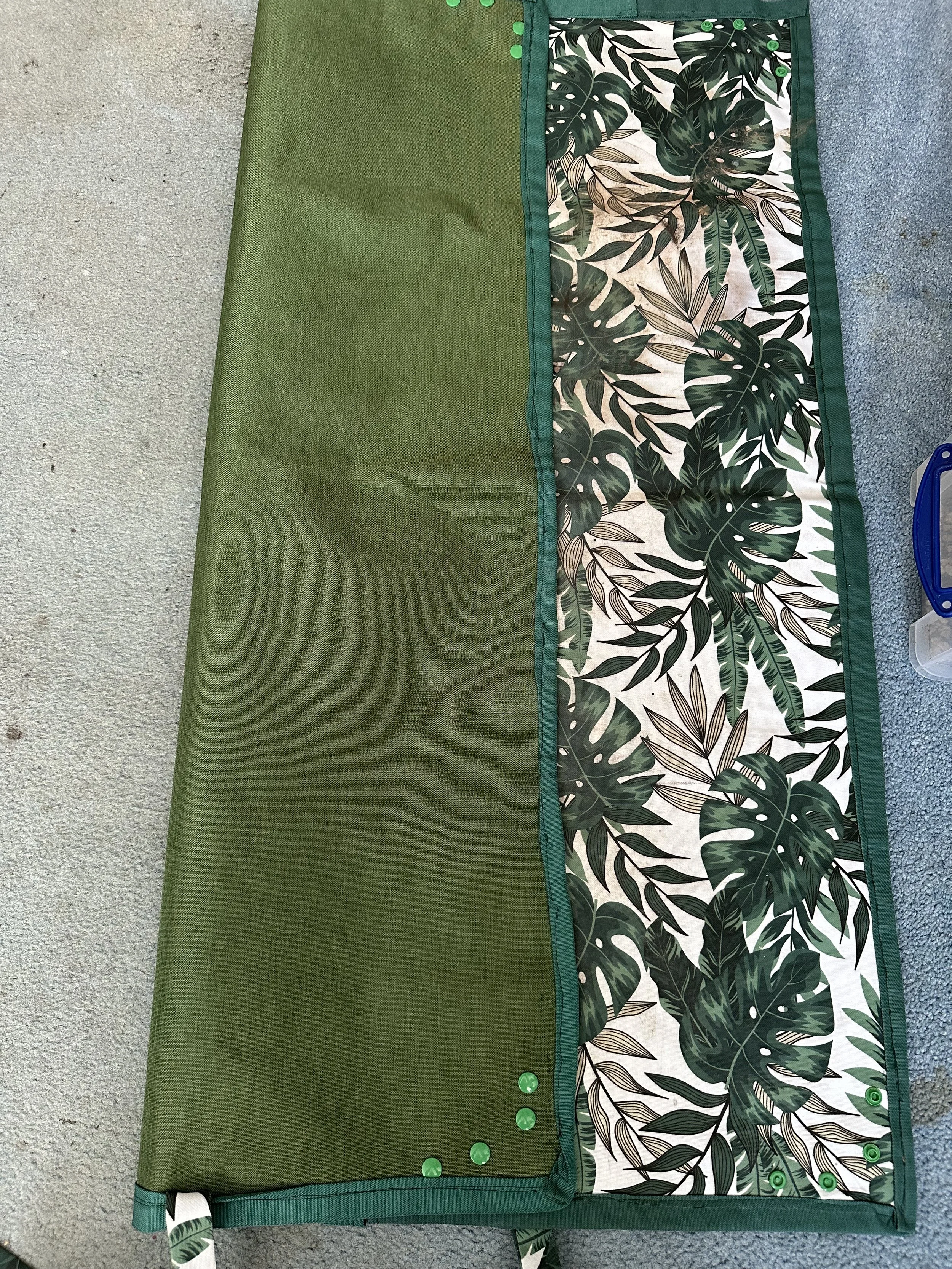
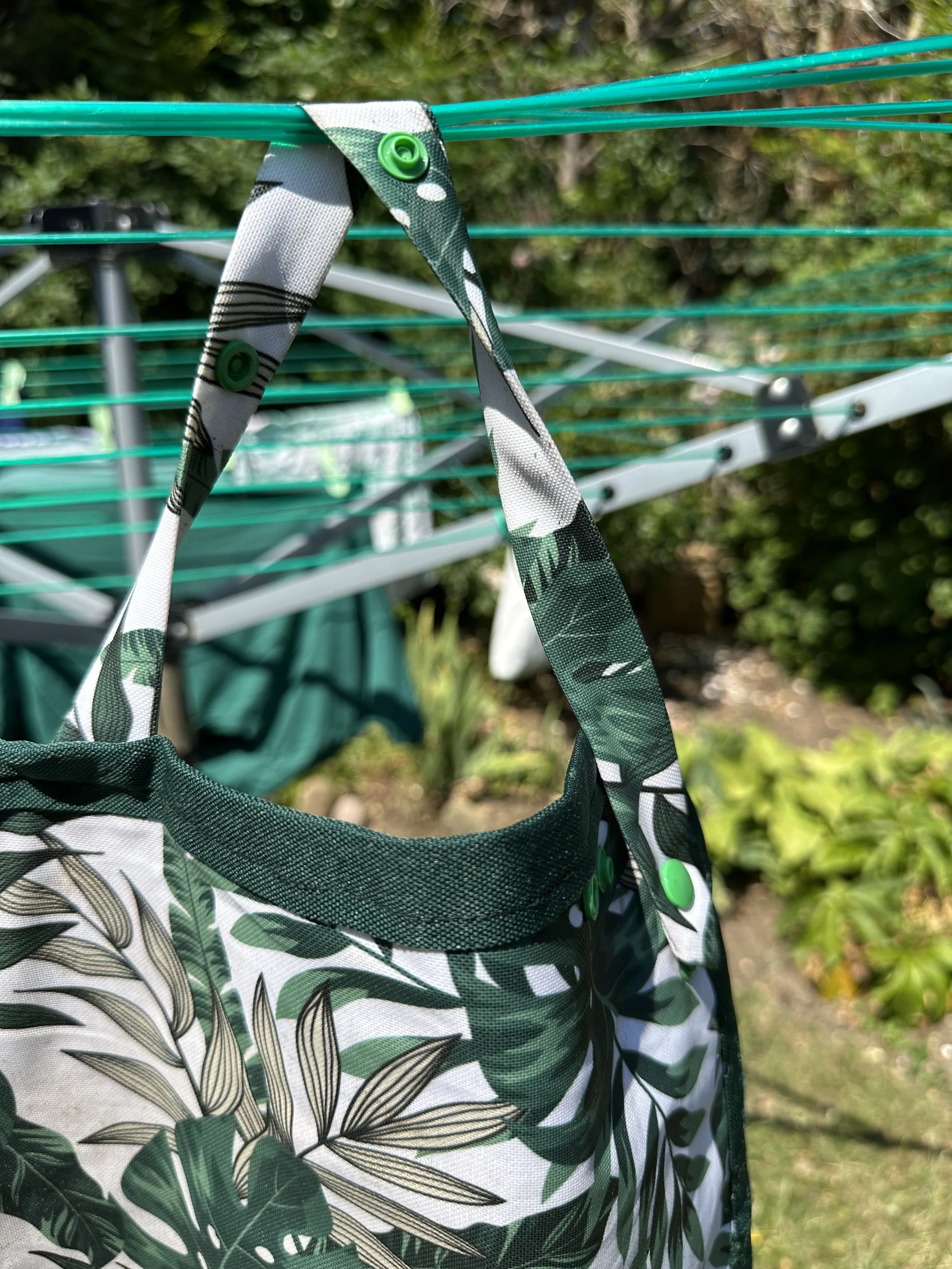
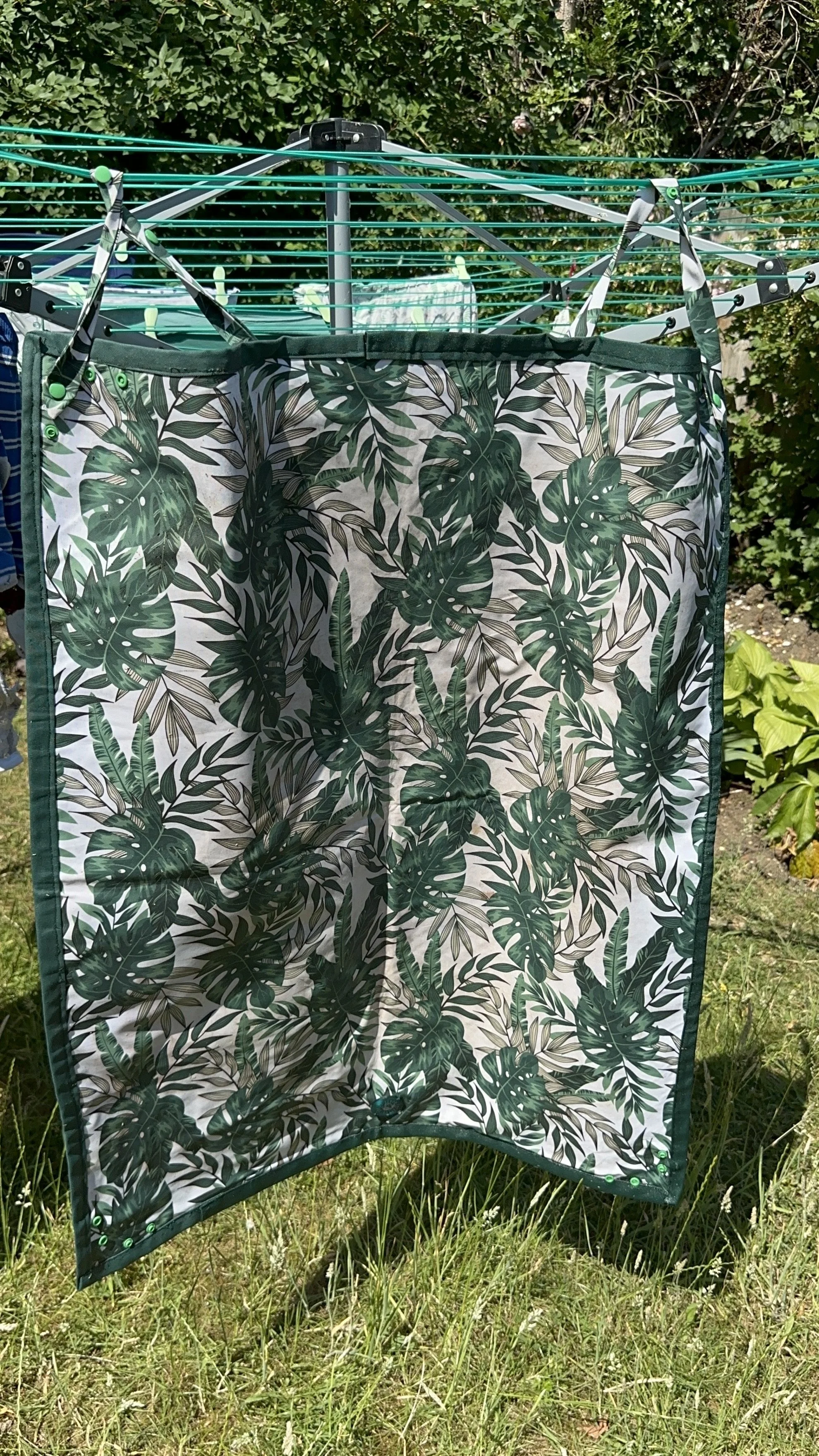
Use the handy straps to hang your Jungle Floor Creative repotting mat somewhere shaded. It usually dries within an hour or so (faster on sunny days, just avoid too much direct sunlight).
5. Fold and Store for Next Time
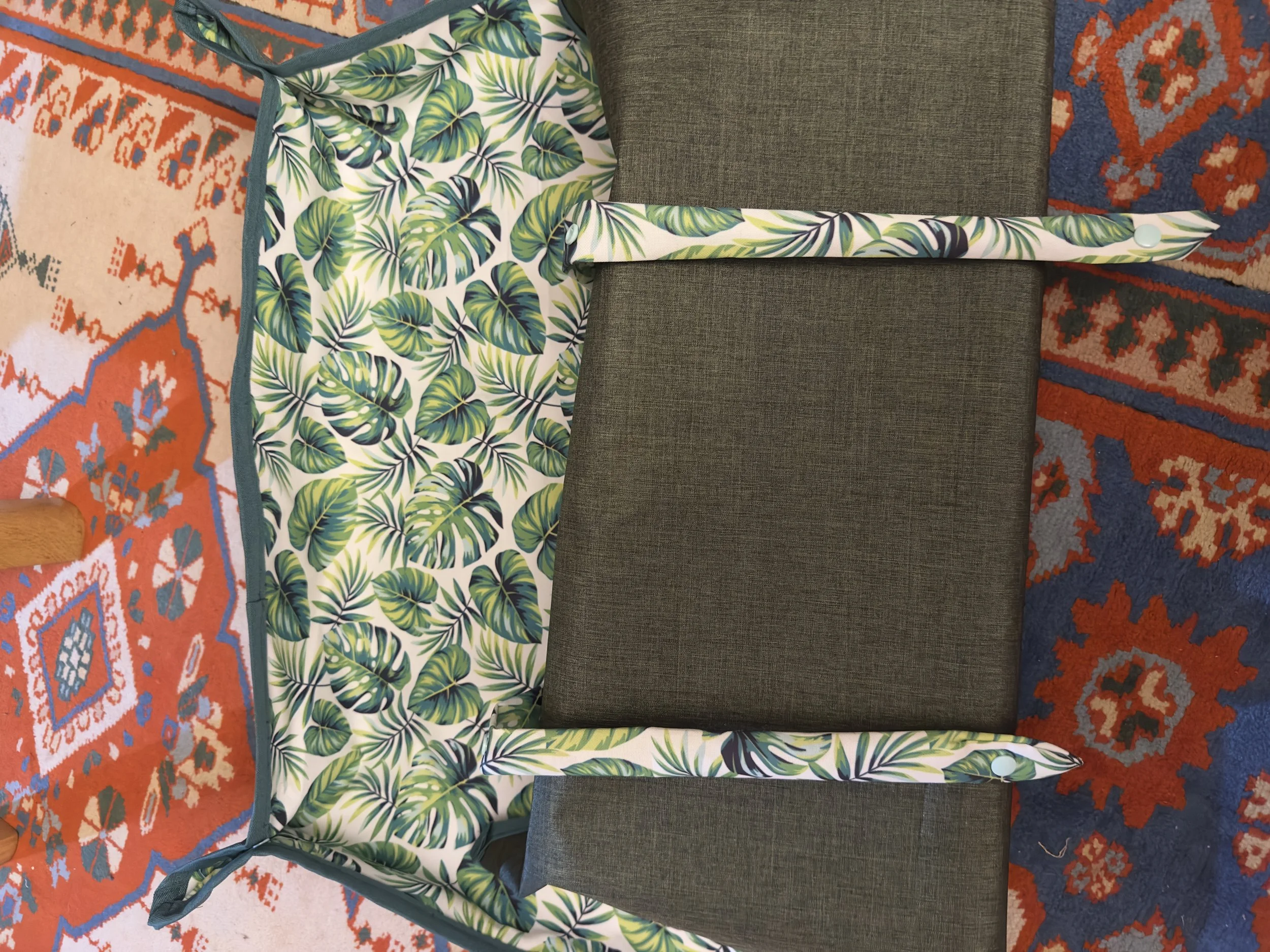
Once it’s completely dry, fold your mat in half and roll it up — ready for your next repotting session or planty adventure.
🌿 A Few Quick Warnings:
Hand wash only — no washing machines, please!
Avoid long exposure to direct sunlight or UV rays, as this can affect the durability of your mat.
Store somewhere dry and cool for best results.
remember when emptying mat take of anything that will not be biodegradable in the garden.
Take care of your tools, and they’ll take care of your plants.
Ready to roll out your mat and repot again? Jungle Floor Creative has you covered.

Unlocking the Underground Magic: The Power of Mycorrhizal Fungi
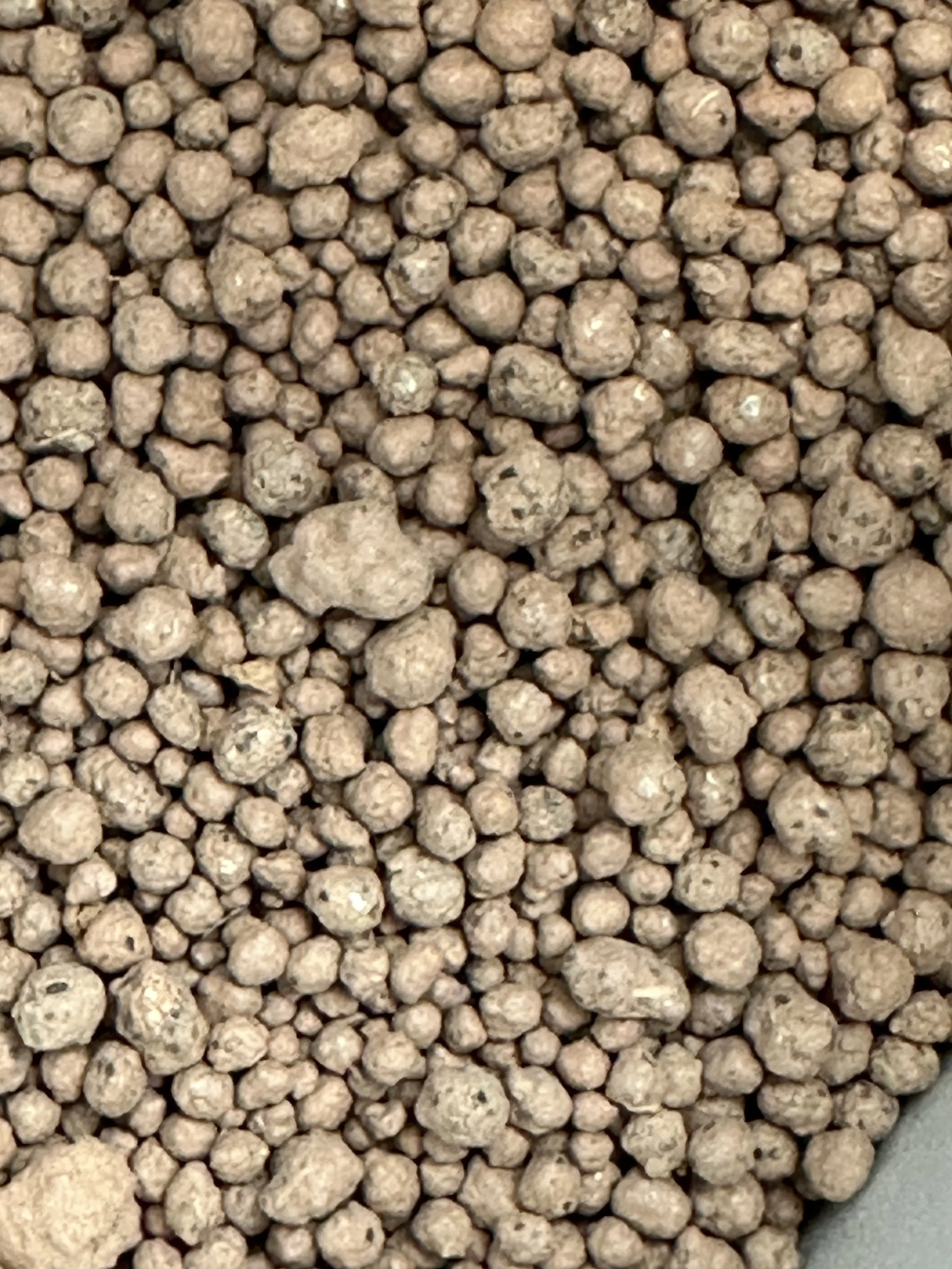
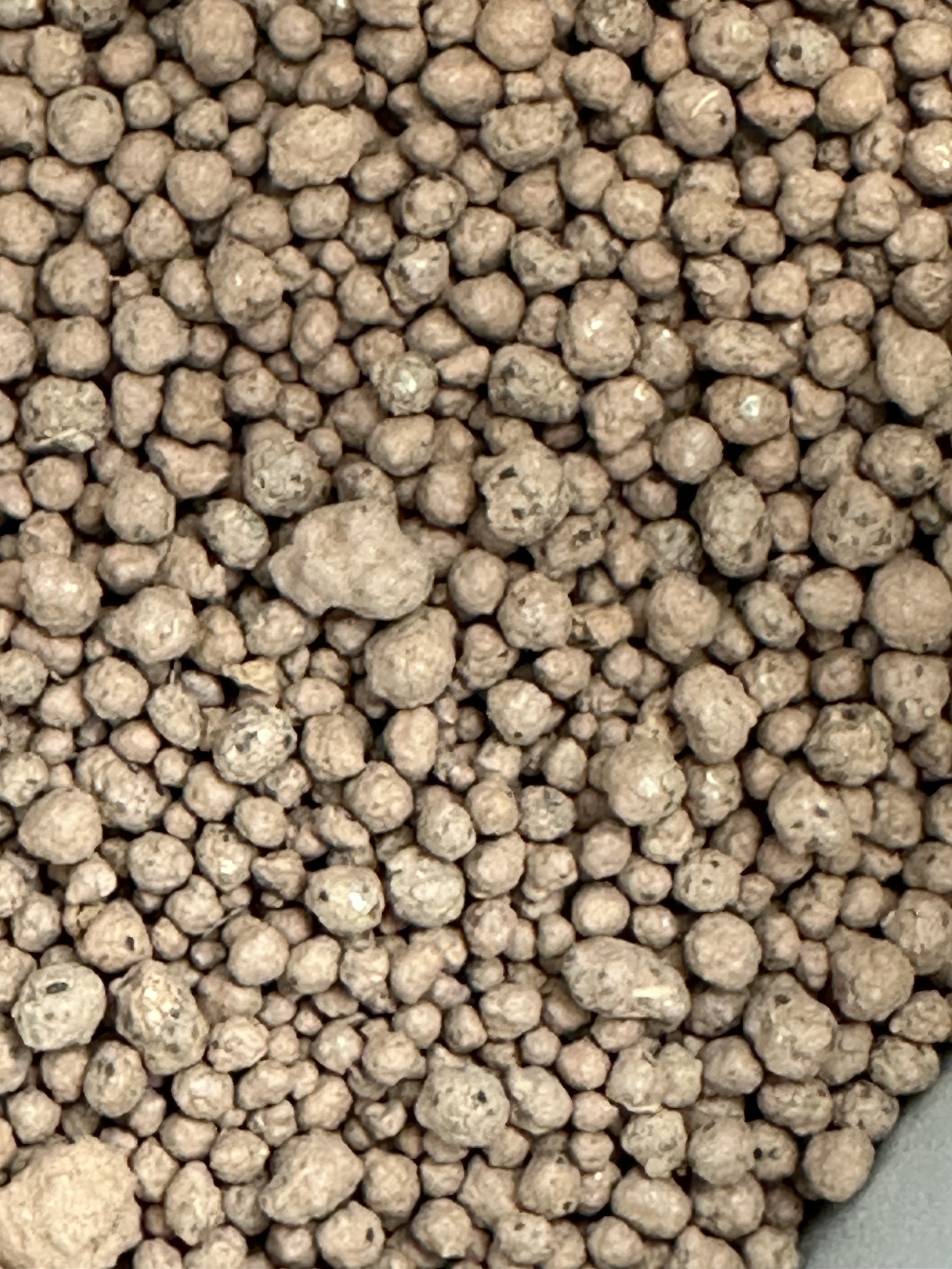
I’ve recently been experimenting with different methods of growing what I can add to my substrates to improve the root growth as well as using Sea Weed, I’ve been trying out Mycorrhizal Fungi. As you know I like to research and be using it for a while before sharing my experience with something.
When we think about plant care, we usually focus on what we can see — leaves, stems, flowers, and maybe a bit of root pruning here and there. But beneath the surface lies a hidden network that has been quietly supporting plant life for hundreds of millions of years: mycorrhizal fungi. We all want our plants to have the best start and if the roots are happy the plants are happy. You may have seen them used in rooting cutting of Roses.
What is Mycorrhizal Fungi.
"Mycorrhiza" literally means "fungus-root." These are beneficial fungi that form symbiotic relationships with plant roots. In simple terms, they team up with your plant’s roots and help each other thrive. The fungi attach to the root system and extend their thread-like structures (called hyphae) deep into the soil, increasing the root’s reach dramatically.



Why Are They So Magical?
Let’s break down the benefits:
🌱 Nutrient Superhighways
Mycorrhizal fungi help plants access nutrients that would otherwise be out of reach, especially phosphorus, nitrogen, and trace minerals. The fungi absorb these nutrients from the soil and shuttle them directly to the plant roots.
💧 Improved Water Uptake
The extended network of hyphae acts like a sponge, helping plants access water from a larger area. This is especially valuable in dry conditions or for thirsty plants.
🛡️ Stronger Immunity
Mycorrhizal relationships can boost a plant's resistance to soil-borne diseases and environmental stress. They essentially help train your plant's immune system and fend off unwanted pathogens.
🌍 Soil Health Champions
These fungi play a major role in improving soil structure by binding particles together, creating better aeration and drainage. Healthier soil = healthier plants.
🌿 Carbon Exchange & Communication
In forests, these underground fungal networks even allow trees to “communicate” and share resources — often called the “Wood Wide Web.” While this may sound like sci-fi, it's backed by fascinating research.


Mycorrhizae and Houseplants: Do They Need It?
In nature, most plants form mycorrhizal relationships, but indoor plants often miss out. Sterile potting mixes, frequent watering, and isolation from natural ecosystems limit fungal activity. That’s why adding mycorrhizal inoculants when repotting or planting can make a noticeable difference in plant health, especially for slower growers, newly transplanted specimens, or stressed plants.
How to Use Mycorrhizal Inoculants
Powdered or granular: Sprinkle onto roots during repotting.
Liquid: Mix with water and drench the soil.
Pre-mixed into soil: Some high-quality potting mixes already contain beneficial fungi.
Note: Mycorrhizae don’t work as well in synthetic-heavy soils or with high-phosphorus fertilizers, which can inhibit the fungal growth.
Not All Plants Use Mycorrhizae
Fun fact: Some plant families — like orchids — have very specific fungal partnerships, while others (like members of the Brassicaceae family, including cabbage) don’t form mycorrhizal relationships at all.
How to Use Mycorrhizal Fungi in Your Repotting Routine
One of the easiest ways to introduce mycorrhizal fungi is during repotting. Just sprinkle a bit of inoculant directly onto the root ball, or mix it lightly into the soil near the roots. Water it in gently, and let the magic begin.
This is also a great time to streamline your plant care setup. We love using Jungle Floor Creative’s waterproof potting mats — not only do they keep your workspace clean, but they help you stay focused on the task at hand without making a mess. Pair it with one of our plant scoops, and you’ve got everything you need to blend soil, fungi, and love into every pot.
Whether you’re repotting on the balcony, kitchen table, or floor, these reusable tools help you stay grounded (and stylish!) while you work.
🌱 Pro tip: Avoid high-phosphorus synthetic fertilizers when using mycorrhizae — they can suppress fungal growth!


⚠️ Cons of Mycorrhizal Fungi
❌ They’re Picky About Conditions
Mycorrhizae don’t thrive in sterile, compacted, or overly wet soils. Excessive use of chemical fertilizers (especially high-phosphorus ones) can also kill or suppress them.
❌ Not Universal
Some plants (like brassicas — think cabbage, broccoli, etc.) and many carnivorous plants don’t form mycorrhizal relationships. Orchids, on the other hand, require very specific fungal partners.
❌ Takes Time to Establish
They aren't a quick fix. Benefits develop gradually as the fungal network builds — it’s a long game.
❌ Varied Product Quality
Some commercial inoculants may contain low spore counts or inactive fungi, especially if stored improperly. Always check the source and shelf life.
❌ Not Always Needed
In rich, living soil with a healthy microbial ecosystem, fungi may already be present. Inoculants are most helpful when starting fresh or working with poor/substrate-heavy mixes.
Final Thoughts
Mycorrhizal fungi aren’t just a scientific curiosity — they’re ancient allies. With the right tools, knowledge, and a little fungal magic, your plants can become more resilient, nutrient-efficient, and beautifully self-sufficient.
So next time you're repotting, don’t just think about soil and pots — think about connections. Beneath the surface, there’s a whole world rooting for your plants. 🖤
Featured Tools
🪴 Jungle Floor Creative Potting Mats – Durable, waterproof, and foldable. Designed for tidy, joyful repotting.
🪣 Plant Scoops – Because who has time to spoon mix soil by hand? These scoops make measuring, mixing, and sprinkling mycorrhizae a breeze.
I recommend Aqua Culture UK Dry Seaweed, Slow Release Fertiliser Soil Topper. This will work really well with Mycorrhizal as its organic and slow releasing like that of the Mycorrihizal to find out more about the benefits of sea weed check out my blog.
I use this type of Mycorrhizal started with a smaller bag and then now get a bigger bag