7 Houseplant Myths That Lost Their Context
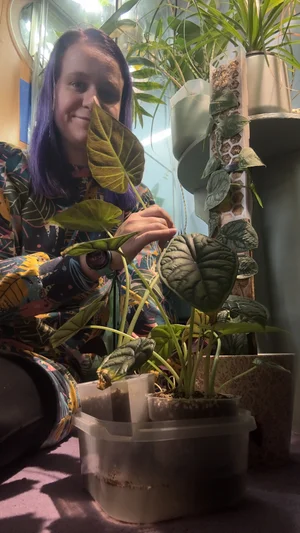
It's been a few years since I started Jungle Floor Creative, but I've been into plants from an early age.
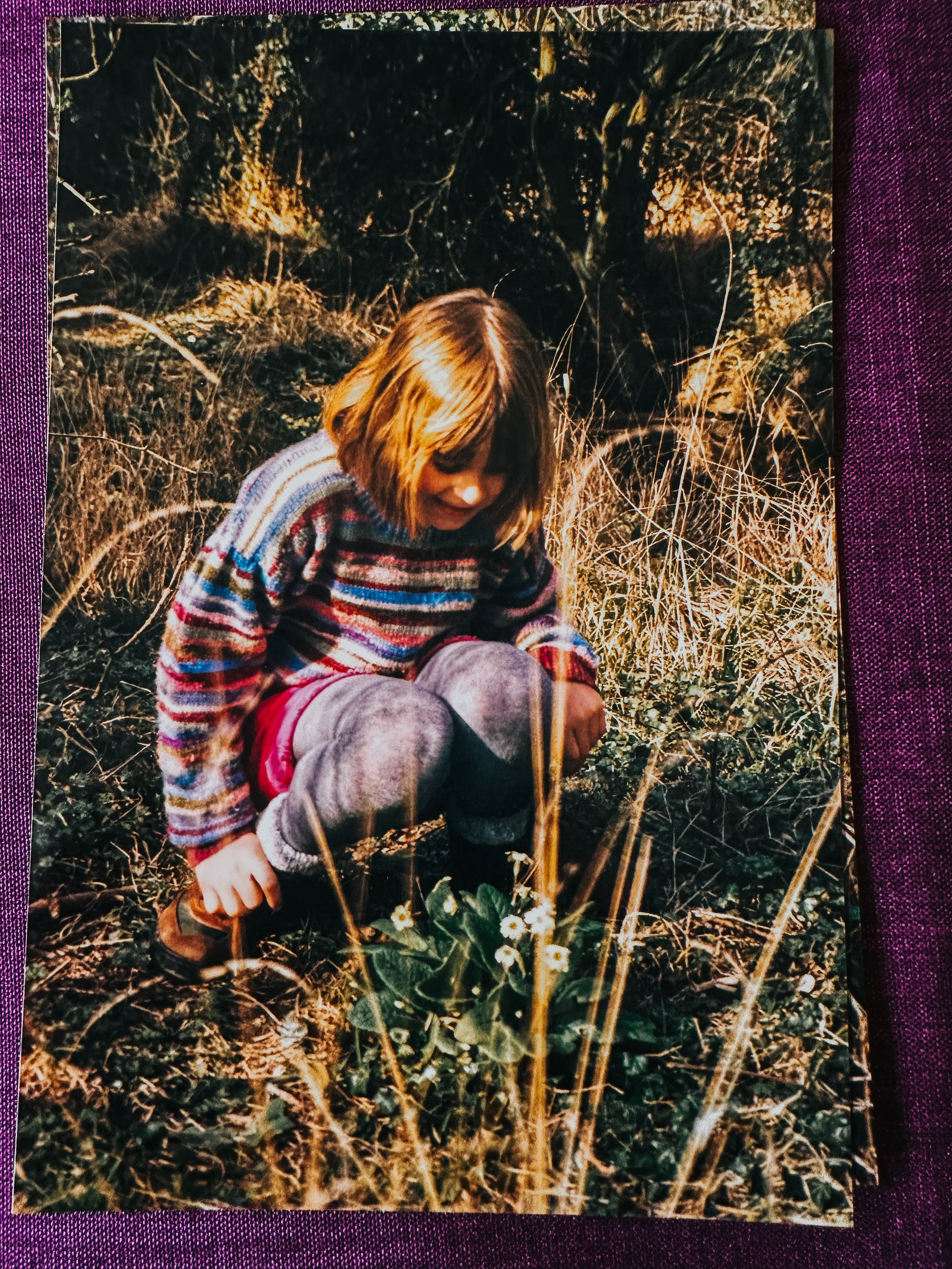
When I was growing up, plant advice came from books, watching Gardeners' World on TV, or asking your grandad to show you the ropes. Whether it was indoor plants or outdoor gardening, knowledge was often passed down through experience and practical advice.
Now, thanks to the internet, plant advice is everywhere. Some of it is brilliant, some of it is questionable, and some of it has gone completely bonkers. Many of the tips and tricks we see shared online started with a grain of truth. The problem is that somewhere along the way, the context got lost.
Advice that was useful for one plant, one situation, or one growing method became a rule that everyone was expected to follow. Suddenly, plant hacks were everywhere, and many of them were being treated as universal truths.
So, I thought it was time to take a closer look at some of the most common houseplant myths. Let's put them back into context, explore where they came from, and figure out what's actually true.
Myth #1: You Should Remove All the Old Soil When Repotting
Okay, so you're either sitting there thinking I'm crazy, or you've seen this advice so many times that you've started to wonder if it's actually true.
Let's unravel it.
You've got your Jungle Floor repotting mat ready, your fresh soil mix prepared, and the perfect pot picked out. You gently squeeze the nursery pot and slide the plant out.
The first question isn't, "Should I remove all this soil?"
The real question is:
Why are you repotting?
Scenario 1: The Plant Is Healthy
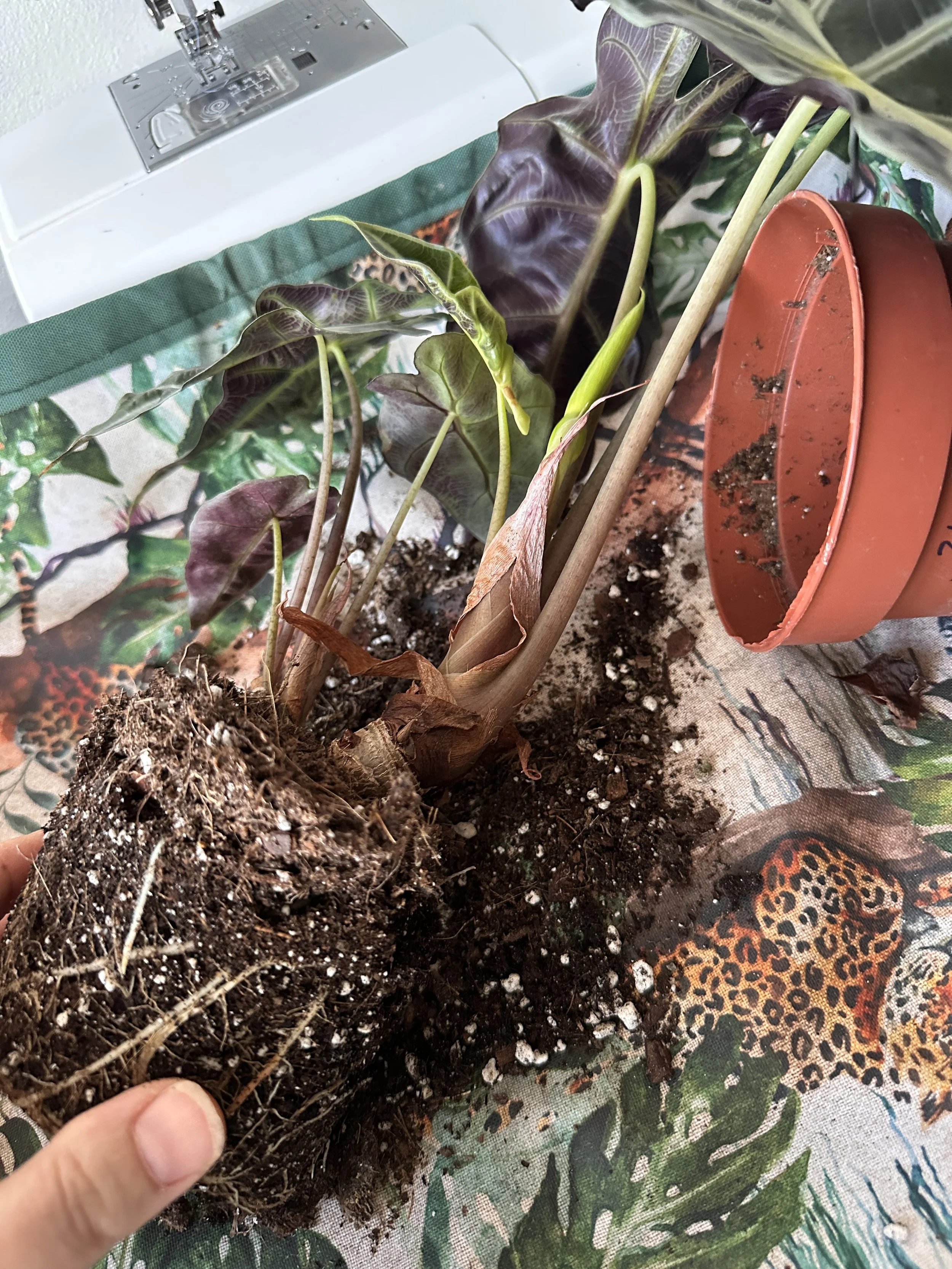
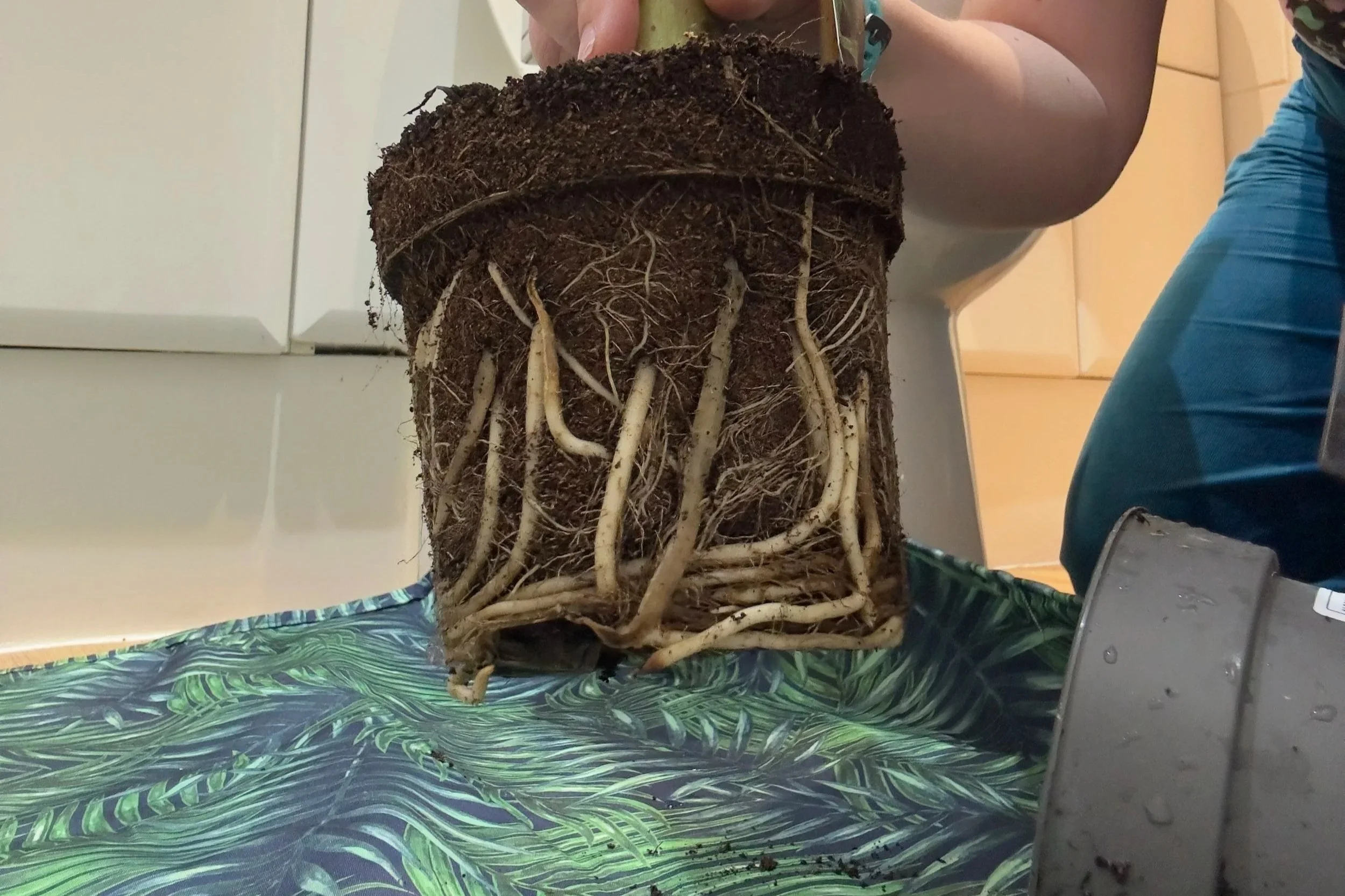
If the roots have simply filled the pot and the plant has become loose because it's outgrown its home, then a standard repot is usually all that's needed.
In this situation, completely removing all the old soil can create unnecessary stress. If the plant is healthy and growing well, it's already telling you it's happy with its current setup. Refreshing some of the potting mix and moving it into a slightly larger pot is often enough.
Scenario 2: The Plant Isn't Happy
Now let's imagine you slide the plant out of the pot and notice something different.
The roots are dry, brittle, and falling away easily. The soil is bone dry and compacted. Or perhaps you spot signs of root rot, stem rot, or a mushy rhizome.
This is where removing more of the old soil can be beneficial.
I often water the plant before repotting because it gives me one less thing to worry about and helps loosen the root ball. Once the roots are hydrated, it's easier to gently shake away old soil and inspect what's really going on beneath the surface.
Even then, slow and gentle is usually best. A cocktail stick can be incredibly useful for teasing away old soil without damaging healthy roots.
Scenario 3: You're Changing Growing Medium
If you're moving a plant from one growing medium to another, such as transferring it into a chunkier aroid mix or a semi-hydro setup, you'll want to remove as much of the old soil as possible.
Soaking the roots can help loosen stubborn soil and make the transition less stressful. But don't panic if a little soil remains attached to the roots. It doesn't have to be spotless.
In many cases, beneficial organisms in the potting mix will help break down any remaining organic matter over time.
The Truth
Removing all the old soil isn't a rule. It's a tool.
Sometimes it's exactly what a plant needs. Other times it's unnecessary stress for an otherwise healthy root system.
The key is understanding why you're repotting in the first place. Once you know the reason, the right approach usually becomes much clearer.
Myth #2: If You Want a Bigger Plant, Put It in a Really Big Pot
I'll happily put my hands up and admit that I used to believe this one.
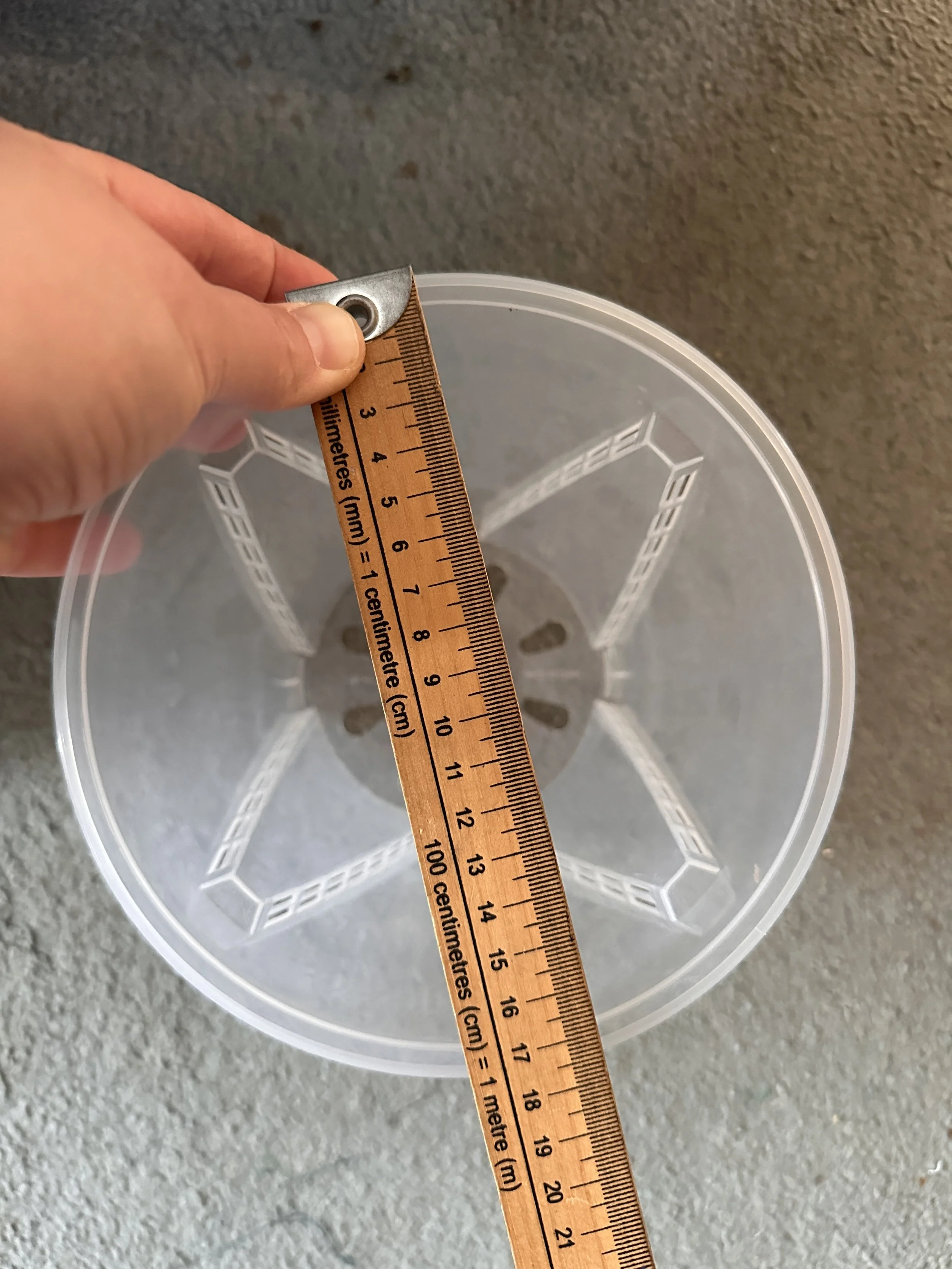
I thought putting a plant into a pot five times larger than its root ball was the secret to huge leaves and explosive growth. After all, if plants need room to grow, surely more room must be better... right?
Well, yes and no.
This myth actually starts with a grain of truth. As plants grow, they do eventually need larger pots. Roots need space to expand, fresh potting mix provides structure and nutrients, and a plant that's become rootbound may well benefit from moving up a size.
The problem comes when we take that idea and run with it.
The Water Problem
When you place a small root ball into a very large pot, the roots can only absorb water from the area they've already grown into.
The rest of the pot is filled with soil that stays wet for much longer.
Think of it like giving a studio flat's worth of roots a mansion to manage.
Every time you water, the plant is trying to use a small corner of the pot while the rest of the compost is still holding moisture. That can make watering much harder to judge and, in some cases, increase the risk of root rot.
Bigger Pots Don't Equal Faster Growth
One of the biggest surprises for me was learning that plants don't instantly fill a larger pot with roots.
-
The RHS recommends sizing up gradually when repotting. For smaller containers, they suggest choosing a pot around 2.5-5cm, or 1-2 inches, deeper and wider than the previous one. The reason isn't that plants hate space. It's that excess compost around a small root system can stay wet for too long, which makes watering harder to manage.
Growth still depends on light, temperature, water, nutrients, and the plant's natural growth rate.
Giving a small plant a huge pot doesn't suddenly persuade it to grow faster. It simply gives it more soil than it can currently use.
What About in Nature?
This is where a lot of the confusion comes from.
Tropical plants aren't wandering around rainforests thinking, "I'd really like to be rootbound."
In the wild, roots often spread through leaf litter, fallen branches, moss, and organic matter over a surprisingly large area.
What makes houseplants different is that we're growing them in containers. Once a plant is living in a pot, we have to think about water retention in a way that nature doesn't.
The Truth
A bigger pot doesn't automatically create a bigger plant.
Most houseplants are happiest when they're gradually moved up in size as they grow, rather than being placed straight into a pot that's dramatically larger than their root system.
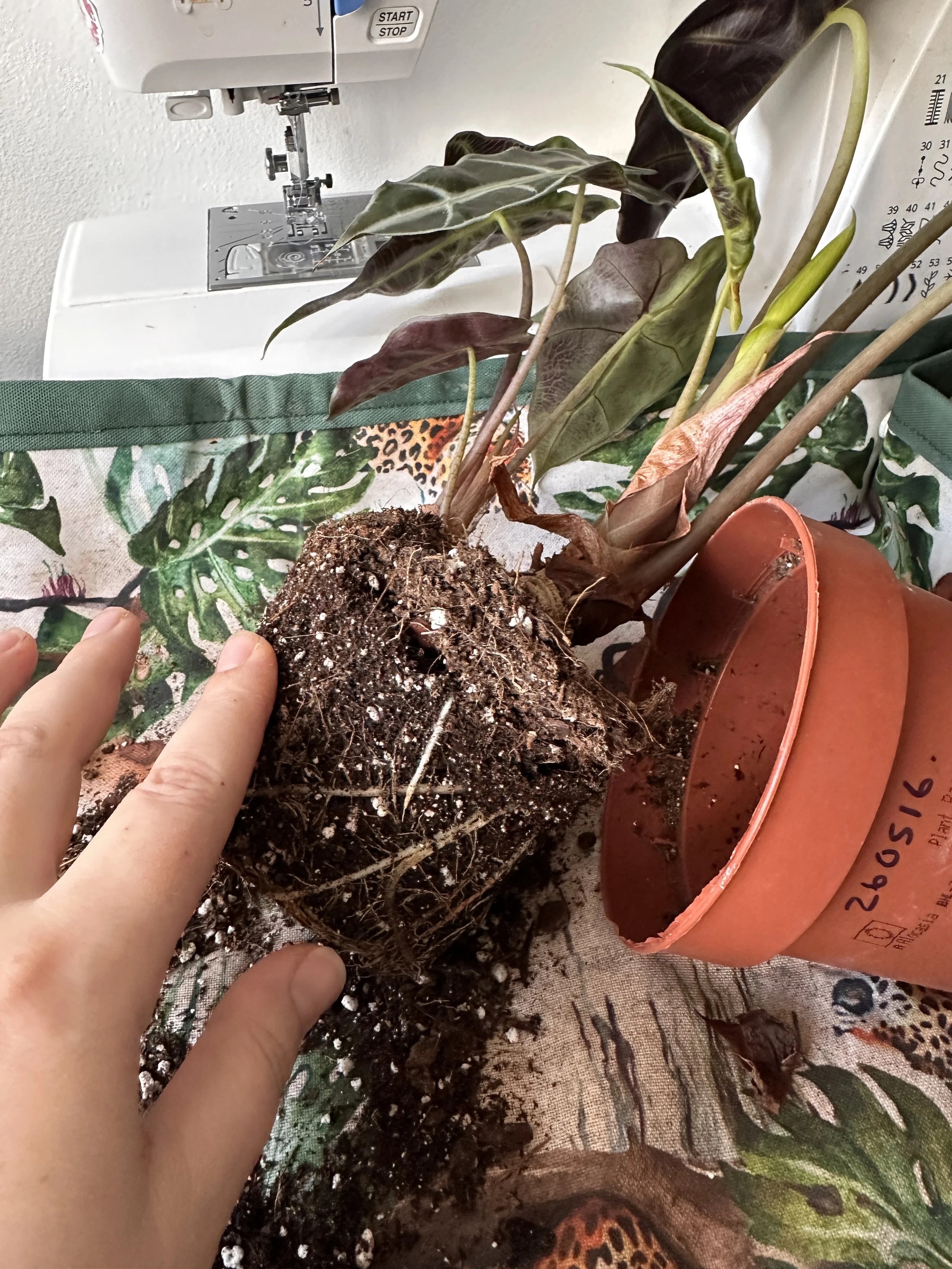
As a general rule, I only move a plant into a pot that's around one or two inches larger than its current root ball or nursery pot. That might not sound like much, especially when you're hoping for huge growth, but it gives the roots room to expand without surrounding them with a huge volume of wet soil.
Of course, there are exceptions. A large, fast-growing Monstera is going to have different needs to a slow-growing succulent. But for most houseplants, sizing up gradually is far easier to manage than jumping straight into a pot that's several times larger than the root system.
So when you're repotting, don't think about giving your plant the biggest house possible.
Think about giving it the right-sized home for the stage it's currently in.
The myth isn't that plants need bigger pots.
The myth is that they need the biggest pot possible right now.
Myth #3: You Must Always Loosen the Roots
This is one of those pieces of advice I've seen repeated so often that many people now treat it as a compulsory step in every repot.
Take the plant out of its pot.
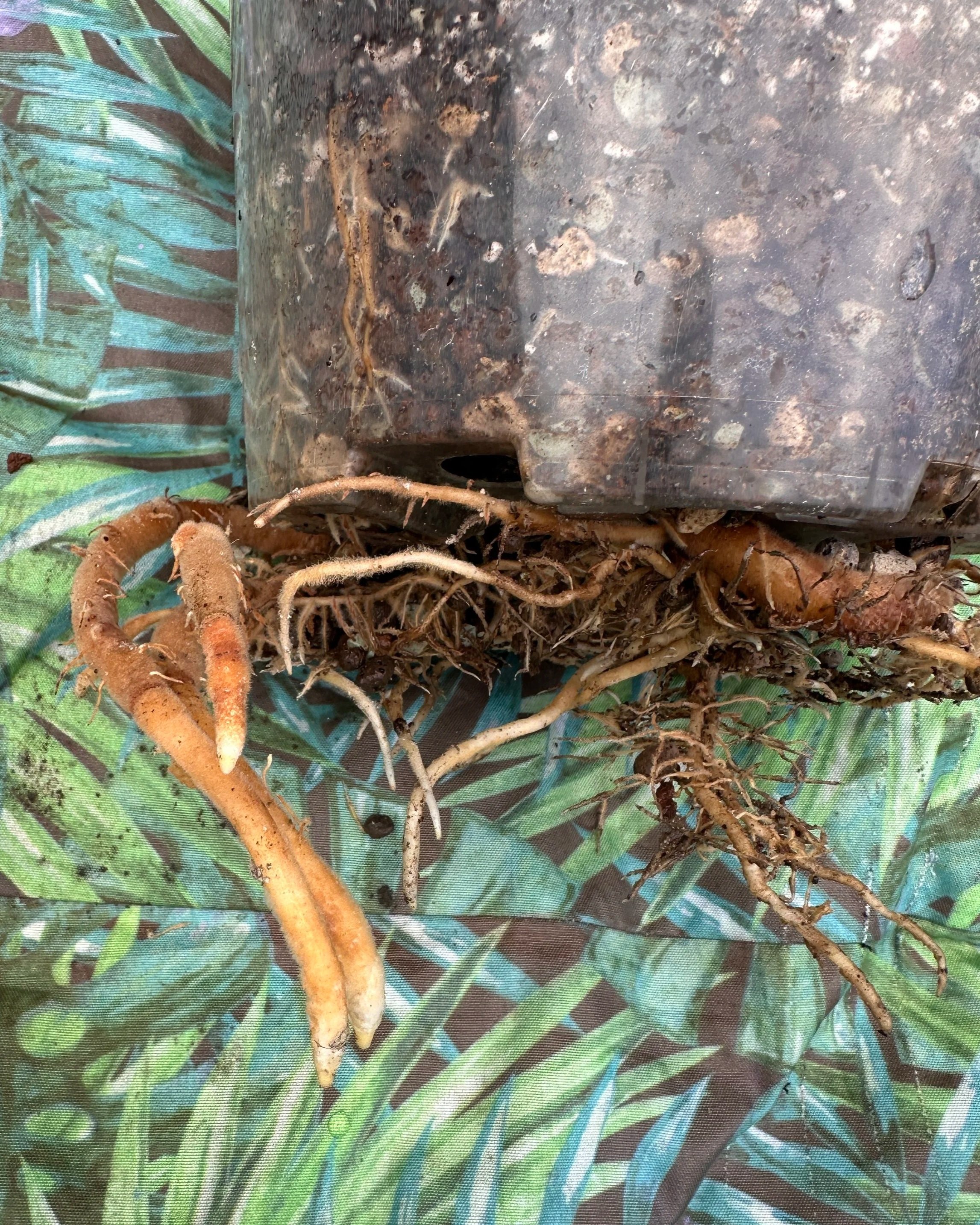
Loosen the roots.
Tease them apart.
Break up the root ball.
Job done.
But is it actually necessary?
Well, not always.
Like many of the myths in this article, this one starts with a grain of truth. If a plant is severely rootbound and the roots have formed a dense mass around the outside of the pot, gently loosening some of those roots can help them spread into the fresh potting mix.
The problem is that somewhere along the way, "sometimes helpful" became "always necessary."
Why Do Roots Circle the Pot?
When roots reach the edge of a pot, they don't stop growing. They simply follow the space available to them, which is why you often see roots circling around the outside of the root ball.
This doesn't automatically mean the plant is struggling.
In fact, many healthy plants will have roots circling the pot simply because they've filled the space they've been given.
Less Can Sometimes Be More
If I take a healthy plant out of its pot and the roots look strong and healthy, I'm often quite happy to leave them largely alone.
A gentle poke with a cocktail stick can help loosen compacted areas of soil, but aggressively pulling roots apart can create unnecessary damage and stress.
After all, the plant has already proven it knows how to grow roots. It doesn't need me to give it a crash course.
What About Plugs?
Sometimes you'll find a propagation plug or nursery plug around the base of the plant.
-
Roots circle a pot because they reach the container wall and continue growing along the available space. This does not automatically mean the plant is unhealthy.
-
A corm is a storage organ. The more developed it is, the more energy it has to support new growth on its own.
In some cases these can restrict root growth or hold moisture differently to the surrounding potting mix, making it worthwhile to remove them
As with most things in plant care, context matters.
What About Corms?
A good example of this is corms, especially if you're an Alocasia collector like me.
I often see advice telling people to remove every corm they find during repotting, but not every corm is ready to leave home just yet.
Many mature corms naturally work their way towards the outside of the root ball and can often be removed with little effort. Those are often the corms telling you they're ready to start life on their own. They've already done much of the hard work and built up the energy reserves they'll need to grow independently.
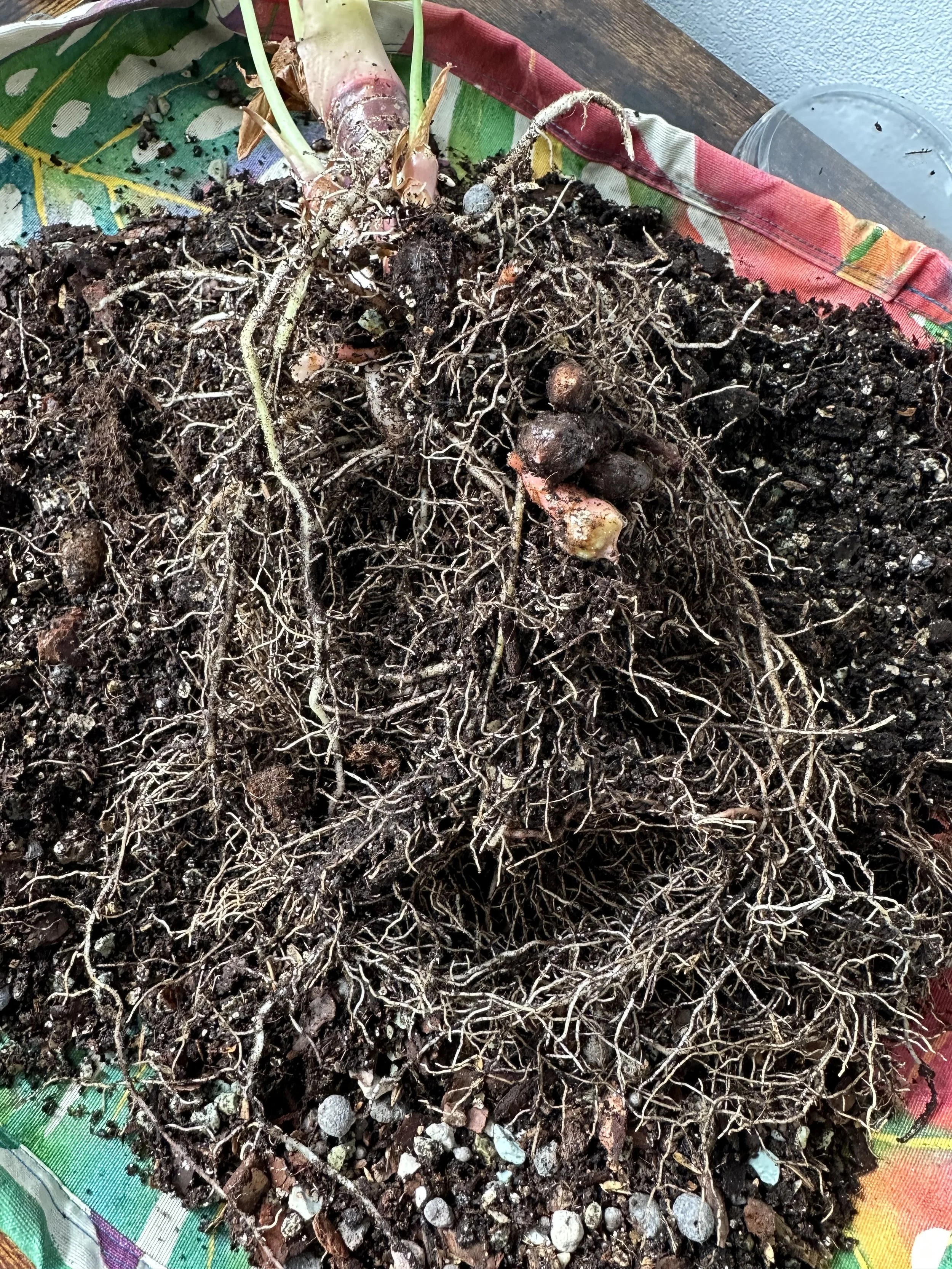
However, if a corm is still firmly attached to the mother plant, there may be a reason for that. It is still building up energy reserves and benefiting from its connection to the parent plant.
Removing it too early doesn't necessarily harm the mother plant, but it can leave you with a corm that struggles to establish itself because it simply wasn't ready yet.
Sometimes the best thing you can do is leave it where it is and let nature finish the job.
The Truth
Loosening roots isn't a rule. It's a tool.
If a plant is severely rootbound, compacted, or struggling, gently loosening the roots may be helpful.
But if the roots are healthy and the plant is thriving, there's often no need to wage war on the root ball before repotting.
The same goes for corms. A loose, well-developed corm is telling you one story. A tiny corm that is still firmly attached is telling you another.
Whether it's roots, nursery plugs, or corms, the answer isn't always found in a checklist.
The best growers learn to observe first and act second.
The trick is learning to read what the plant is telling you rather than following a fixed rule.
Myth #4: Rocks and Clay Balls Improve Drainage
This is one of those pieces of plant advice that has been around for so long that most of us have probably followed it at some point.
Add rocks to the bottom of the pot.
Add gravel.
Add clay balls.
Instantly better drainage.
Simple.
Or is it?
Like many plant myths, this one has its roots in reality.
Where Did This Advice Come From?
For years, gardeners were told that adding a layer of rocks, gravel, broken terracotta, or clay balls to the bottom of a pot would improve drainage and keep roots away from excess water.
It sounds perfectly logical.
Water drains through the soil, collects below, and the roots stay safely above it.
The problem is that soil doesn't always behave the way we imagine it does.
Potting mix holds onto moisture through capillary action. In simple terms, water doesn't always drop neatly from the soil into the layer below like rain falling through a sieve. Sometimes it is held within the potting mix above the drainage layer instead.
This is where the idea of a perched water table comes in. The wettest part of the potting mix can sit above the coarse layer, rather than disappearing safely below it.
In other words, adding rocks doesn't automatically create a dry zone for roots.
It can also reduce the amount of usable growing space in the pot because part of the container is now filled with rocks instead of soil and roots.
But The Science Is More Nuanced Than That
This is where things get interesting.
Older horticultural advice often warned against drainage layers because they can interfere with how water moves through potting mix.
However, newer research suggests the picture is not quite as simple as "rocks are always bad." A 2025 study looking at drainage layers and potting media found that drainage layers can affect water retention, but the results depend on things like the type of potting mix, the material used for the drainage layer, and how deep that layer is.
So the science doesn't really say, "Never use rocks."
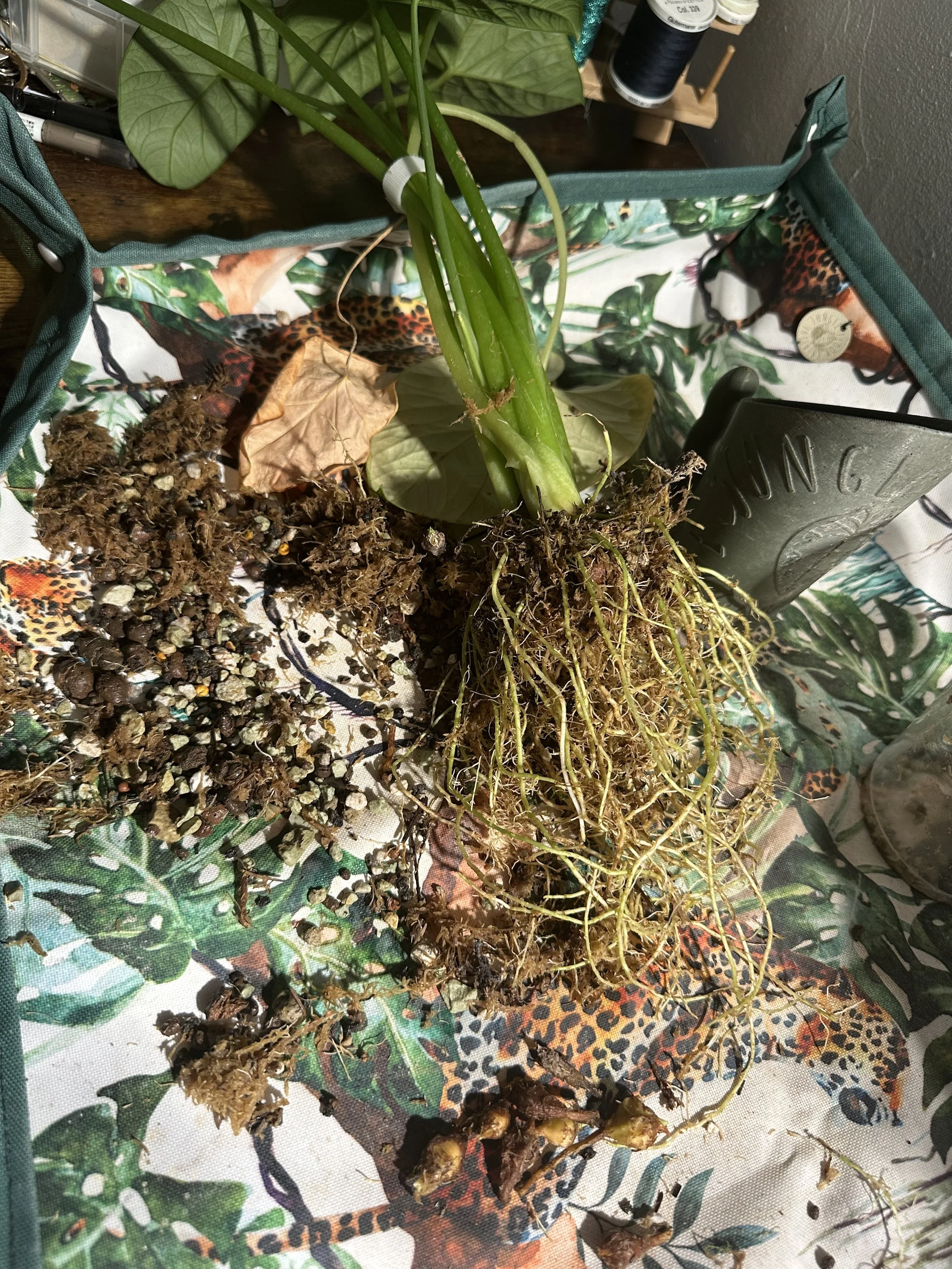
It says, "Understand what job you think they are doing."
And that is a very different thing.
So Are Rocks and Clay Balls Useless?
Not necessarily.
This is where context starts to matter.
One thing I've learned from growing plants over the years is that very few techniques are completely right or completely wrong.
I grow a lot of Alocasia, and I'm always experimenting with different growing methods, potting mixes, and growing mediums. Not because an influencer told me to, but because I'm genuinely curious about what works and why.
One of the challenges with plant advice online is that it can sometimes feel like plant advice telephone. A tip gets shared, then reshared, then simplified, until nobody remembers where it came from or what problem it was originally trying to solve.
That's when a technique becomes a rule.
And that's usually where the trouble starts.
What About Pots Without Drainage Holes?
One place where I do use clay balls is in pots without drainage holes.
Now before the comments section starts sharpening its pitchforks, hear me out.
I don't use them because I believe they're magically improving drainage. Technically, if there is no drainage hole, the water isn't draining anywhere. It is still inside the pot.
What the clay balls can do is create a reservoir area below the soil line.
When watering, I often add water slowly down the side of the pot at an angle rather than pouring directly over the entire surface. I've found this allows me to introduce water more gradually to the lower part of the pot without immediately soaking all of the potting mix at once.
-
Potting mix holds water through capillary action, which means water does not always fall neatly into a drainage layer below. This is why rocks or clay balls do not automatically create a dry zone for roots.
Source: UC Master Gardenerstext goes here -
Newer research suggests drainage layers can affect water retention, but the results depend on the potting mix, the drainage material, and the depth of the layer. In other words, context really does matter.
Source: Rowe, 2025, PLOS One
Does that mean the soil above stays completely dry? No. Water will still move through the potting mix over time.
What I have found, however, is that it gives me a little more control over how moisture is distributed within the pot. For some plants and some growing setups, that can be useful.
Would I do this in every pot? No.
Would I recommend it as a universal solution to drainage problems? Definitely not.
It's simply a technique that works for me in certain situations.
What About Humidity?
Another reason people use clay balls is to create a little extra humidity around the plant.
If water is sitting in the reservoir below the soil or beneath a nursery pot, some of that water will evaporate. So yes, technically, it can add a small amount of moisture to the air immediately around the plant.
But I wouldn't treat it as a magic humidity machine.
In most homes, especially once heating is on, that moisture can disappear into the room very quickly. It may help a little in the tiny microclimate around the pot, but it won't turn your living room into a tropical glasshouse.
The Truth
The best drainage usually comes from a combination of:
A pot with drainage holes
A suitable potting mix
Appropriate watering habits
Rocks and clay balls aren't magic drainage boosters.
They may have uses in specific situations, especially if you're experimenting with different growing methods, semi-hydro setups, cachepots, or pots without drainage holes. But they aren't a cure-all for poor watering habits or unsuitable soil mixes.
Just like every other myth in this article, the problem isn't that the original advice was completely wrong.
The problem is that a technique designed for one situation became a rule that everyone was expected to follow.
Context matters.
#5 Every Houseplant Needs Repotting Every Spring
Myth #5: Every Houseplant Needs Repotting in Spring
Okay, this is another one of those plant rules that sounds sensible at first.
Repot in spring.
Only repot in spring.
Spring is repotting season.
And yes, there is a reason this advice exists.
For outdoor gardening, spring often makes sense. The days get longer, temperatures rise, and many plants start waking up after winter. Growth becomes more active, roots begin moving again, and plants are generally better placed to recover from being disturbed.
You see this with bulbs, garden plants, and seasonal growers. Some plants really do have a clear growing season, and timing matters.
But houseplants are a little different.
Your indoor jungle doesn’t always run on the same clock as the garden outside.
If your plants are growing under grow lights, living in a warm room, sitting in a cabinet, or kept in a fairly consistent environment all year round, they may not follow the traditional spring-and-winter routine quite so neatly.
You might find a plant needs potting up in autumn.
You might discover roots bursting out of the drainage holes in winter.
You might have an Alocasia growing happily under lights while the weather outside is doing its usual grey British performance.
So does spring matter?
Yes, sometimes.
But is spring the only time you can repot?
No.
The Truth
Not every houseplant needs repotting in spring, and not every houseplant needs repotting every year.
The better question is not, “Is it spring?”
The better question is, “Is this plant ready?”
-
Plants respond to their growing conditions, not just the calendar. Light, temperature, moisture, nutrients, and the plant’s own growth cycle all influence when it is actively growing. Spring is often useful because natural light increases, but indoor growing setups can extend or shift that growing period.
Signs your plant may need repotting include:
Roots growing out of the drainage holes
Water running straight through the pot
The plant drying out much faster than usual
Roots circling tightly around the pot
The potting mix breaking down or becoming compacted
The plant becoming unstable in its pot
Spring can be a brilliant time to repot, especially if your plant is starting to grow again.
But if your indoor jungle is actively growing at another time of year, and the plant is clearly telling you it needs more space, then it may not care what month it is.
Plants don’t run on our calendars.
They run on their own little leafy clocks.
Myth #6: Coffee Grounds Are Great for Houseplants
This is one of those plant hacks that seems to come back around every few months.
Sprinkle coffee grounds on your houseplants.
Mix them into the soil.
Use them as fertiliser.
Keep pests away.
Make your plants grow wild and wonderful.
It sounds harmless enough. After all, coffee grounds are natural, and surely adding something natural to soil must be good?
Well, not always.
Like many plant myths, this one has its roots in reality. Coffee grounds can be useful, but usually not in the way people think.
The Compost Context
Used coffee grounds contain organic matter and small amounts of nutrients, including nitrogen. That makes them useful in composting, especially when mixed with plenty of carbon-rich materials like dry leaves, cardboard, bark, or paper.
But there is a big difference between adding coffee grounds to a compost heap and sprinkling them directly onto the top of a houseplant pot.
A compost heap is full of microbial activity. Things break down, change, heat up, cool down, and eventually become a much more balanced material.
A houseplant pot is not a compost heap.
It's a much smaller, more controlled environment, and adding a layer of coffee grounds can sometimes create more problems than benefits.
The Problem With Houseplants
When coffee grounds are added directly to indoor pots, they can form a dense layer on the surface of the soil.
That layer can hold moisture, restrict airflow, encourage mould, and make watering harder to judge.
And if you already struggle with fungus gnats, damp soil, or plants that hate sitting wet, adding coffee grounds may not be the leafy miracle you were hoping for.
-
Research suggests that uncomposted coffee grounds are not the same as a ready-to-use fertiliser. They may contain compounds that can affect plant growth, especially when used in large amounts or before they have properly broken down.
Composted coffee grounds are a different story. Once broken down, they can become part of a useful soil amendment.
In short: coffee grounds are usually better in the compost than straight onto your houseplants.
-
UC Master Gardener material says uncomposted coffee grounds are not a nitrogen fertiliser and recommends combining used grounds with compost rather than applying them directly.
-
Oregon State University explains that used coffee grounds are close to pH neutral after brewing, not strongly acidic, and that they provide only modest nutrition rather than enough nutrients to fully feed plants. They also mention caffeine research relating to slugs and snails.
-
The RHS says spent coffee grounds can add organic matter and small amounts of nutrients, including nitrogen, phosphorus, potassium and magnesium. However, their effect on soil pH is minor and temporary, and they are best used in small quantities or composted first.
It can turn the top of the pot into a tiny composting experiment, and your Calathea did not sign a consent form for that.
But Aren't Coffee Grounds Acidic?
This is another part of the myth that gets repeated a lot.
People often say coffee grounds are good for acid-loving plants because coffee is acidic.
But once coffee has been brewed, used coffee grounds are usually much closer to neutral than people expect. So they are not a reliable way to acidify soil for plants that prefer lower pH.
Again, the advice started with a little truth, then wandered off into the jungle without a map.
What About Slugs and Snails?
This is where coffee grounds do have some interesting research behind them.
Caffeine can affect slugs and snails, and research has shown that caffeine solutions can be harmful to them.
But that doesn't mean a sprinkle of used coffee grounds around a pot is a guaranteed slug forcefield.
Outdoors, rain, watering, soil type, and how much caffeine is actually left in the grounds all change how effective they might be. Indoors, slugs and snails are not usually the main problem for most houseplants anyway.
The Truth
Coffee grounds are not useless.
They are just not a magic houseplant fertiliser.
If you want to use them, composting is usually the better route. Let them break down properly, mix them with other materials, and use the finished compost as part of a balanced approach.
For houseplants, I would rather use a suitable potting mix and a proper fertiliser than guess what my plant is getting from yesterday's coffee.
The myth isn't that coffee grounds can never be useful.
The myth is that every houseplant wants a cappuccino sprinkled on its roots.
Myth #7: Banana Peel Water Is a Miracle Fertiliser
This is one of those plant hacks that sounds almost too wholesome to question.
Eat a banana.
Pop the peel in water.
Leave it to soak.
Water your plants.
Instant natural fertiliser.
Lovely, right?
Well, sort of.
Like many plant myths, this one has its roots in reality. Banana skins do contain nutrients, including potassium, magnesium, calcium and phosphorus. Potassium is important for plants, especially when it comes to water movement, overall plant health and flowering or fruiting.
So the idea itself didn't appear from nowhere.
The problem is what happens when that idea gets simplified into: "banana water will feed your houseplants."
Compost Is Not the Same as Banana Water
Banana skins can be useful when they are allowed to break down properly.
In compost, they become part of a bigger process. Microbes, fungi, moisture, air and time all work together to turn organic waste into something more useful for plants.
But soaking a banana peel in a jar of water for a few days is not the same thing as composting.
-
Banana skins contain useful nutrients, but homemade banana peel water is unpredictable. The nutrient levels depend on the peel, the amount of water, how long it is soaked, and how it is stored.
In short: banana peel water may be a very mild feed, but it is not a balanced fertiliser.
You may extract a small amount of nutrients into the water, but you don't really know how much. You also don't know whether the final liquid is balanced, strong enough to do anything useful, or starting to become a tiny swamp potion on your windowsill.
And as magical as swamp potion sounds, I'm not sure my Alocasia asked for it.
The Houseplant Problem
For outdoor garden plants, a very diluted homemade feed may not cause much trouble, especially if it is watered into the soil.
Houseplants are different.
They are growing in a small pot, often indoors, with limited airflow and carefully managed moisture. Adding sugary, decomposing plant liquid can encourage mould, bacteria, fungus gnats or unpleasant smells.
That doesn't mean one splash of banana water will destroy your plant.
But it does mean I wouldn't treat it as a regular houseplant fertiliser.
What I’d Do Instead
If you want to use banana skins, I would add them to compost rather than soaking them for houseplants.
Let them break down properly first.
If your plant genuinely needs feeding, use a balanced fertiliser that tells you what nutrients it contains and how much to use.
That way you're not guessing what your plant is getting from a banana peel in a jar.
The Truth
Banana skins are not useless.
Banana peel water just isn't the miracle fertiliser social media sometimes makes it out to be.
The myth isn't that banana skins contain nutrients.
The myth is that soaking them in water creates a complete, reliable plant feed for every houseplant.
Once again, context matters.
A Few Other Plant Myths That Lost Their Context
Of course, these are not the only plant myths floating around the internet.
Once you start noticing them, they seem to pop up everywhere like fungus gnats after one overenthusiastic watering.
Here are a few honourable mentions.
Ice Cubes Are a Good Way to Water Plants
-
Ice Cubes Are a Good Way to Water Orchids
This one always makes me pause because, honestly, why are we putting frozen water on a tropical plant?
The context usually comes from Phalaenopsis orchids, the common houseplant orchid often sold in supermarkets and garden centres. The idea was to make watering feel simple and measurable: a few ice cubes, once a week, slowly melting into the bark.
There has even been research showing that controlled ice cube watering did not reduce plant quality in potted Phalaenopsis orchids grown in bark.
But that is the key bit: Phalaenopsis orchids, in bark, with a controlled amount of ice.
Somewhere along the way, that specific advice became a viral plant hack.
The myth is not that one ice cube will instantly kill every orchid.
The myth is that frozen water is the best way to water tropical houseplants.
-
Research on potted Phalaenopsis orchids grown in bark found that controlled ice cube watering did not reduce display life or plant quality. But this evidence is specific to Phalaenopsis orchids in bark, not all tropical houseplants. Sources: Ohio State University and HortScience.
-
Flowers Are Bad for the Plant's Energy
This is one I see a lot with Alocasia.
As soon as an Alocasia produces an inflorescence, people often panic and say to cut it off so the plant can put its energy back into leaves.
I understand where the idea comes from. Flowers do take energy to produce, and if you grow Alocasia mainly for the foliage, it can feel frustrating when the plant suddenly decides to make blooms instead of leaves.
But this is another myth that has lost its context.
Alocasia breeder and aroid grower LariAnn Garner has explained that flowering is driven by internal hormonal processes and environmental triggers. In other words, once the plant has entered a flowering cycle, cutting off the bloom does not simply switch the plant back into leaf mode.
The plant may still continue trying to flower, and if the inflorescence is removed too early, it may lose the chance to recycle some of the nutrients from that structure as it naturally fades.
So no, I wouldn't panic-cut Alocasia flowers just because someone online said they are stealing energy.
For me, if the plant is healthy, I let the inflorescence do its thing and remove it once it has naturally died back.
The myth isn't that flowers use energy.
The myth is that cutting them off always gives that energy back to the leaves.
-
Alocasia inflorescences are part of the plant's natural reproductive cycle. According to Alocasia breeder LariAnn Garner, removing blooms does not stop the internal flowering cycle that has already begun. Letting the bloom fade naturally may allow the plant to recycle some nutrients before it dies back.
This one is often linked to orchids, but most tropical houseplants are not asking for tiny frozen boulders on their roots.
For most plants, room-temperature water and a proper watering routine are far better.
Flowers Are Bad for the Plant's Energy
Flowering does take energy, but that does not automatically make it bad.
For many plants, flowering is a sign that they are mature, healthy, or responding to their environment. You might remove flowers if you want the plant to focus on foliage, but blooms are not automatically a problem.
Mayonnaise Makes Leaves Healthy and Shiny
Mayo might make leaves look shiny for five minutes, but it can also leave a greasy coating that attracts dust and may interfere with the leaf surface.
A damp cloth is usually a much better option.
Misting Dramatically Increases Humidity
Misting can temporarily wet the air and leaf surface, but it does not usually raise humidity for long.
If a plant genuinely needs higher humidity, a humidifier, cabinet, grouped plants, or a more suitable growing environment will usually make a bigger difference.
Yellow Leaves Always Mean Overwatering
Yellow leaves can mean many things: overwatering, underwatering, low light, old leaves naturally dying off, nutrient issues, temperature stress, pests, or root problems.
The yellow leaf is not the answer.
It is the plant asking you to investigate.
Final Thoughts: Context Matters
The more I look at houseplant myths, the more I realise that most of them did not appear from nowhere.
They usually started as advice for a specific plant, a specific problem, or a specific growing setup.
Remove old soil if there is rot.
Size up your pot when the roots need more room.
Loosen roots if they are severely compacted.
Use clay balls if they are part of a growing method you understand.
Compost coffee grounds and banana skins instead of treating them like instant plant magic.
The problem starts when that context disappears.
A useful technique becomes a rule.
A small experiment becomes a hack.
A bit of gardening wisdom gets passed around until nobody remembers what it was originally trying to solve.
And that is where plant care can become confusing.
For me, good plant care is not about following every rule perfectly. It is about learning to notice what your plant is actually telling you.
Is it actively growing?
Are the roots healthy?
Is the potting mix still working?
Is the plant drying out too quickly, staying wet too long, or looking unstable in its pot?
Those questions will usually teach you far more than a one-size-fits-all plant hack ever could.
So the next time you see a piece of houseplant advice online, maybe pause before adding it to your routine.
Ask where it came from.
Ask what problem it is trying to solve.
Ask whether it applies to your plant, your pot, your home, and your growing setup.
Because the truth is, plants do not need us to follow myths.
They need us to pay attention.
And that is where the real magic of growing begins.
Whether you're refreshing soil, checking roots, rescuing a struggling plant, or just having a nosey at what's happening below the surface, repotting is one of the best ways to understand your plants better.
And of course, having a good repotting setup makes the whole process much less chaotic.
So grab your potting mix, choose the right-sized pot, roll out your Jungle Floor Creative repotting mat, and let the plant show you what it needs.