Understanding Begonias: From Forest Floor to Stone (And How to Care for Them Indoors)
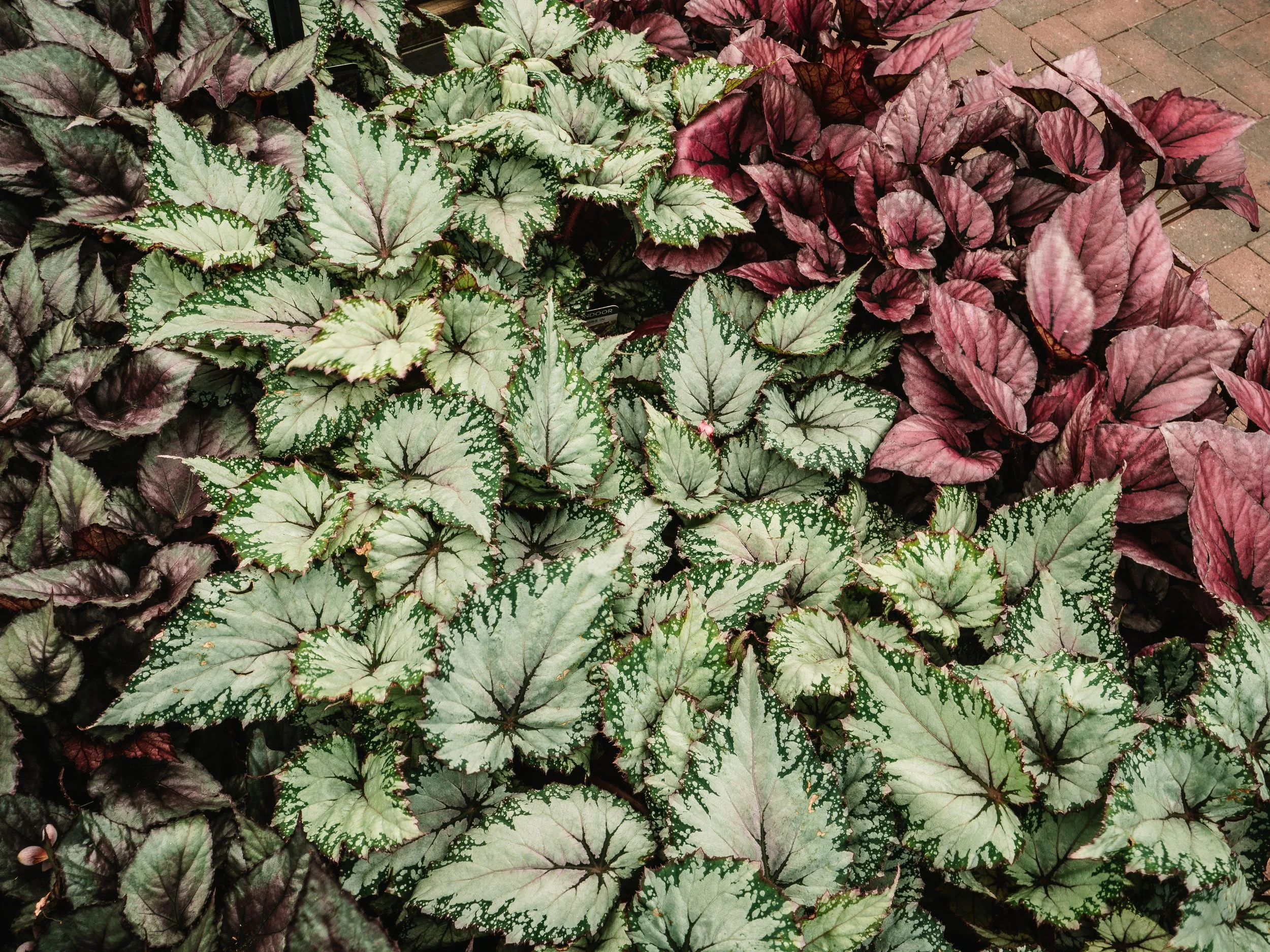
It’s easy to read the care tags that come with plants, but they rarely tell the full story, and can often leave you more puzzled than before.
🌿 Understanding your begonia’s world
It’s easy to read the little care tag that comes with a plant… but if you’ve ever stood there thinking “okay, but why?” — you’re not alone.
Begonias don’t all come from the same place, and that’s where things get interesting.
Some grow low along soft forest floors, others stretch upwards through the understory, and some cling to rock where soil barely exists at all. So when we try to care for them all in the same way, it’s no surprise things don’t always go to plan.
According to the Royal Botanic Garden Edinburgh, there are over 2,200 species of Begonia, found across tropical and subtropical regions of Central and South America, Africa, and Asia. But what really matters isn’t just where they grow, it’s how they grow once they’re there.
Each begonia carries a little piece of its environment with it. And once you start to notice that, care becomes a lot less confusing.
In this blog, I want to simplify things by looking at three main environments:
🌱 Forest floor
🌿 Vertical understory
🪨 Limestone and rocky habitats
From these, we can understand the three most common types of begonia you’ll come across indoors:
Rhizomatous / Rex
Cane begonias
Limestone and rocky types
I’ll share what I’ve learned through research, along with my own experience growing them, so you can start to read your plant a little differently.
Because once you understand where a begonia comes from, caring for it stops feeling like following rules… and starts feeling more like a conversation.
🌱 Forest floor (Rhizomatous / Rex begonias)
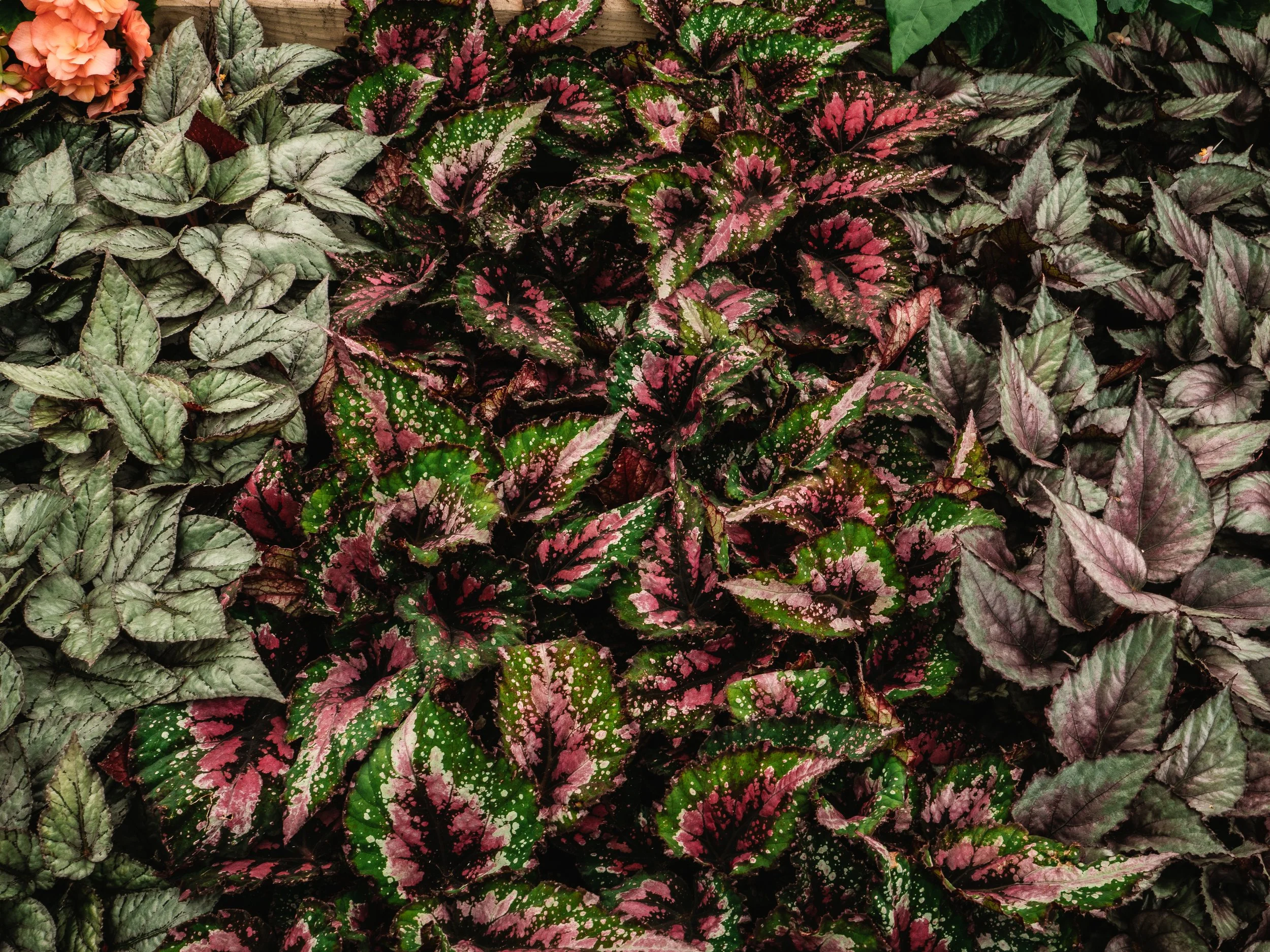
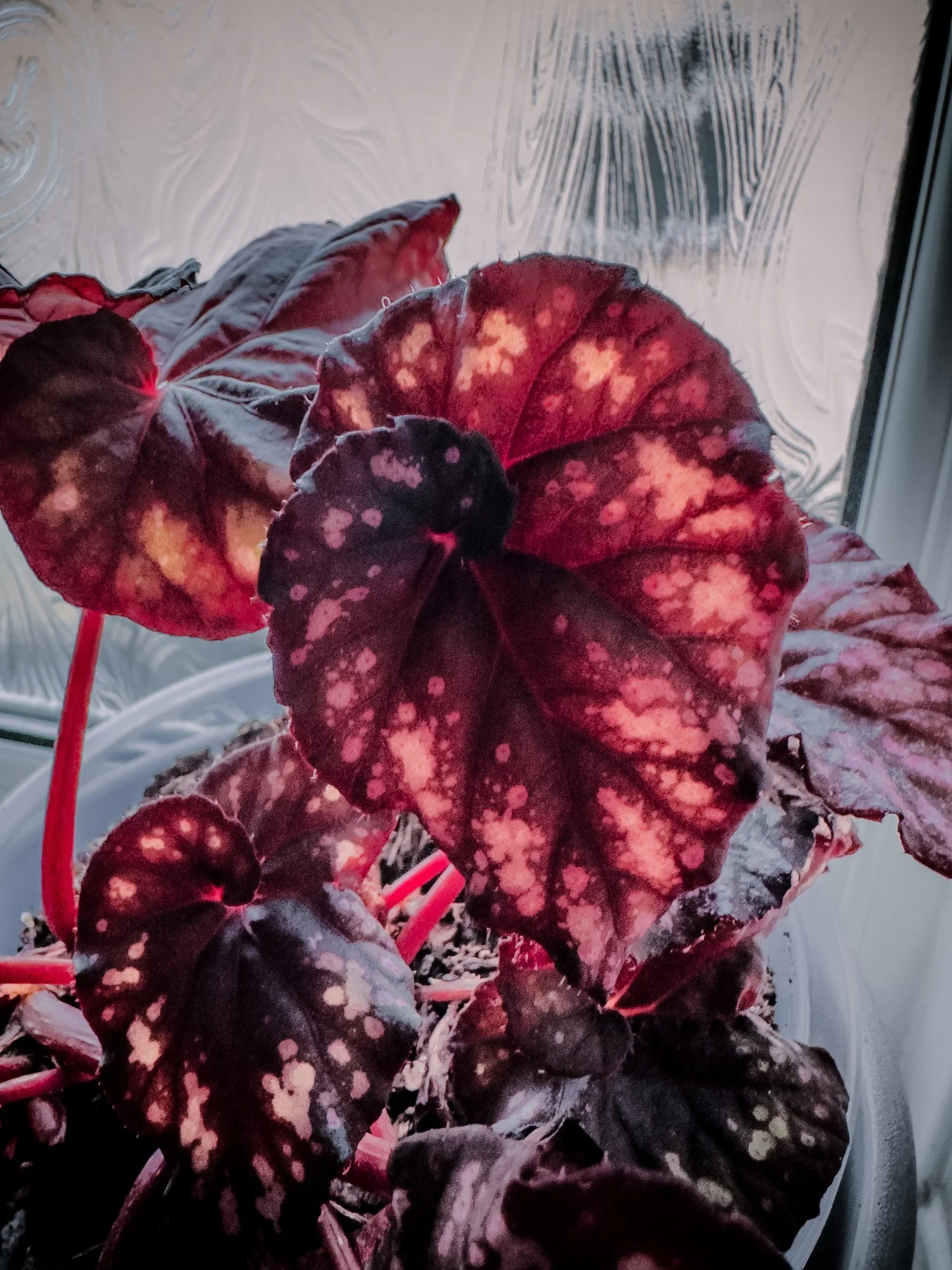
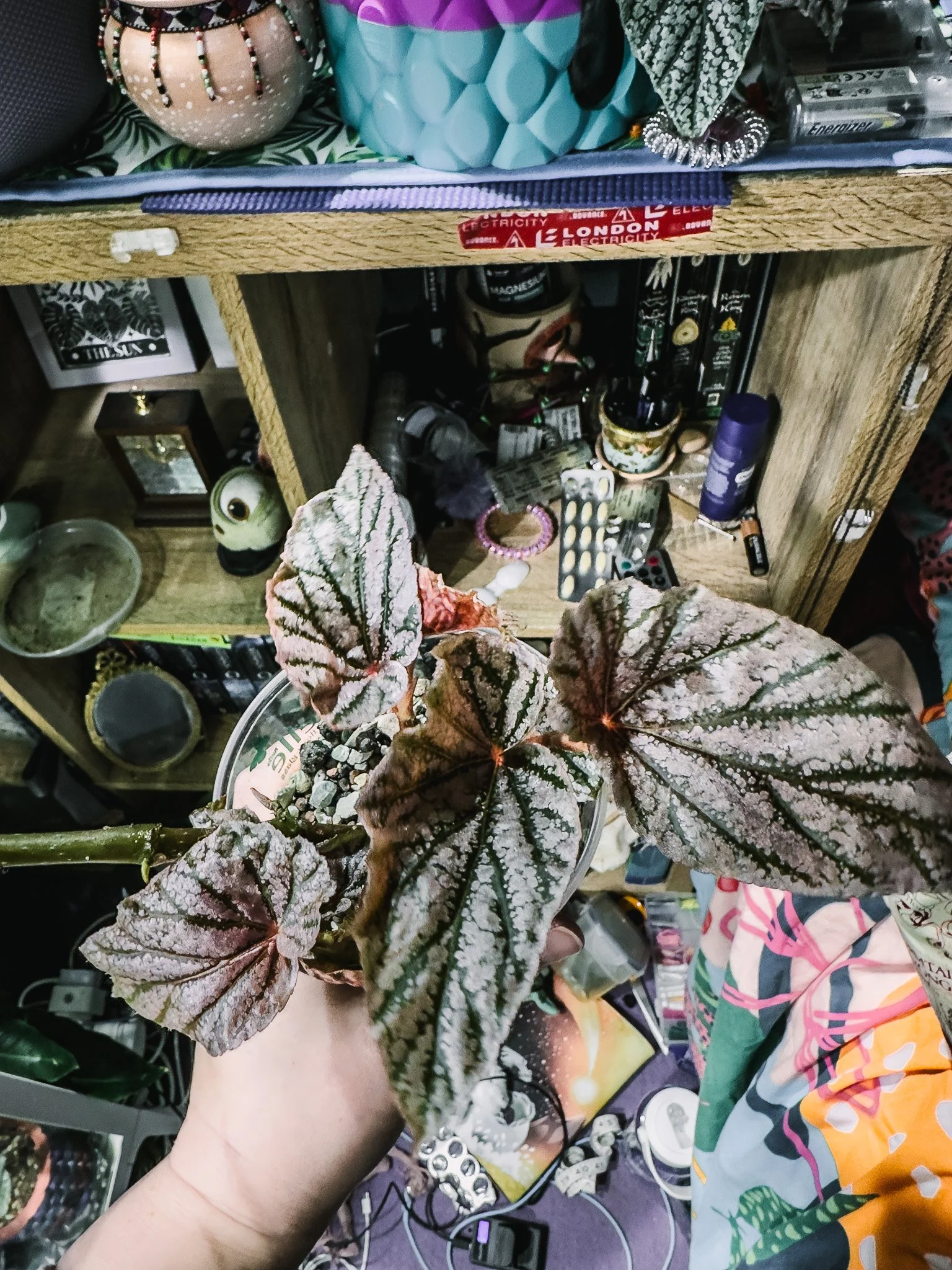
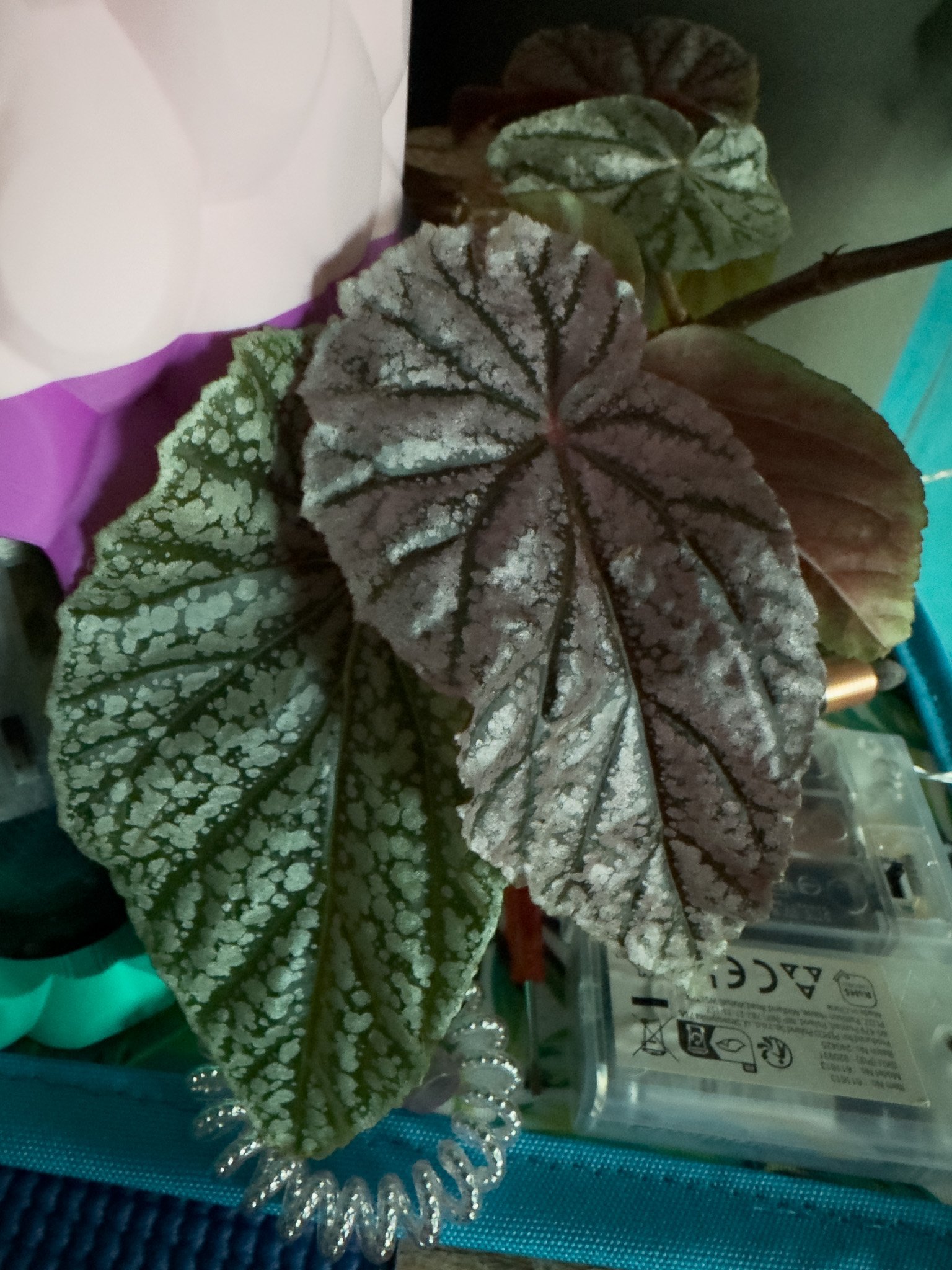
Rhizomatous and Rex-type begonias are some of the most striking indoor foliage plants, grown for their beautifully patterned, often shimmering leaves in a wide range of colours.
These begonias grow from a creeping rhizome, which sits along or just above the surface of the soil, creating a compact, spreading form.
In the wild, many originate from regions such as the eastern Himalayas, where they grow along shaded forest floors and sloped terrain, often in loose organic matter over rock. These environments provide excellent drainage while still holding gentle, consistent moisture.
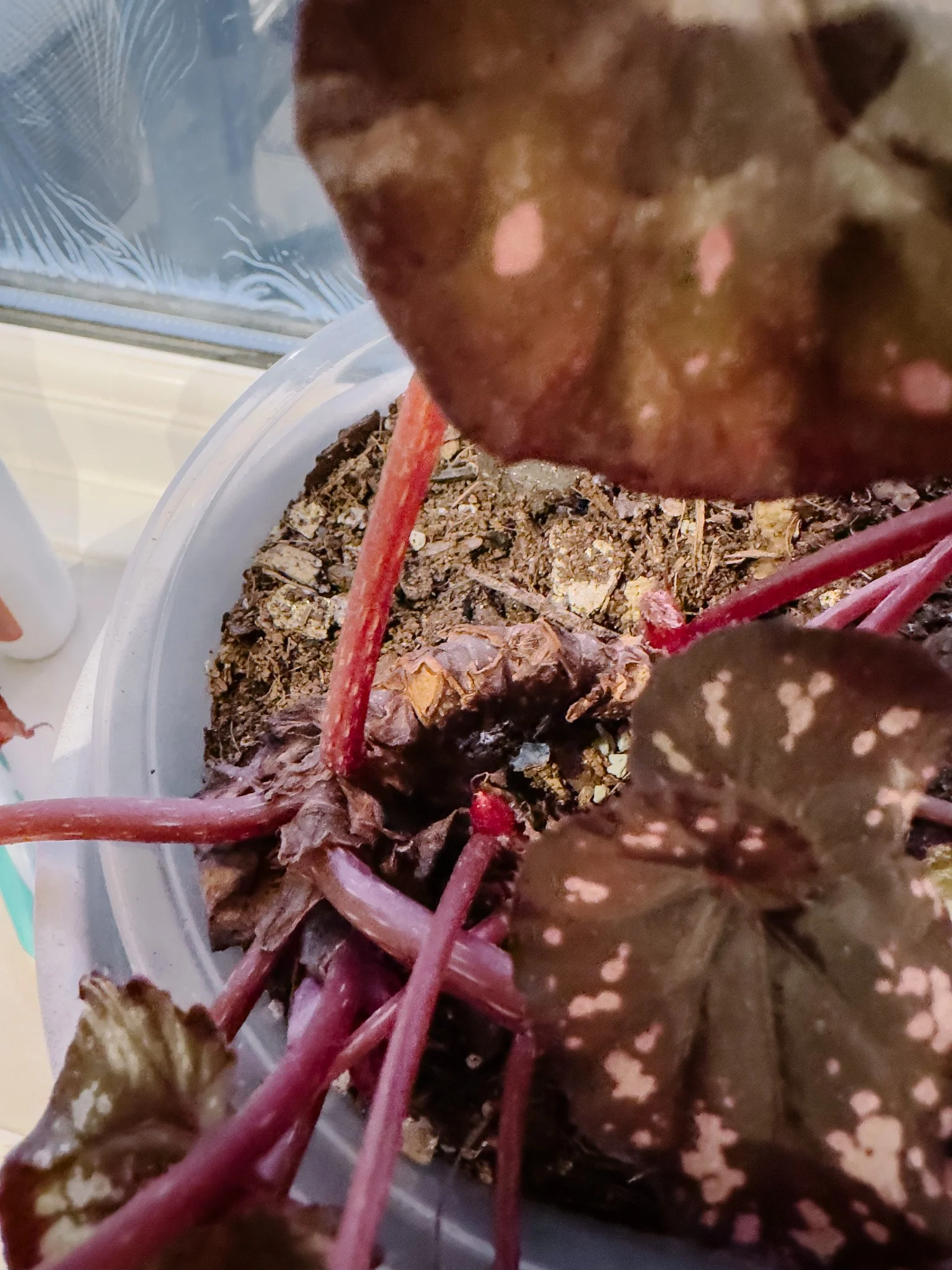
This gives us an important clue to their care: they prefer a well-draining, airy soil mix and dislike sitting wet, especially around the crown, which can lead to rot.
During winter, when light levels and temperatures drop, their growth naturally slows. If you’re unable to provide consistent warmth and bright light, it’s best to reduce watering slightly. Keep the soil lightly moist, but avoid letting it become waterlogged or completely dry.
🌿 Why they work so well as houseplants
Rhizomatous begonias are loved for their texture, detail, and variety. They tend to stay more compact than cane types, making them ideal for:
shelves
terrariums
bright bathrooms
smaller indoor plant spaces
They bring that forest floor softness into your home, grounding a space rather than reaching through it.
Some well-known and much-loved varieties include:
‘Escargot’
‘Fireworks’
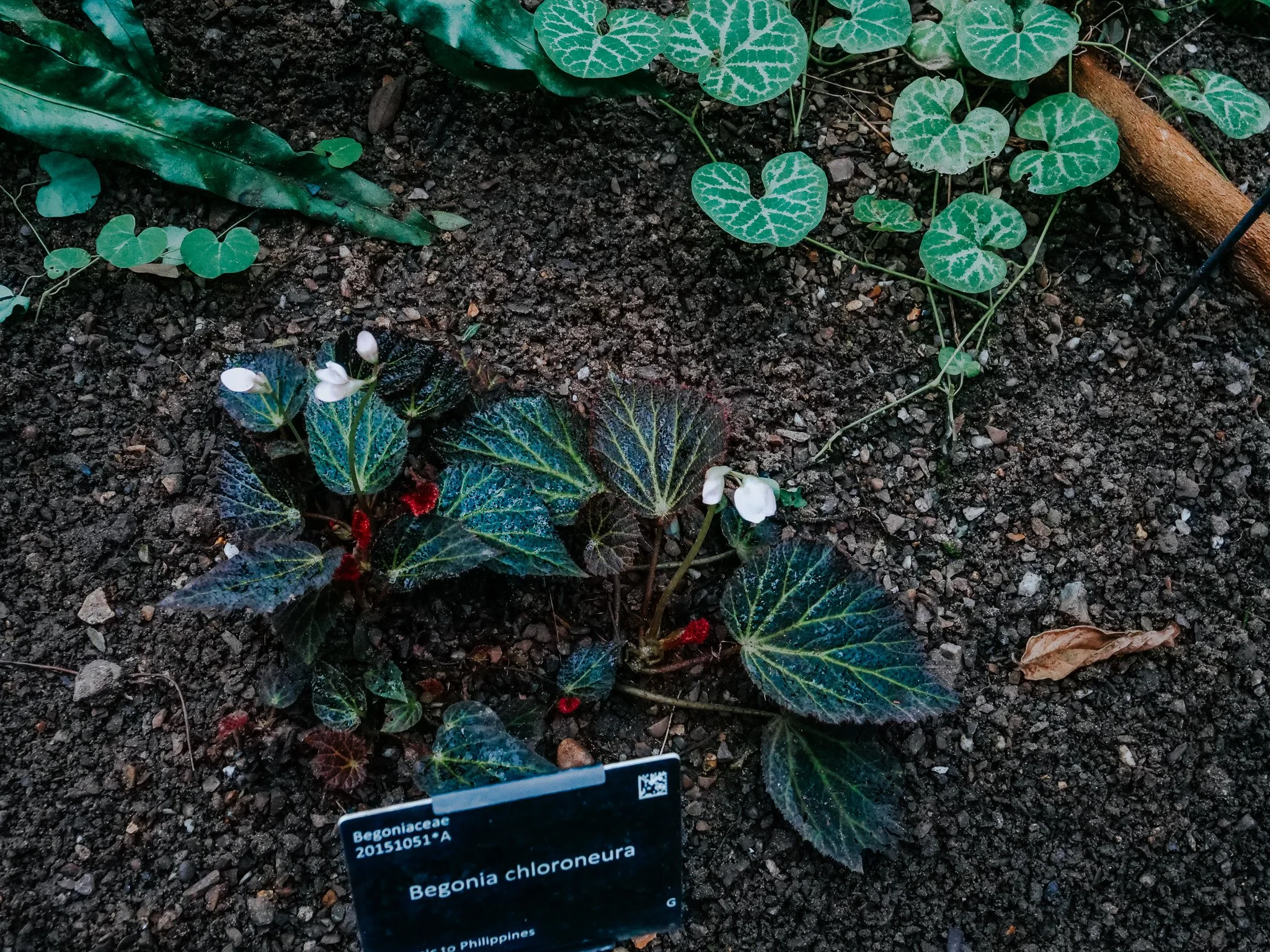
Begonia chloroneura
Begonia masoniana
Begonia cleopatrae
Begonia bowerae (Tiger Paws)
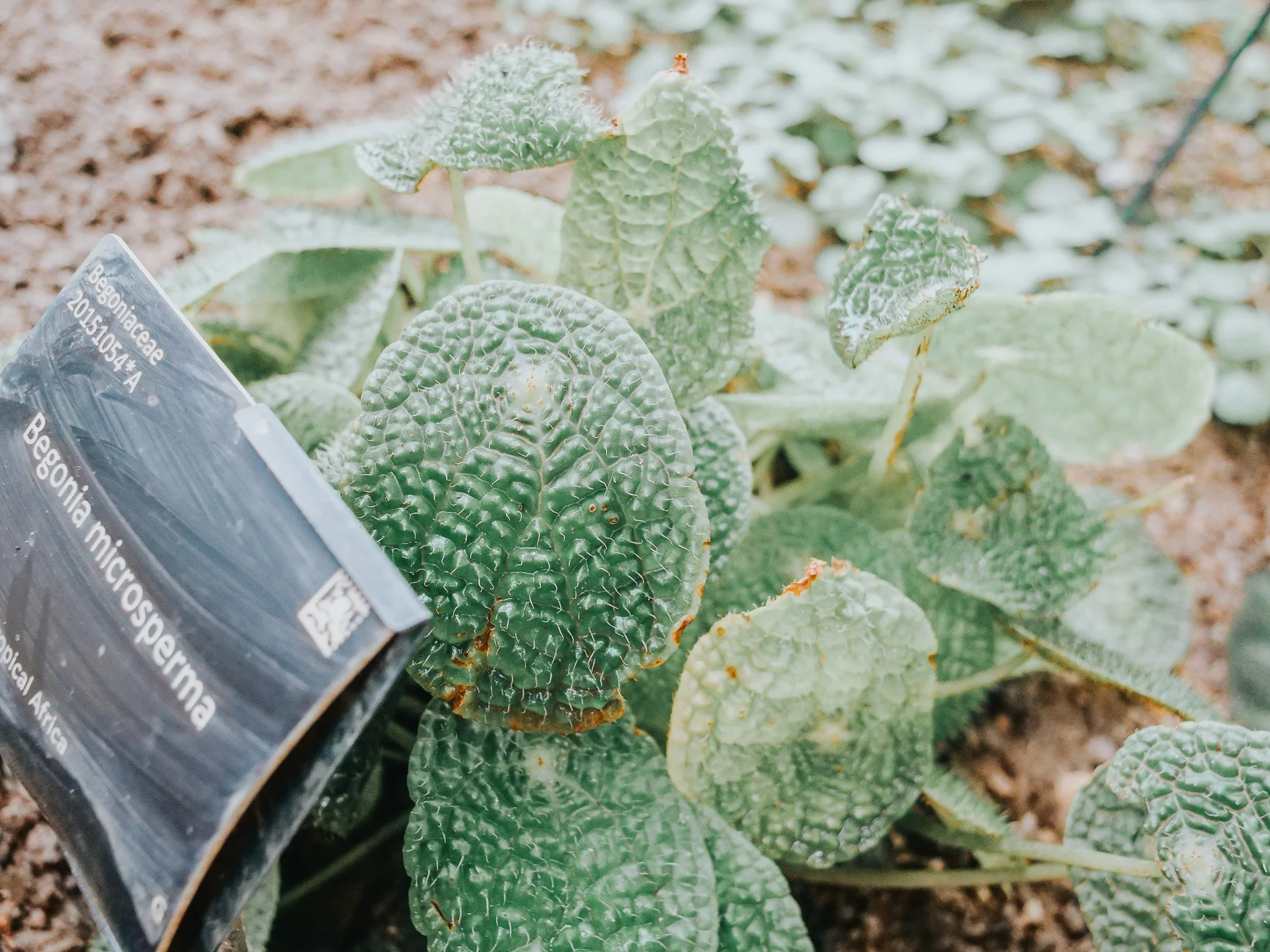
Begonia microsperma
🌿 Soil profile – surface growers
Rhizomatous begonias grow differently to other types, and their soil needs reflect that.
Roots are shallow and spreading, not deep
The rhizome sits at the surface, requiring airflow
The structure should be open and airy, never compact
Moisture should be light and even, not heavy or waterlogged
In nature, they grow in:
leaf litter
decomposing organic matter
shallow layers over rock or compacted ground
This means the surface may dry slightly quicker, while still holding gentle moisture beneath.
These begonias don’t root down into the earth, they move across it.
🌿 Jungle Floor Creative – working with the forest floor
When repotting or refreshing these begonias, I like to keep everything contained and intentional.
Using a Jungle Floor Creative water-resistant repotting mat allows you to build that airy, forest-style mix without mess, keeping all those chunky materials like bark and perlite where you need them.
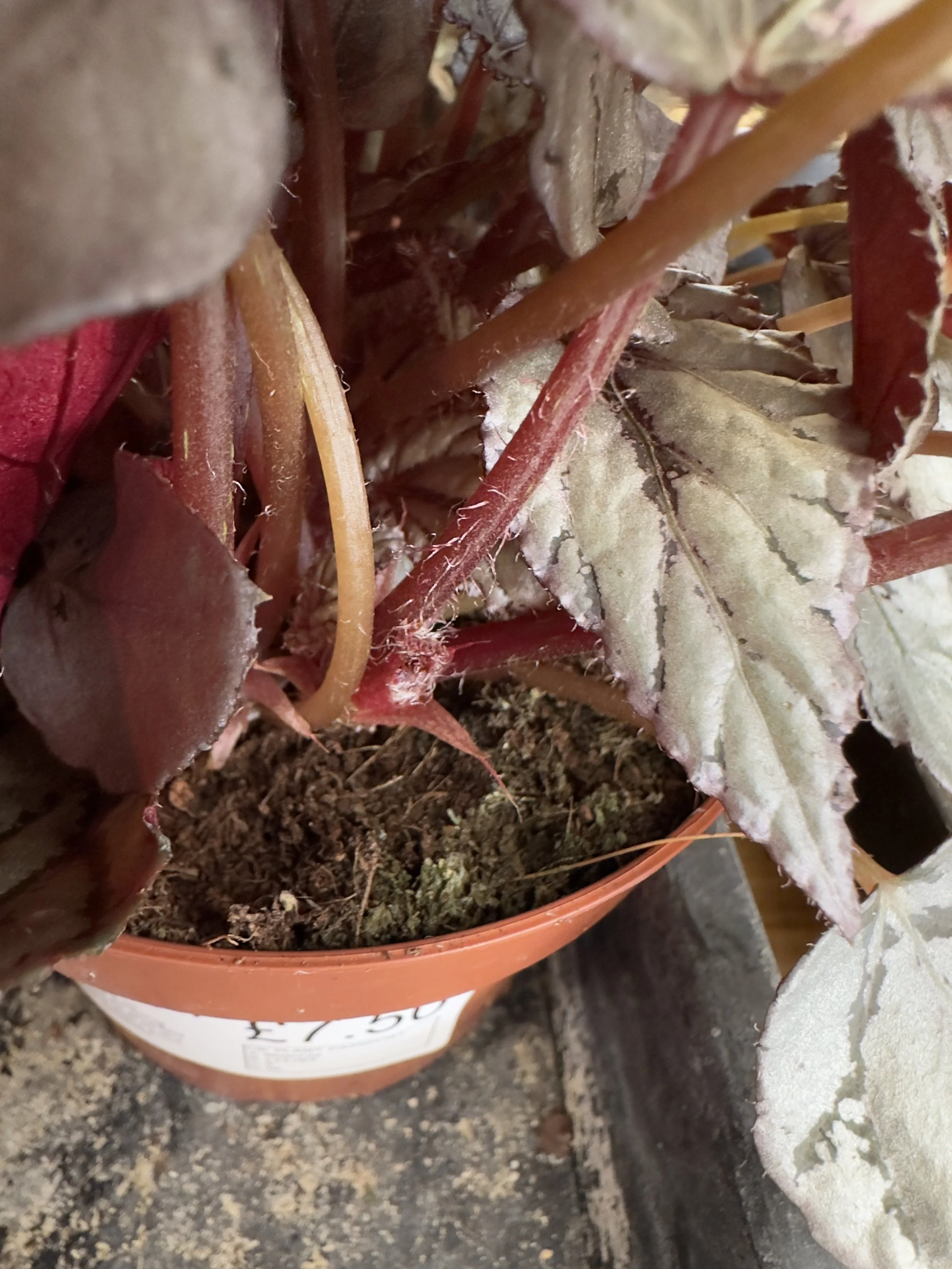
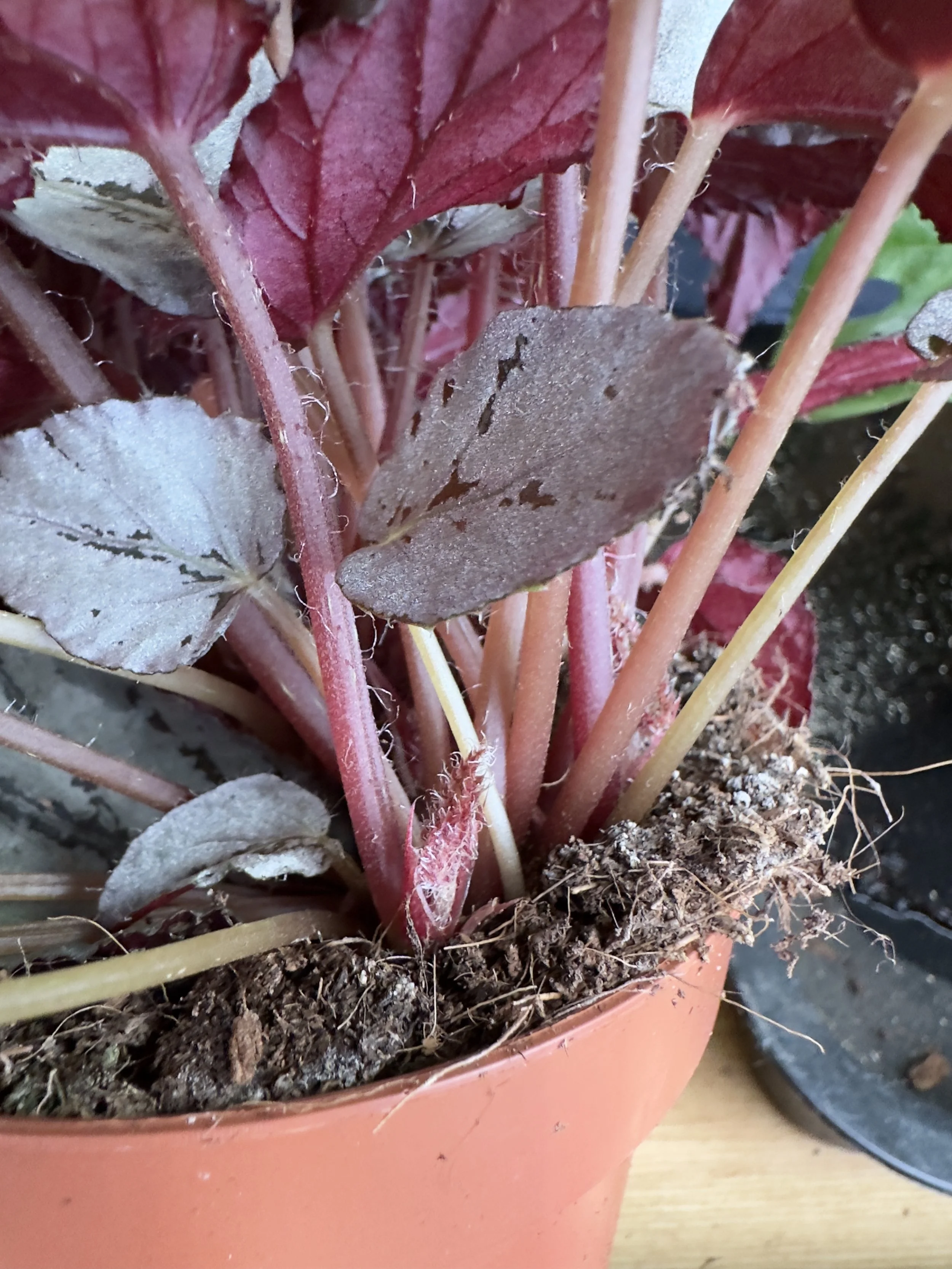
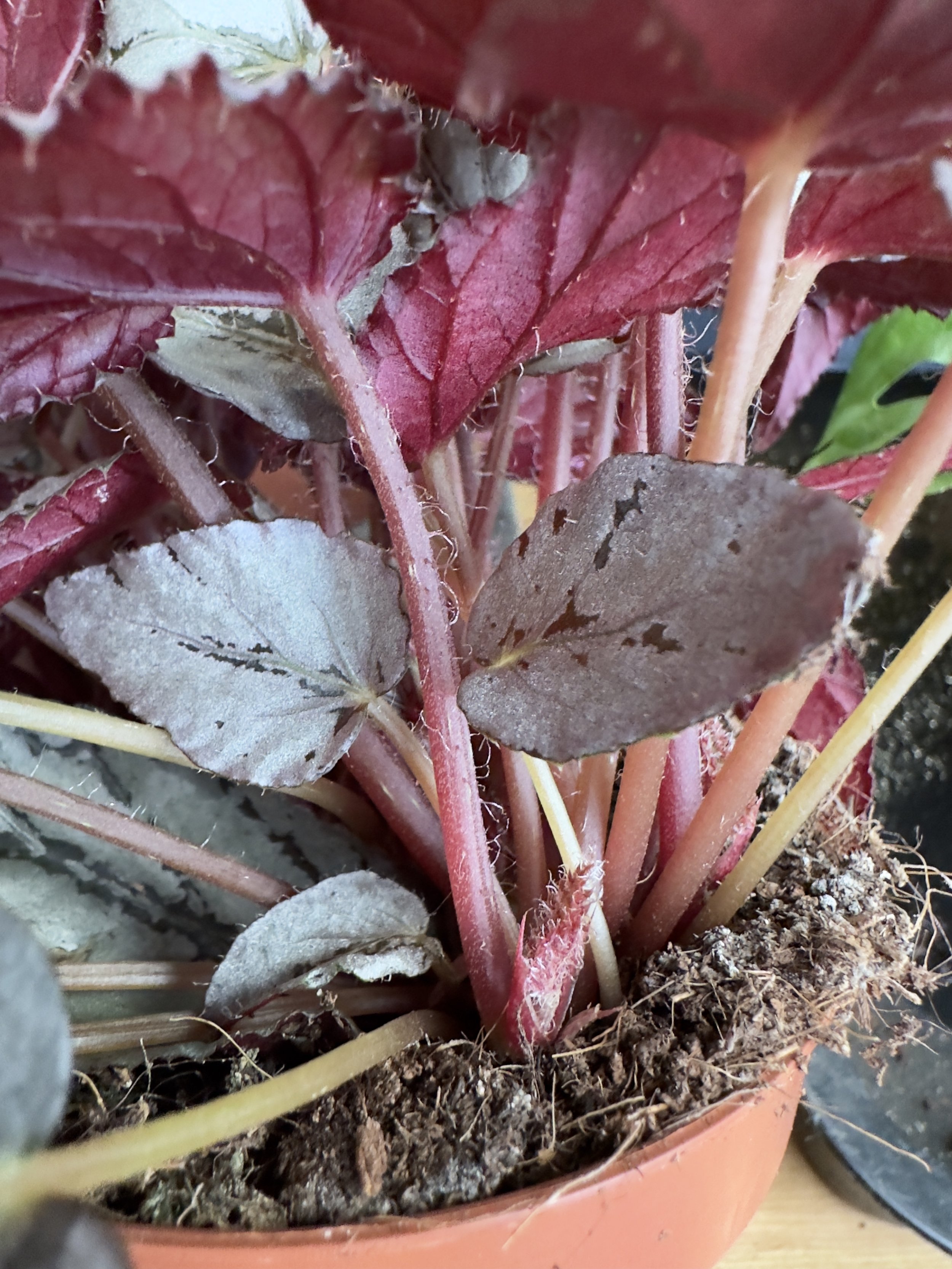
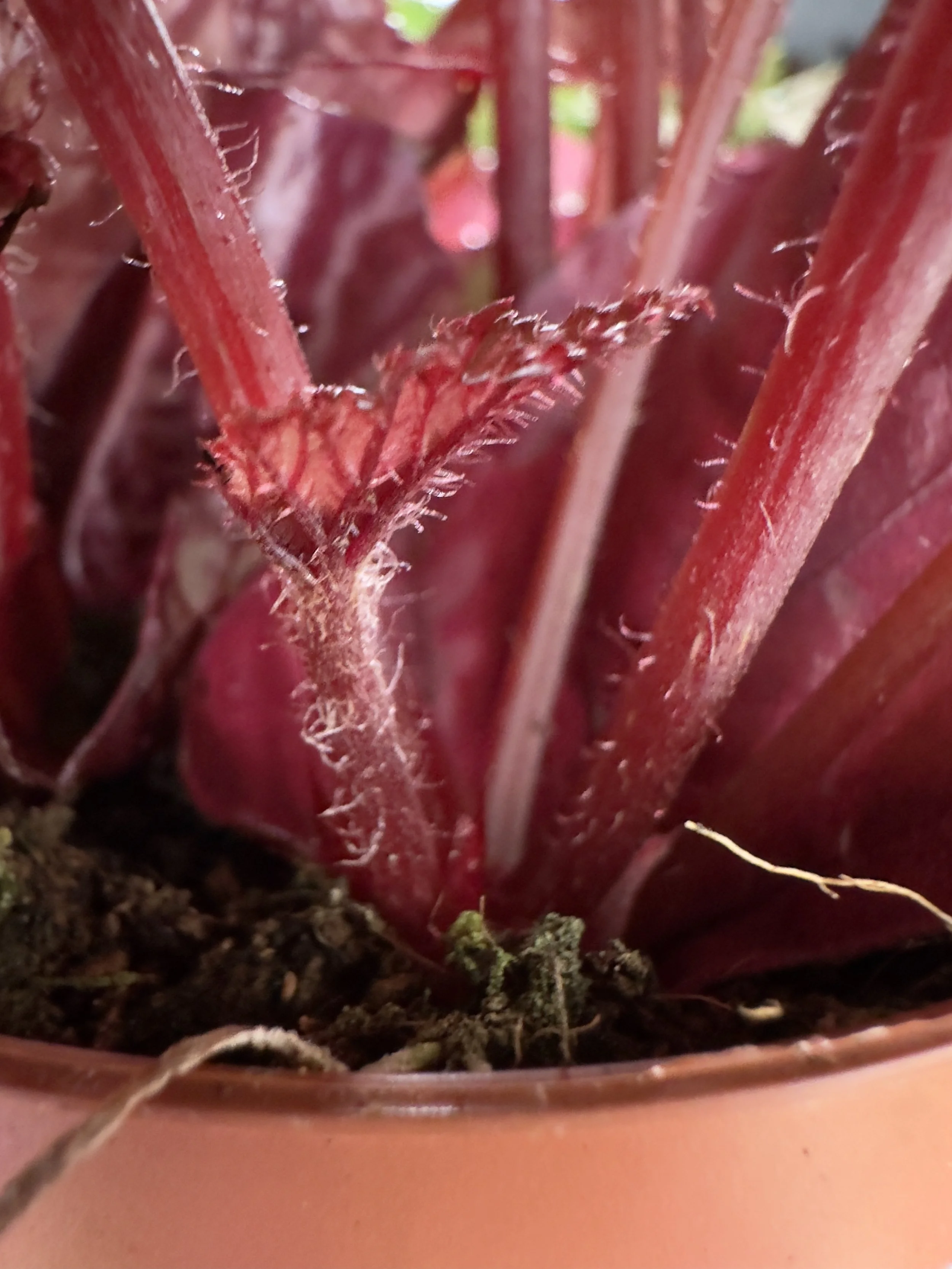
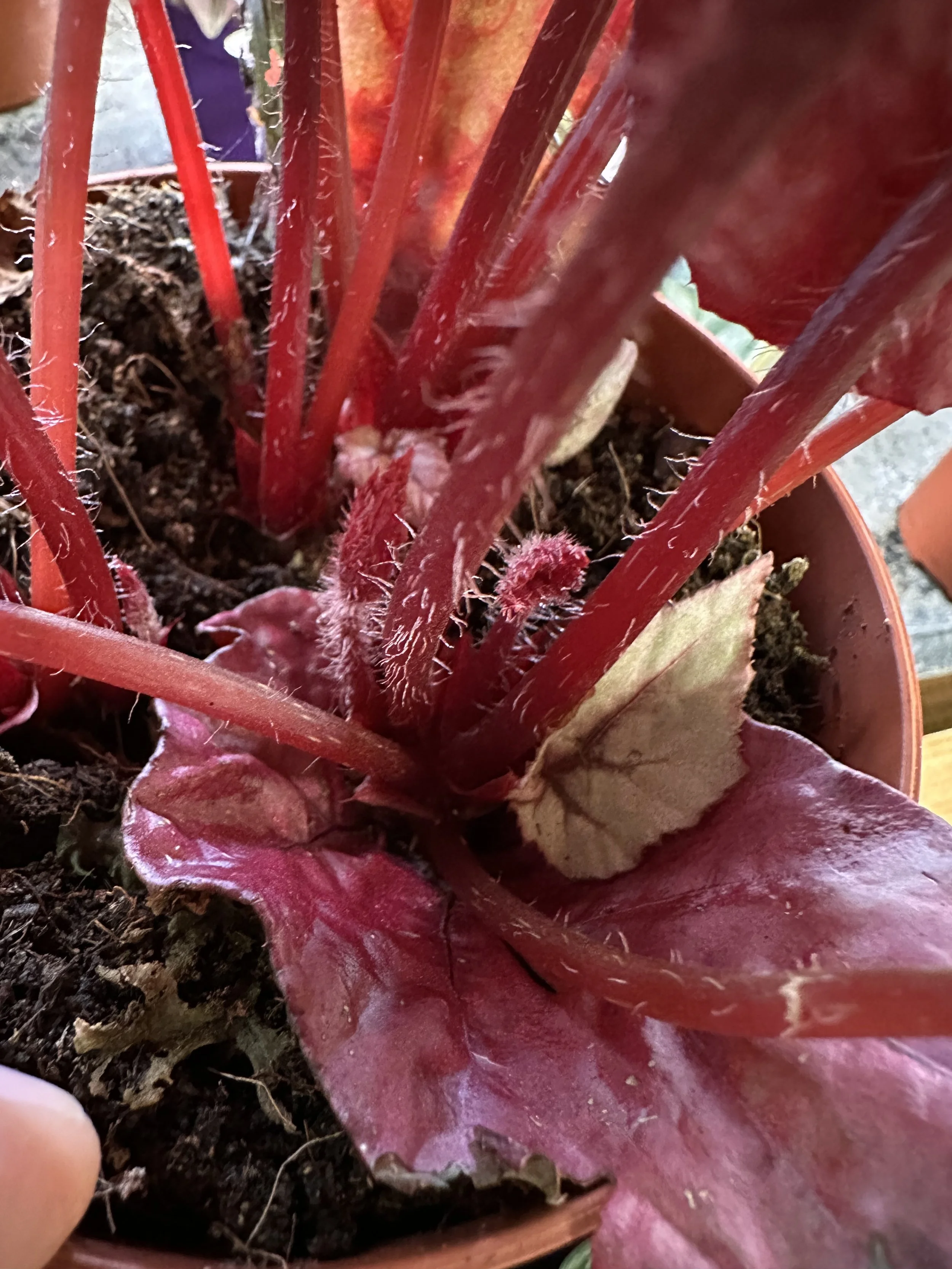
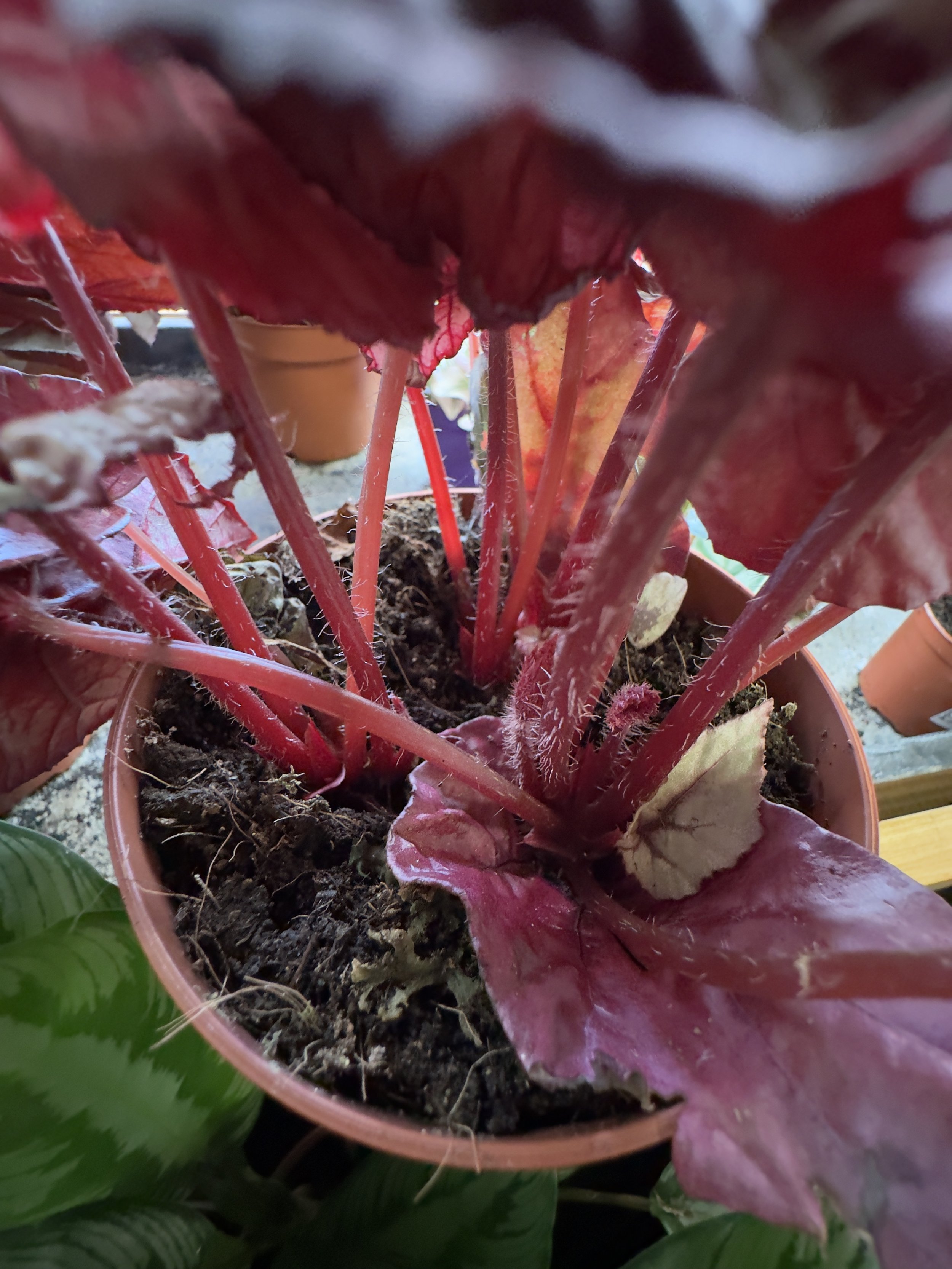
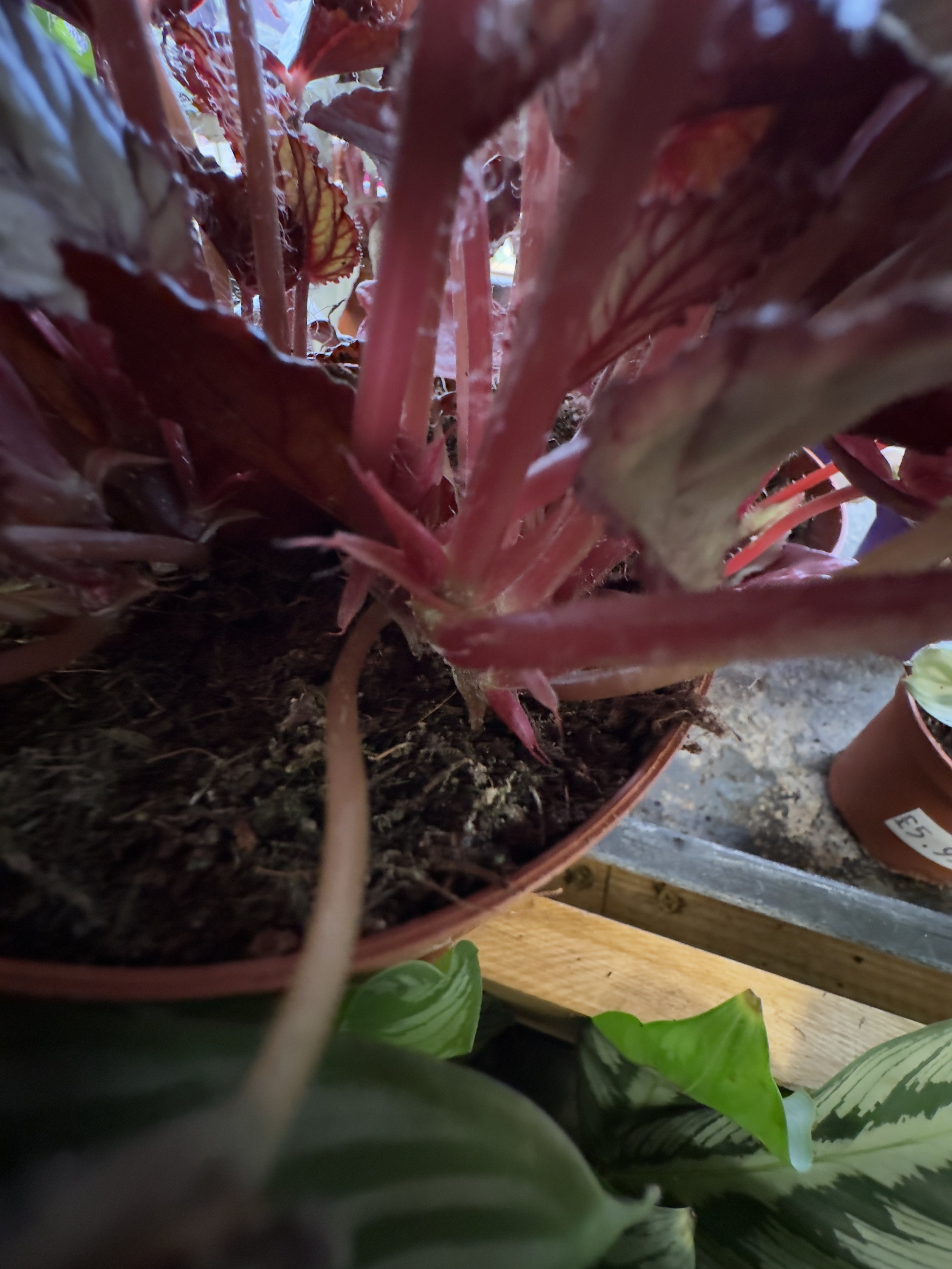
Paired with a soft plant cloth, it becomes much easier to handle delicate, textured leaves without damaging them, especially with varieties like Begonia masoniana or chloroneura, where the foliage is part of the magic.
🌿 Personal observation
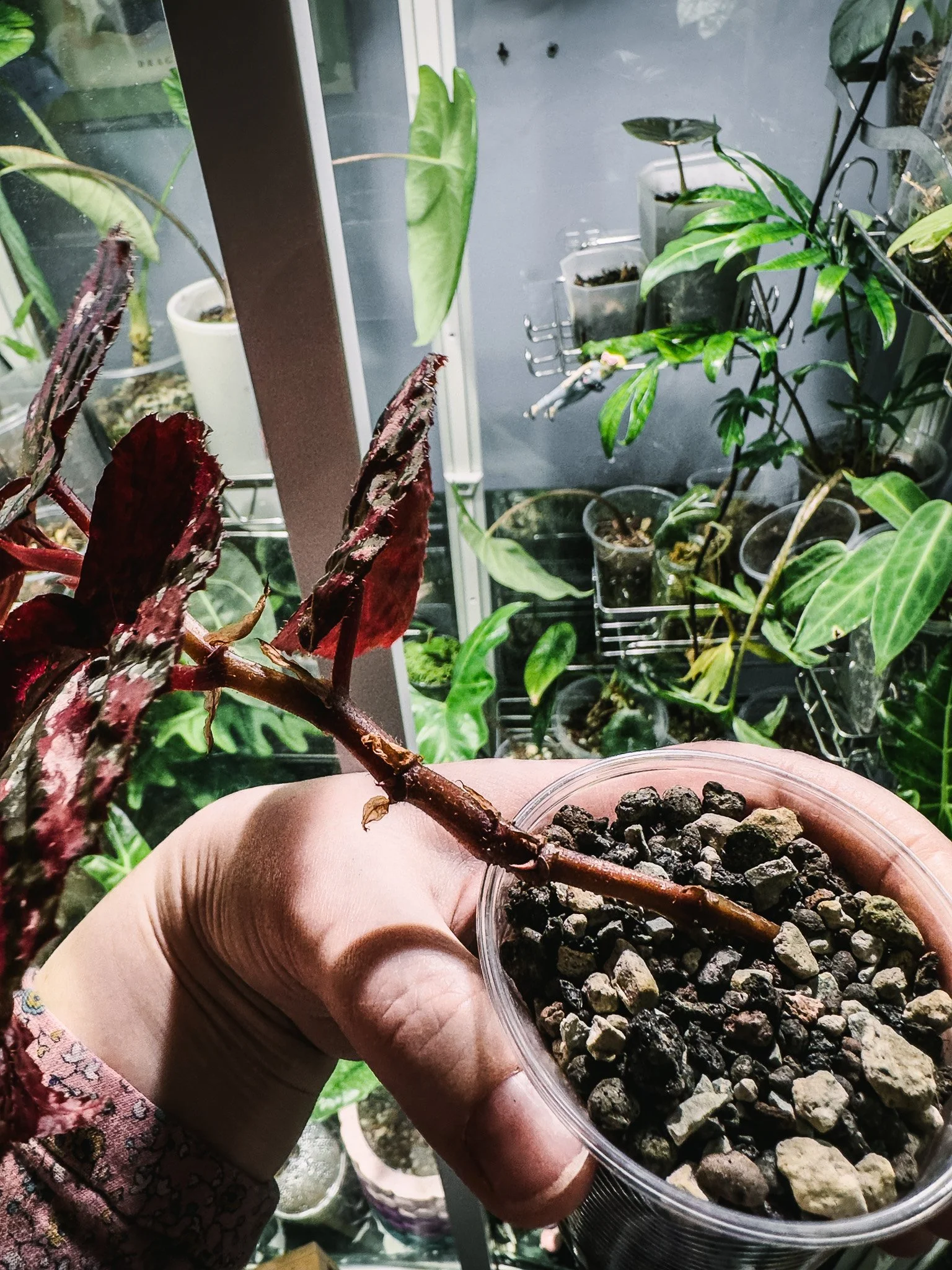
I tend to use a chunky, airy mix for my Rex begonias, something that mimics that natural forest floor structure.
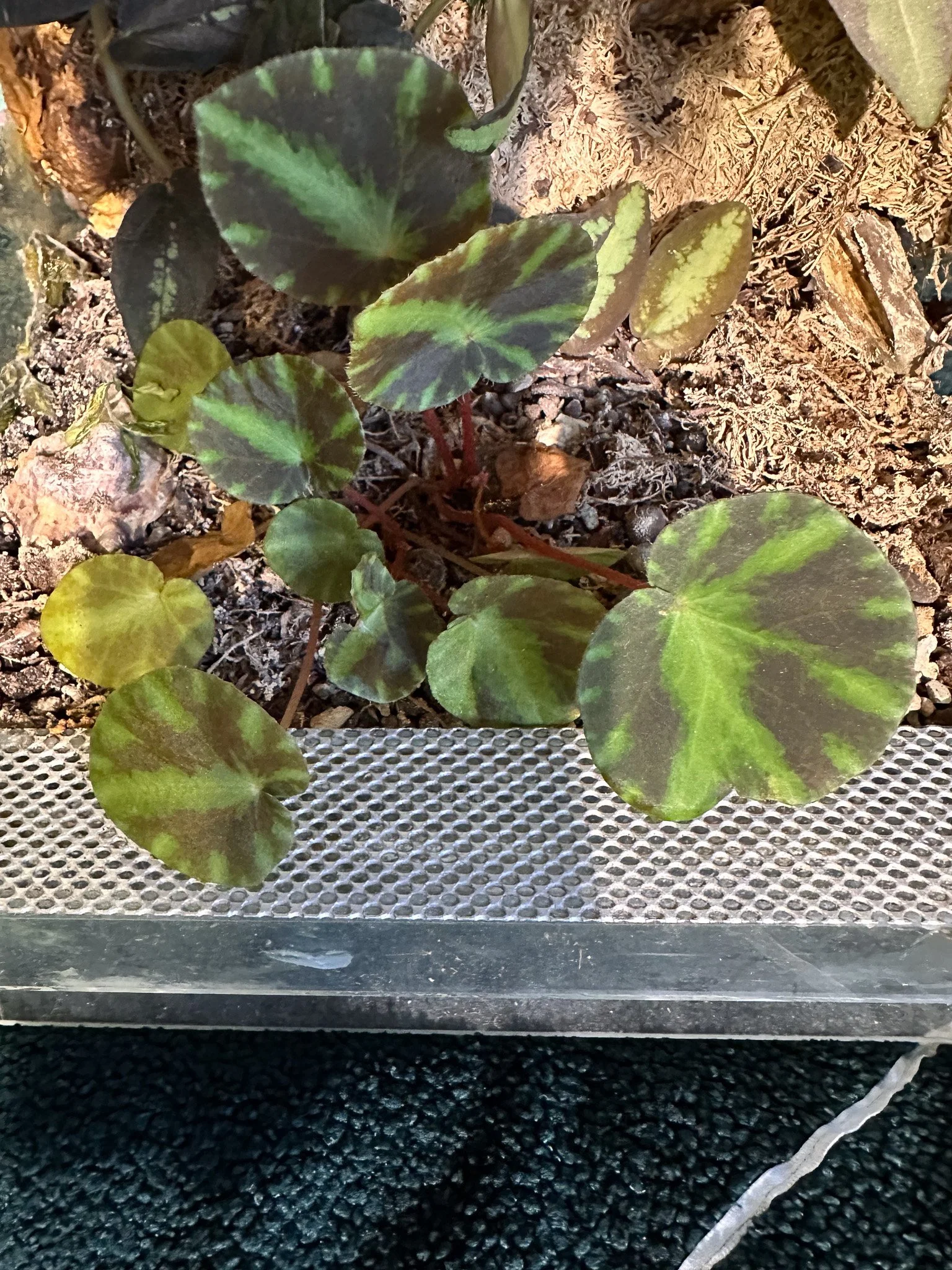
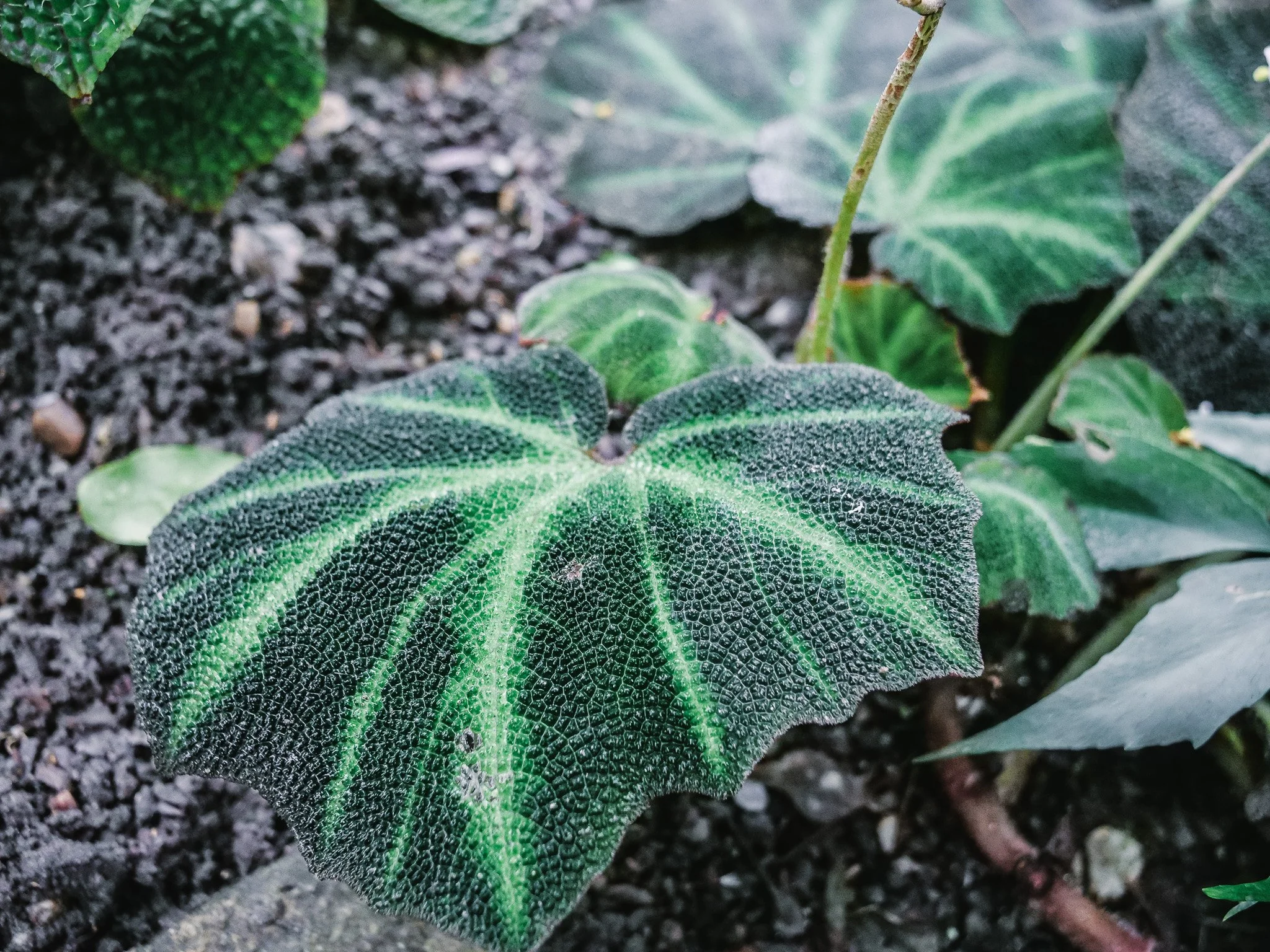
In the image I took at the Cambridge University Botanic Garden, you can see Begonia chloroneura growing in a substrate that includes gritty, stony material. Even in cultivation, it reflects that natural preference for airflow and drainage.
Rhizomatous begonias are not plants of depth, but of surface and balance.
Light is softened
Water is gentle and frequent
Soil is airy and alive
“They don’t grow into the forest floor, they grow across it, where moisture and air meet.”
🌿 Care Needs
🌱 Light
Bright, indirect light is ideal (no harsh sun). Direct sunlight can scorch the leaves, while too little light will result in slower growth and less vibrant patterns. It’s worth taking time to observe your space and adjust positioning to improve light levels where needed.
In their natural habitat, light is filtered through layers of canopy. It shifts throughout the day, never harsh or direct, instead soft and dappled, constantly moving as leaves above catch and release it.
These begonias don’t receive light all at once, they receive it in fragments.
💧 Water
Keep the soil evenly moist, but not soggy. Allow the top layer of soil to dry slightly between watering, and avoid watering directly onto the crown or rhizome, as this can lead to rot.
In nature, rainfall is regular but softened by the forest. Water filters through layers of foliage above, arriving lightly and frequently rather than all at once. Moisture settles briefly into the surface layers, then moves on.
Because of this:
roots experience consistent but gentle moisture
they are never sitting in heavy, saturated soil
It’s also worth noting that water sitting on leaves for long periods can cause damage. During photosynthesis, leaf pores are open, and prolonged moisture can increase the risk of fungal issues or marking on delicate foliage.
🌫️ Humidity
The air in their natural environment is humid and relatively still, protected by the surrounding canopy. It remains warm and stable, with moisture held in the air rather than the soil.
These begonias prefer higher humidity, but many can adapt to typical home conditions. Rather than misting (which offers only temporary humidity and can lead to issues), it’s more effective to:
improve overall room humidity
group plants together
or place them in naturally humid spaces like bathrooms
🌡️ Temperature
Ideally kept between 18–24°C.
Rhizomatous begonias are sensitive to cold and sudden drops in temperature. In winter, as light levels decrease, their growth slows naturally. During this time, it’s important to reduce watering, not because they prefer dryness, but because they are using less.
🪴 Soil
Think forest floor, not compost bag.
A light, airy, well-draining mix is essential. In the wild, these begonias grow in:
leaf litter
decomposing organic matter
shallow layers over rock or compacted ground
At home, you can recreate this with:
a base houseplant mix
bark for structure
perlite or vermiculite for airflow
a small amount of horticultural sand for drainage
The goal is simple:
👉 moisture and airflow at the same time
🌿 Bringing it together
Rhizomatous begonias don’t want extremes.
Not too wet.
Not too dry.
Not too dense.
“They don’t want to sit in water, they want to sit between moisture and air.”
🌿 Jungle Floor favourites
Over the years, I’ve grown a wide range of begonias, and getting the care right for these varieties has definitely been a learning curve.
What I’ve found, and what research supports, is that many rhizomatous begonias are more adaptable than they first appear. While they thrive in higher humidity, they can do well in normal household conditions when their soil, light, and watering balance are right.
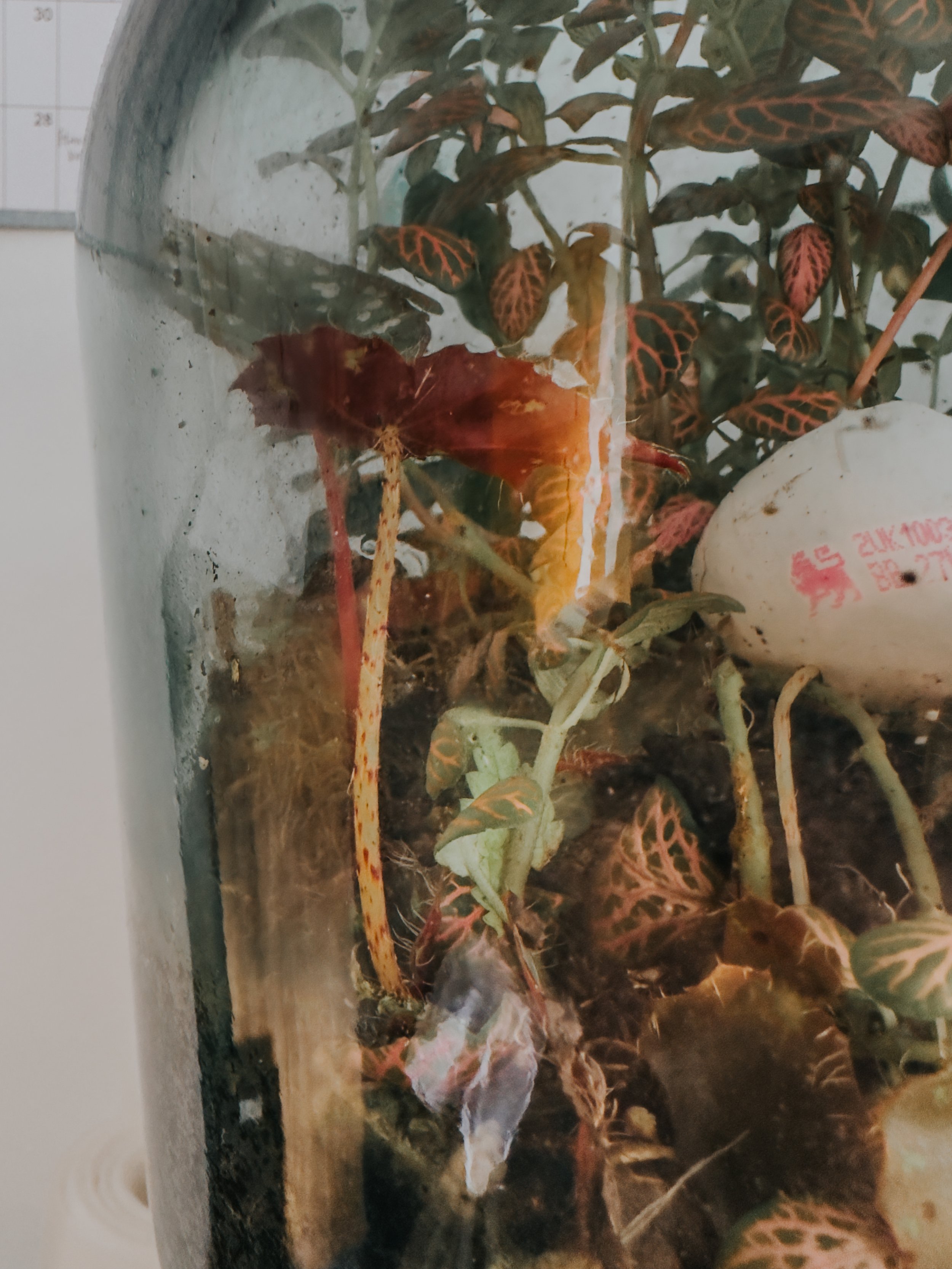
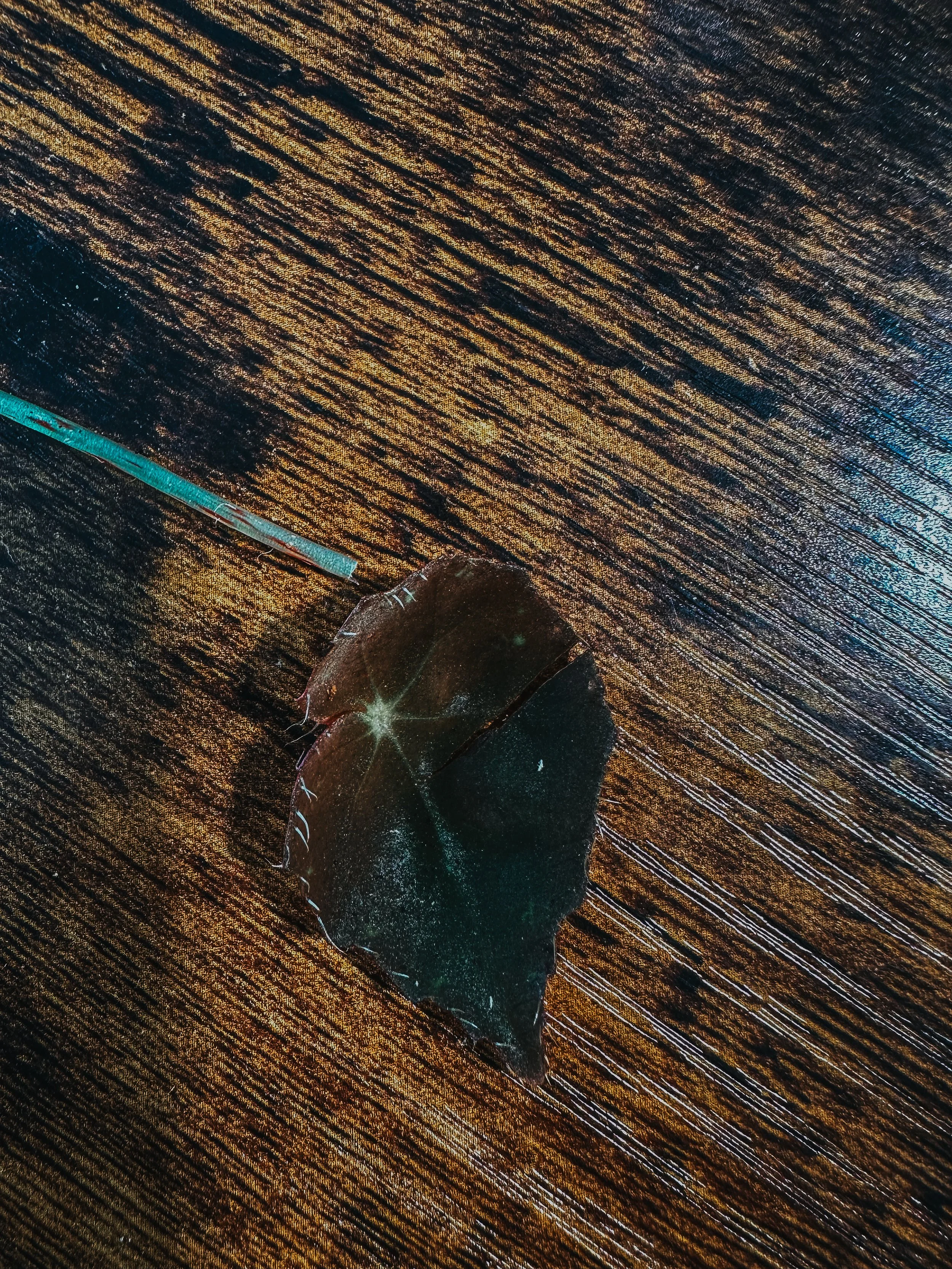
One of my favourites has to be Begonia bowerae, often nicknamed the Tiger Paws Begonia.
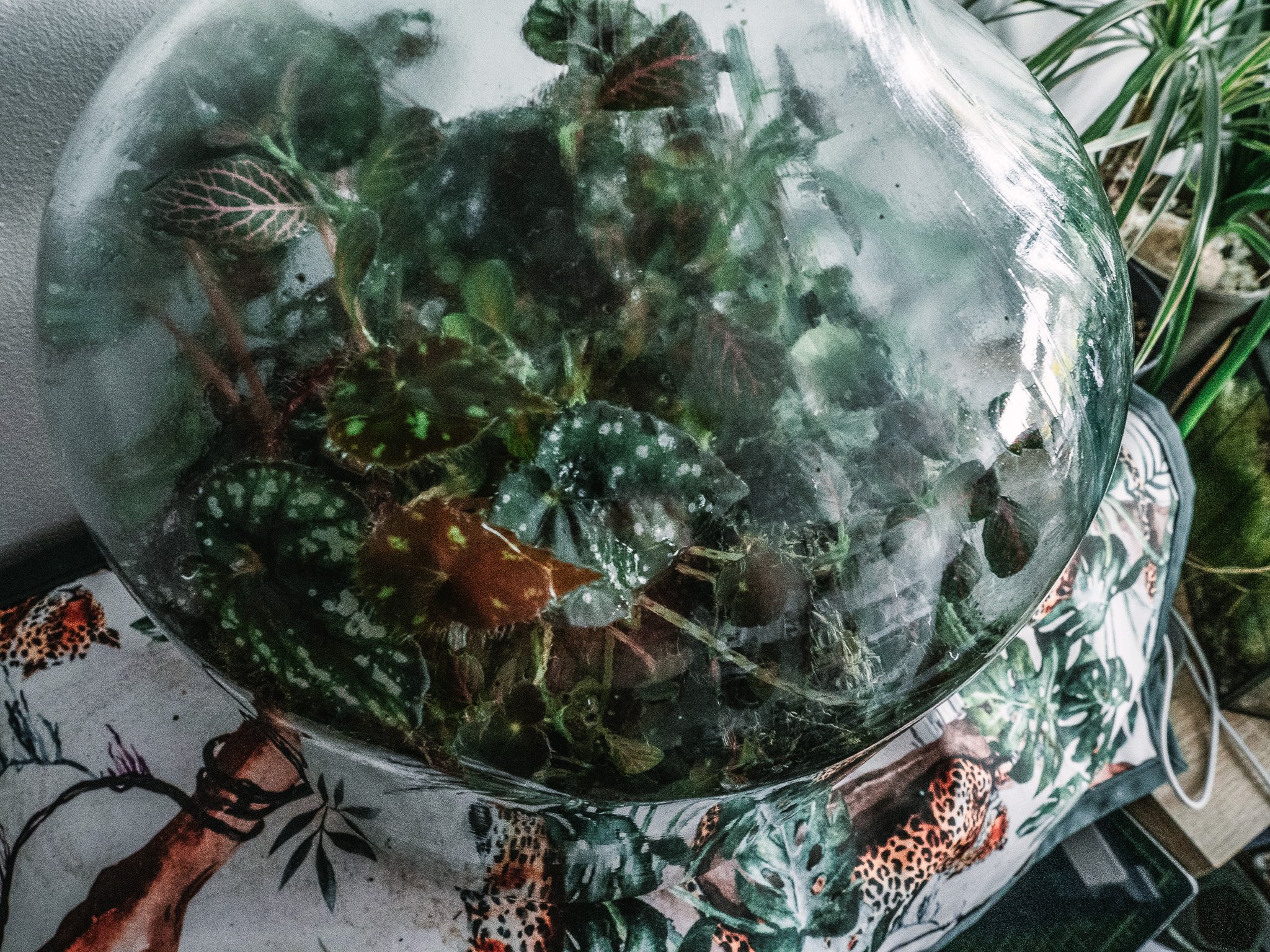
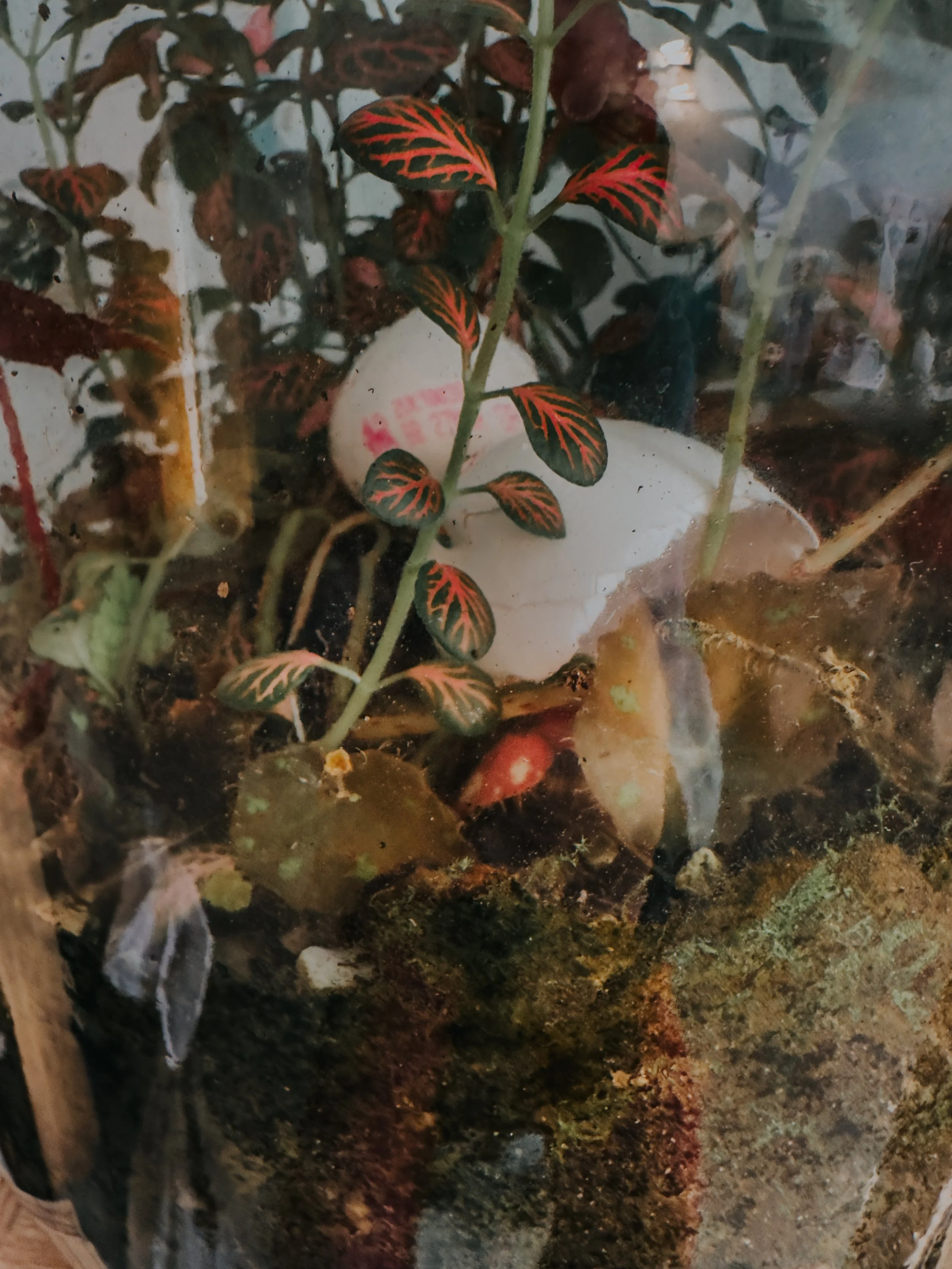
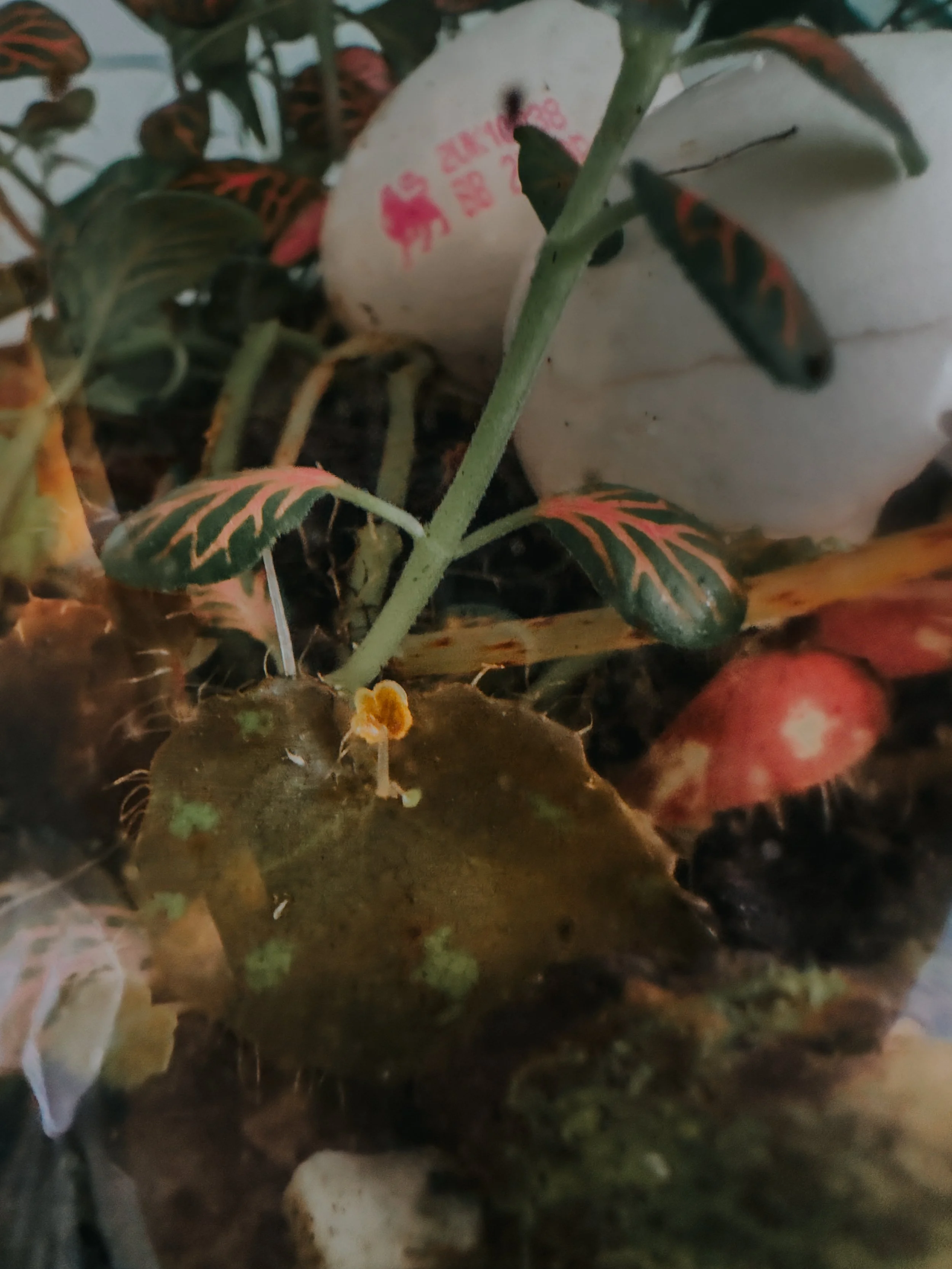
I’ve had great success growing this particular begonia in a large bottle terrarium. Because the opening is very small, it holds onto humidity and moisture, creating a stable environment that I rarely need to interfere with.
I’ve also grown it successfully in my plant room, where humidity tends to sit between 59–75%, sometimes even higher. This really reflects what the research suggests, while these begonias appreciate higher humidity, they can still adapt well when the overall environment is balanced.
🌿 Vertical understory (cane)
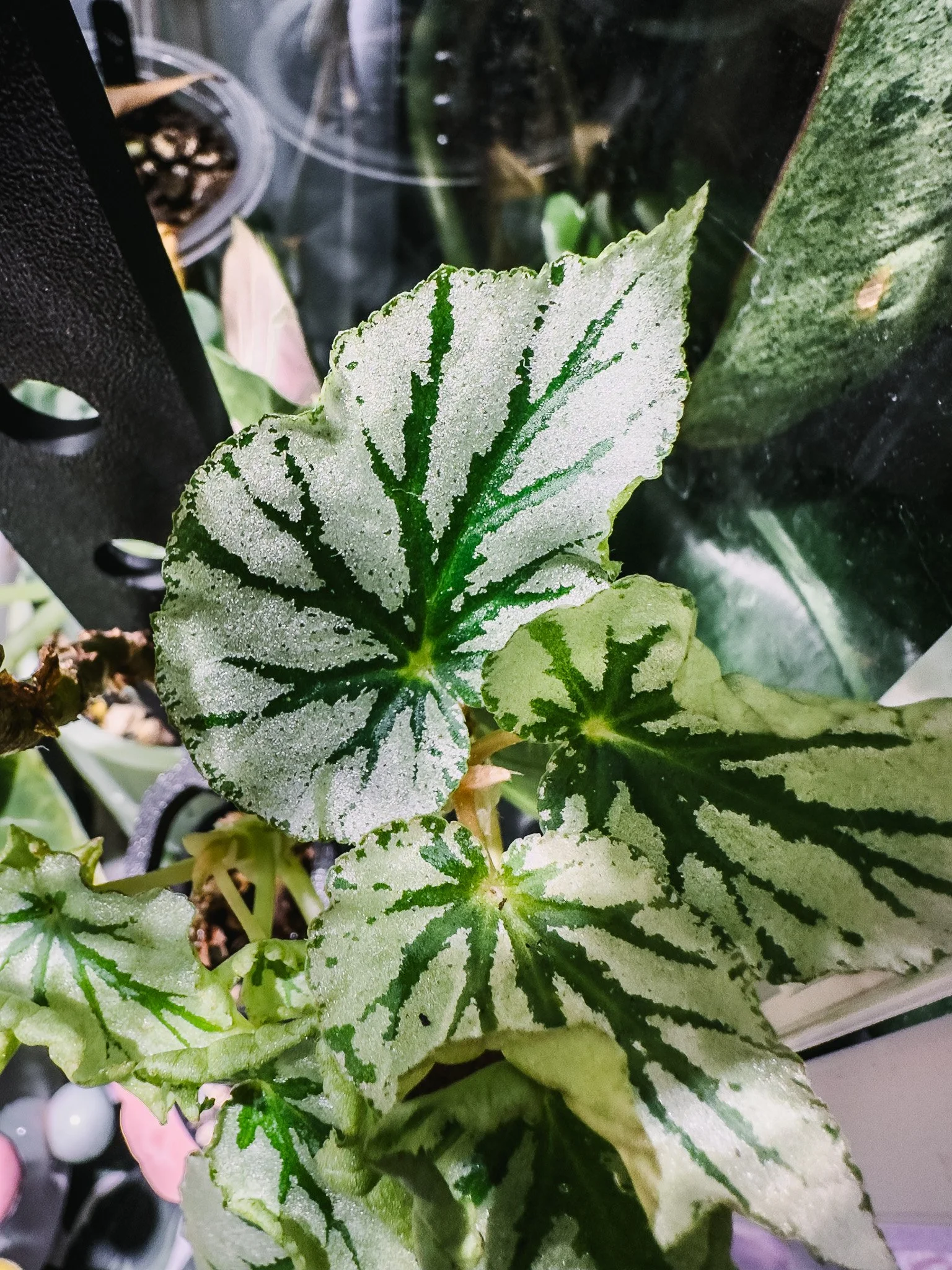
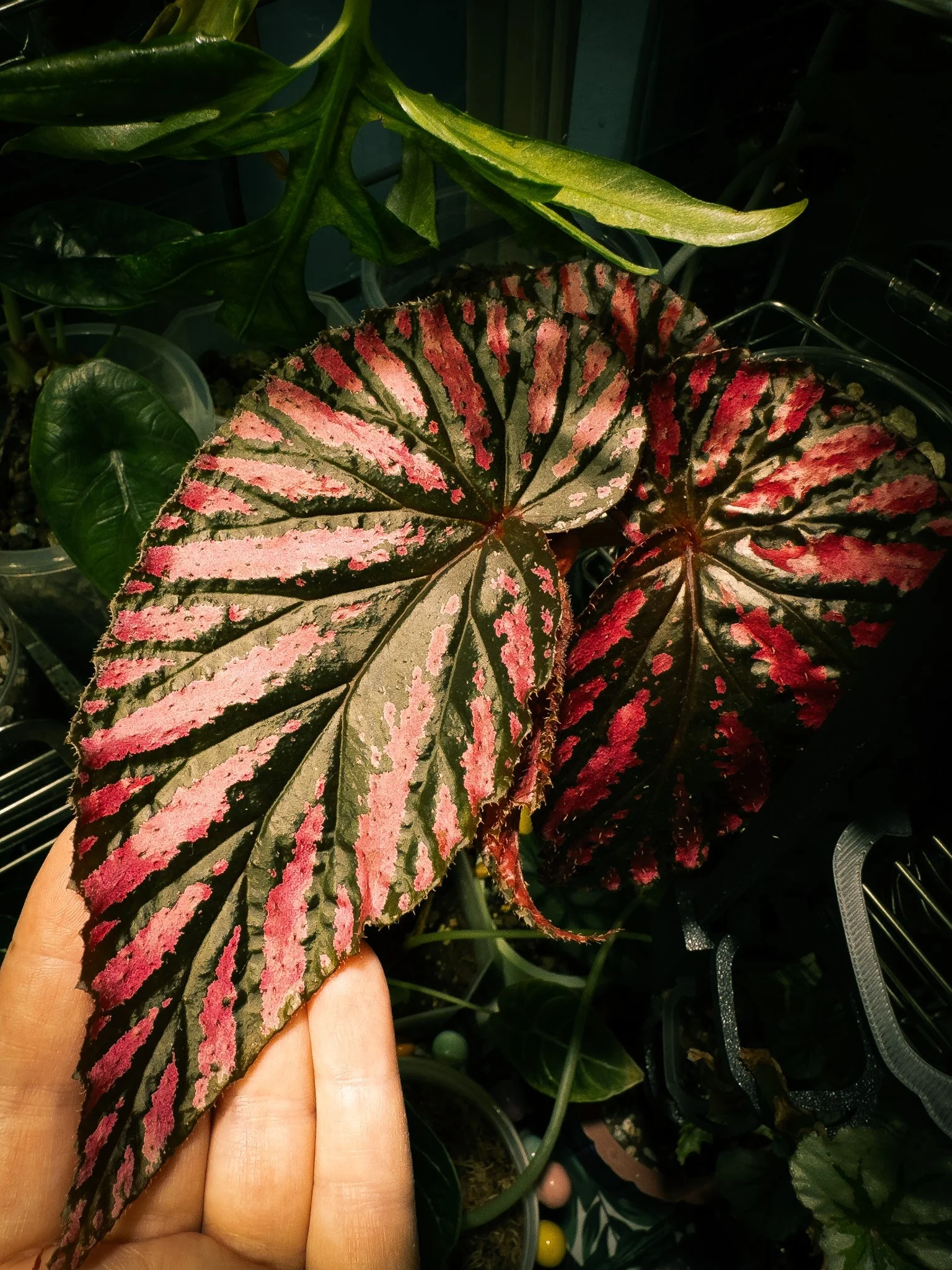
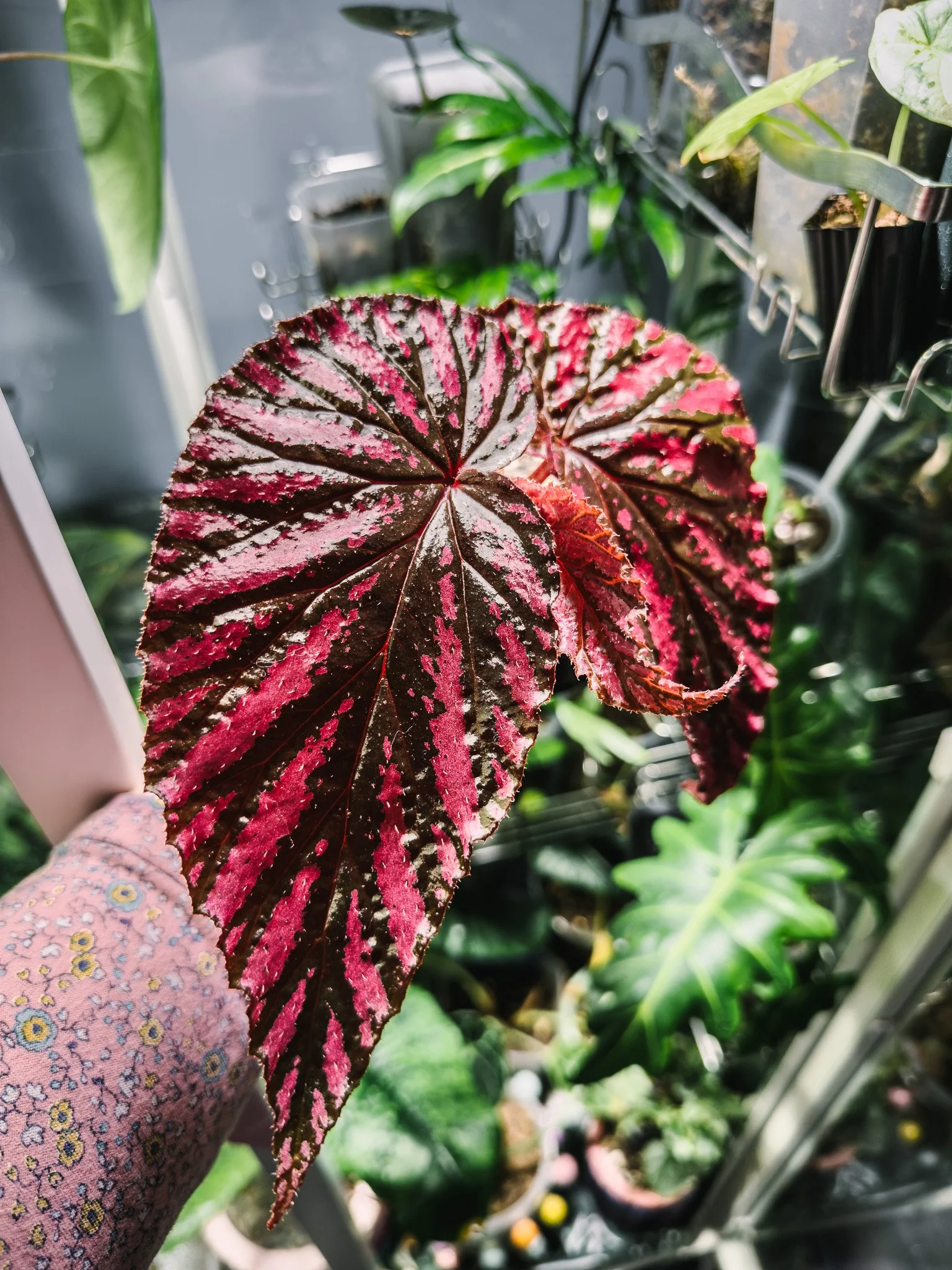
Cane begonias, often known as angel wing begonias, are among the most recognisable types grown as houseplants. They are named for their upright, bamboo-like stems, which allow them to grow taller than many other begonias, creating a more architectural shape.
Cane begonias grow in the middle layers of the forest, rising above the ground but still sheltered beneath the canopy. They are shaped by a world that is layered, competitive, and constantly shifting, where light moves, moisture lingers, and space is shared.
They don’t cling to the ground like rhizomatous types, and they don’t fight for survival in rock. Instead, they position themselves, growing upward into pockets of opportunity.
🌿 Natural environment
These begonias originate from humid tropical forest understories, particularly across Central and South America, as well as parts of Asia and Africa. Although they come from different regions, the environments they grow in are remarkably similar.
In the wild, they grow beneath tree canopies where light is filtered and soft, surrounded by warm air and consistent humidity.
The soil they grow in is very different from what we think of as typical compost. It is:
springy and organic-rich
full of air pockets
constantly being broken down by insects and microorganisms
It’s not just soil, it’s a living system.
Plants grow close together, gently competing for light, while the air remains warm and humid. Rainfall is frequent, but because of the loose, organic structure of the soil, water drains through rather than sitting around the roots.
🌿 Forest understory soil profile
In their natural environment, cane begonias grow in a soil system that is alive, layered, and constantly changing.
Leaf litter (decomposing leaves, twigs, and organic debris)
Loose, crumbly topsoil
High organic matter
Naturally aerated with tiny air pockets throughout
It is soft, but never suffocating.
Rather than growing in deep, compacted soil, their roots move through shallow layers of leaf litter and decaying organic matter, sometimes over underlying rock or compacted ground. This creates a growing medium that is airy, rich, and moisture-retentive without becoming waterlogged.
🌿 What that feels like in nature
Warm, still air.
Gentle, dappled light.
A forest that is always moving, but never harsh.
Light filters through layers of leaves above, shifting throughout the day. It’s not constant or direct, but broken into soft, changing pockets. Bright spots appear and disappear as the canopy moves, and plants grow upward and outward to find them.
Rainfall is frequent in these tropical environments, but it doesn’t arrive all at once. Water passes through layers of foliage before reaching the plant, becoming diffused and softened along the way.
Leaves and stems catch droplets
Water reaches the soil gradually
Excess drains downward through the organic layers
The soil remains consistently moist, but never stagnant. Roots are surrounded by moisture, but always with access to air.
🌫️ Atmosphere
The understory holds humidity like a quiet blanket.
Air is warm and consistently moist
Protected from strong winds
Surrounded by other plants releasing moisture
This creates a buffered environment, where conditions don’t change dramatically.
Even when the air feels still, there is always gentle movement between layers of the forest, allowing for subtle airflow and exchange.
This is not just soil, it’s a system.
A place where:
moisture is steady but never trapped
light is soft but always shifting
air is still, but never stagnant
“Soft underfoot, rich with life, and always breathing.”
🌱 What this means for care
🔆 Light
Bright, indirect light is ideal. Cane begonias can tolerate filtered light and even a little gentle sun, but harsh direct sunlight should be avoided as it can scorch the leaves.
These begonias come from environments where light is consistent but softened, so they respond well to stable lighting conditions. Grow lights can be a great way to supplement natural light, especially in darker months. Tools like the Photone app can help you measure and understand your light levels more accurately.
They generally prefer similar light levels to plants like Alocasia. While some may survive in lower light, they won’t truly thrive, often showing slower growth and reduced patterning.
💦 Water
Keep the soil evenly moist, allowing the top layer to dry slightly between watering.
Cane begonias are used to regular moisture, but they do not tolerate being saturated. Their roots grow deeper than rhizomatous types, so they can handle slightly more water, but they still need air within the soil.
Using a transparent pot can be helpful, as you can visually gauge when the substrate is drying out. As it dries, the soil will appear lighter, giving you a clearer signal of when to water.
During cooler months or periods of lower light, growth slows down. At this time, reduce watering accordingly, as the plant will use less moisture.
🌫️ Humidity
Cane begonias enjoy higher humidity, but they are generally more forgiving than delicate rhizomatous or terrarium species.
They can adapt to typical home environments, but will thrive when humidity is higher and the air is not too dry. Consistency is more important than extremes.
🪴 Soil
Think forest floor, not compost bag.
In their natural habitat, roots grow into loose, organic-rich soil, mixed with leaf litter and decomposing debris. This creates a medium that is both moisture-retentive and breathable.
At home, aim for a mix that is:
Light and airy
Well-draining
Still capable of holding gentle moisture
A good mix might include:
Bark
Coir or compost
Perlite (or similar for airflow)
If the soil is too dense, it will restrict airflow. If it’s too dry and open, it won’t support consistent growth. The balance is key.
🌬️ Airflow
In the forest understory, air is never completely still.
Cane begonias benefit from gentle airflow, which helps prevent issues such as mildew and supports overall plant health. This becomes especially important in more humid indoor environments, where stagnant air can quickly lead to problems.
🌿 Cane begonia varieties
Some beautiful examples of cane begonias include:
‘Maurice Amey’
‘Black Forest’
Begonia brevirimosa
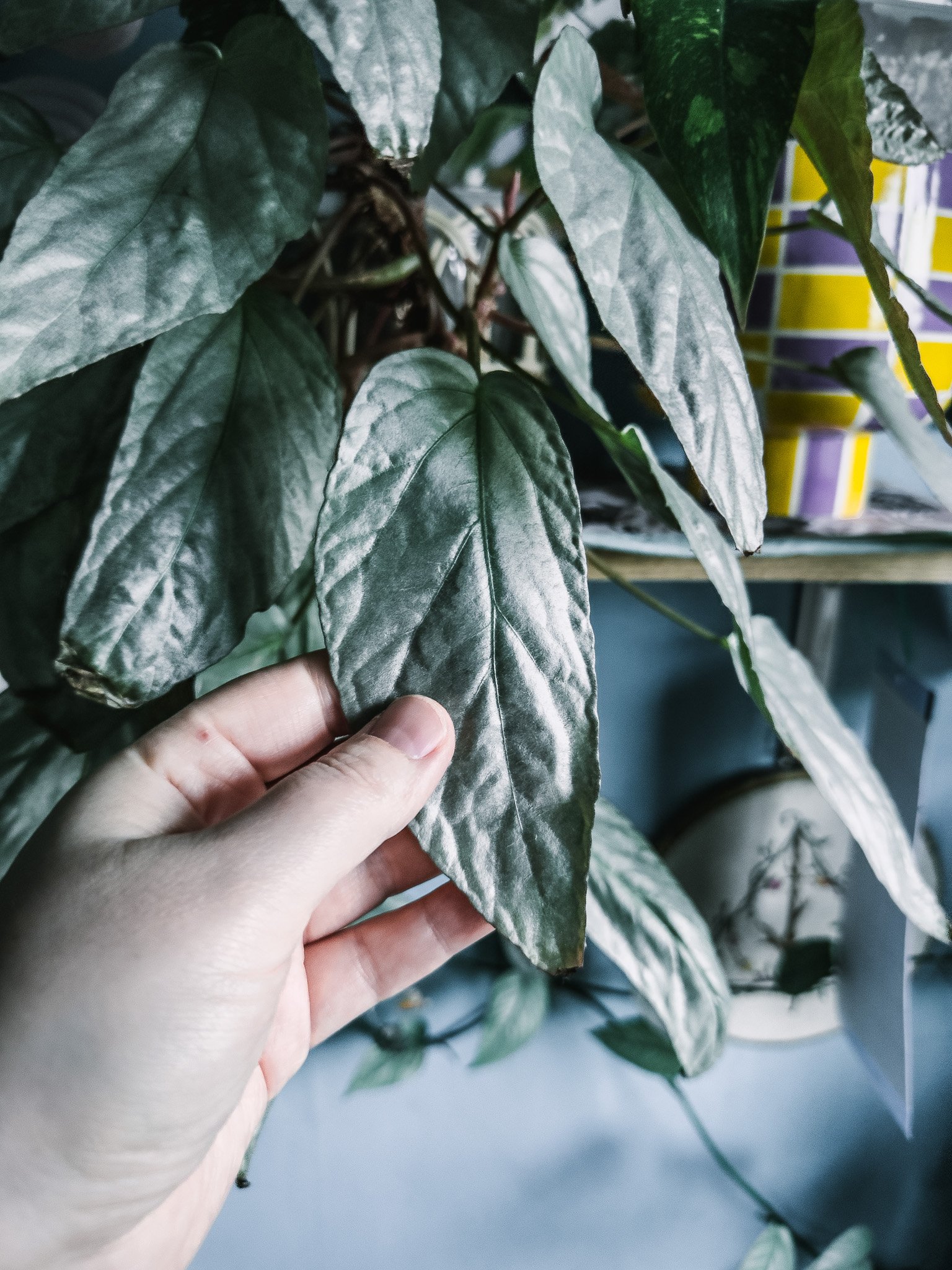
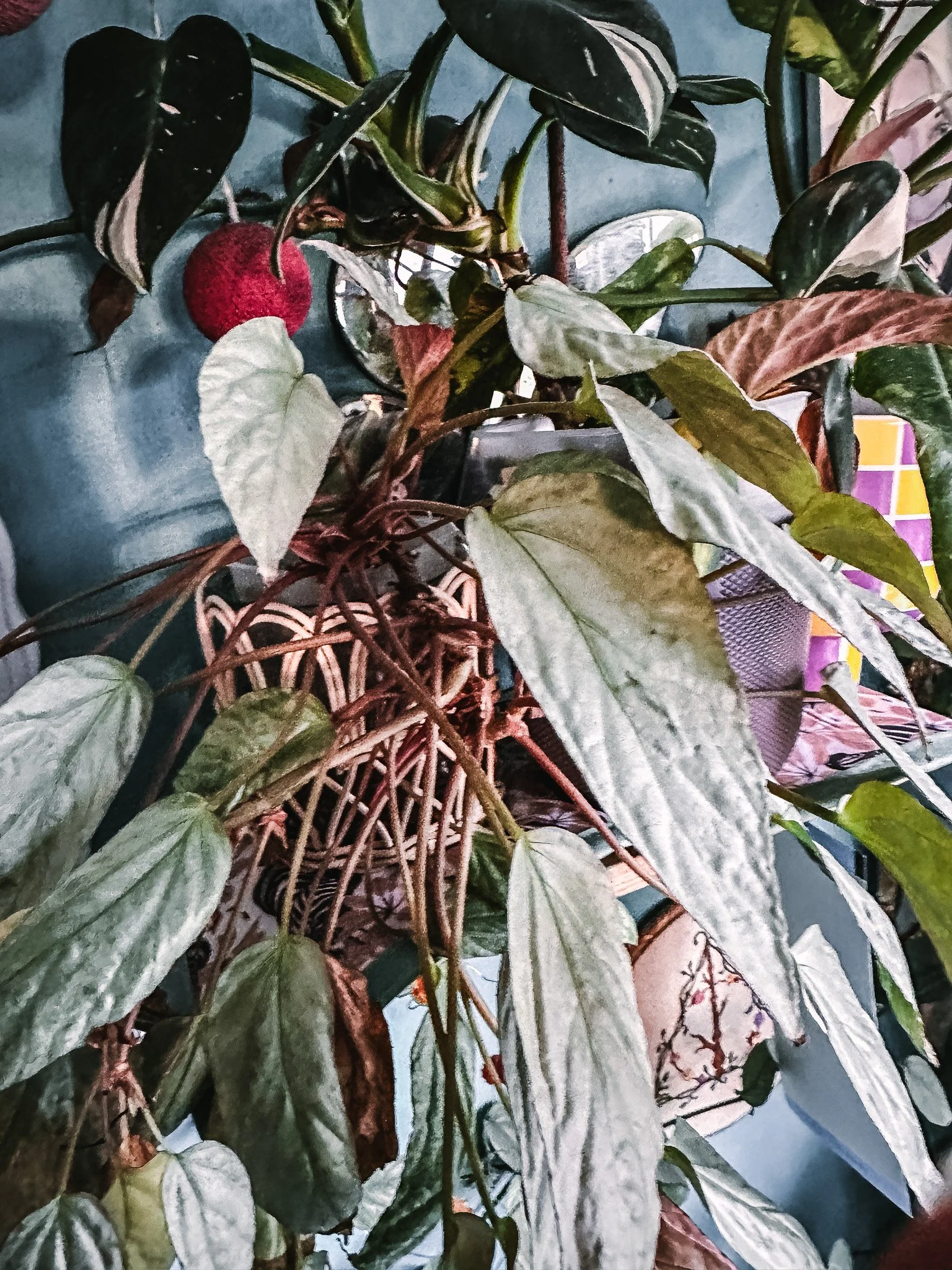
Begonia hatacoa ‘Silver’
“Cane begonias don’t need perfect conditions, just the right balance, light to grow toward, moisture to move through, and air to breathe.”
🌱 What this means for care
🔆 Light
Bright, indirect light is ideal. Cane begonias can tolerate filtered light and even a little gentle sun, but harsh direct sunlight should be avoided as it can scorch the leaves.
These begonias come from environments where light is consistent but softened, so they respond well to stable lighting conditions. Grow lights can be a great way to supplement natural light, especially in darker months. Tools like the Photone app can help you measure and understand your light levels more accurately.
They generally prefer similar light levels to plants like Alocasia. While some may survive in lower light, they won’t truly thrive.
💦 Water
Keep the soil evenly moist, allowing the top layer to dry slightly between watering.
Cane begonias are used to regular moisture, but they do not tolerate being saturated. Their roots grow deeper than rhizomatous types, so they can handle slightly more water, but they still need air within the soil.
Using a transparent pot can help you understand your watering rhythm, as the substrate becomes visibly lighter as it dries.
During cooler months or lower light periods, growth slows, and watering should be reduced accordingly.
🌫️ Humidity
Cane begonias enjoy higher humidity, but they are generally more forgiving than more delicate types.
They can adapt to typical home conditions, but will thrive in environments where the air isn’t too dry. Consistency matters more than chasing high numbers.
🪴 Soil
Think forest floor, not compost bag.
In their natural habitat, roots grow into loose, organic-rich soil, layered with leaf litter and decomposing material. To recreate this at home, use a mix that is:
Light and airy
Well-draining
Still able to hold gentle moisture
A combination of bark, coir or compost, and perlite works well. The aim is to create a structure where water can move through, but never sit still.
When repotting, I like to keep this process contained and intentional. Using a water-resistant repotting mat helps recreate that “contained forest floor” feeling, keeping everything together while you build your mix. Pairing this with a soft plant cloth makes it easier to handle leaves gently, especially when working with larger or more delicate foliage.
🌬️ Airflow
In the forest understory, air is never completely still.
Cane begonias benefit from gentle airflow, which helps prevent issues like mildew and supports overall plant health. This becomes especially important in more humid indoor environments.
🌿 Cane begonia varieties
Some beautiful examples of cane begonias include:
‘Maurice Amey’
‘Black Forest’
Begonia brevirimosa
Begonia hatacoa ‘Silver’
“Cane begonias don’t need perfect conditions, just the right balance, light to grow toward, moisture to move through, and air to breathe.”
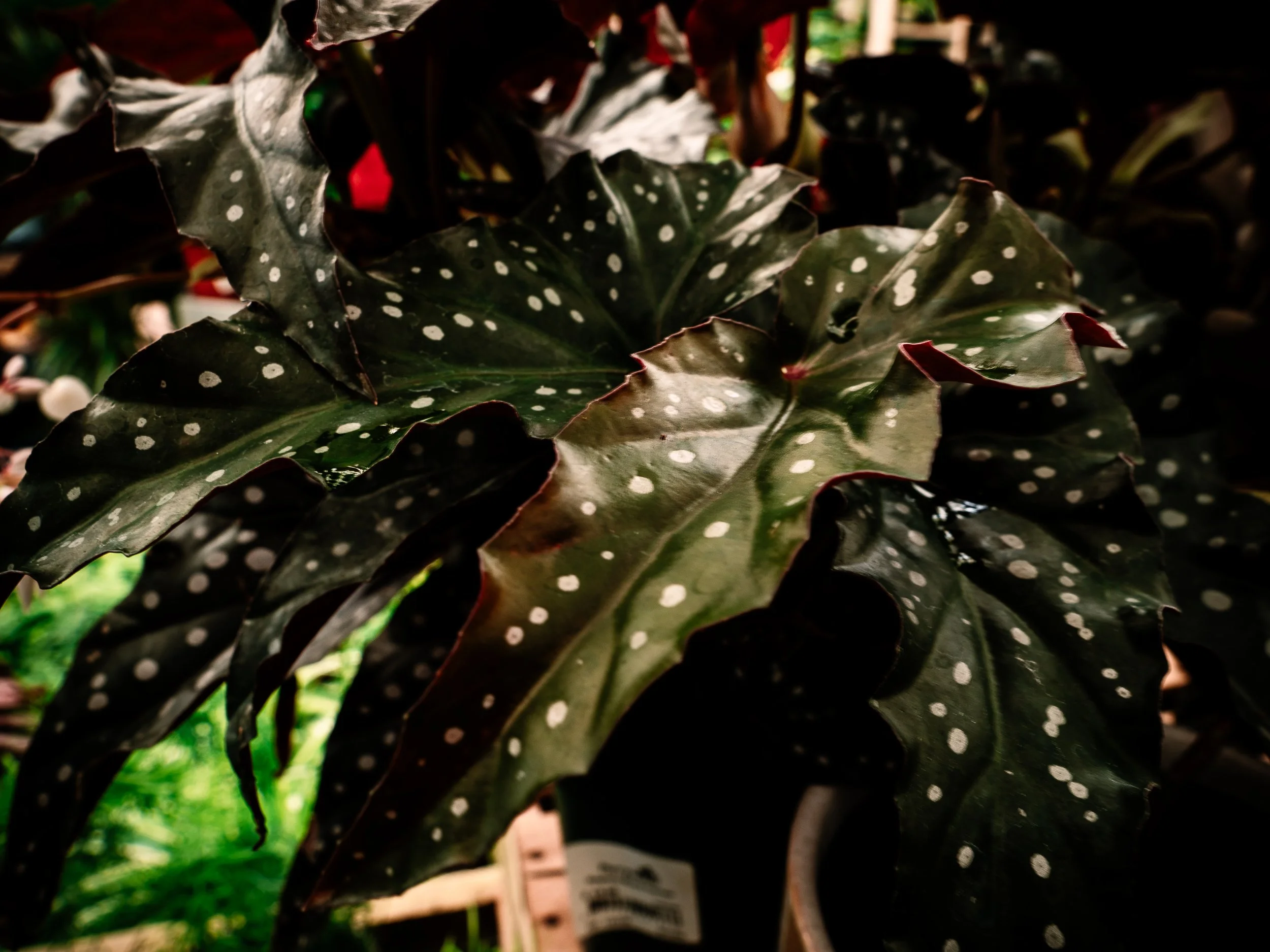
🌿 Why cane begonias work so well as houseplants
Cane begonias strike a beautiful balance. They carry that tropical softness, but with a little more resilience than many other begonia types.
Their upright, architectural growth makes them perfect for adding height and structure to indoor plant spaces, almost like bringing a small piece of the forest’s vertical layers into your home.
They are generally considered some of the easier begonias to care for indoors, though certain varieties, such as Begonia brevirimosa, can be more challenging and benefit from more stable conditions.
🌿 Jungle Floor Creative – vertical understory favourites
Some of my favourite cane begonias reflect both structure and story:
Begonia maculata — the iconic polka-dot begonia, with a kind of vintage charm that feels like it belongs somewhere between the 1920s and 1950s
Begonia hatacoa ‘Silver’ — less common, with a softer, more refined presence
Begonia brevirimosa — more rare, with incredible colour but a little more demanding
‘Maurice Amey’ and ‘Sinbad’ — beautiful examples of cane structure and pattern
For me, care has been relatively consistent across these varieties. I grow many of mine using a semi-hydro setup, in self-watering pots or clear cups, which helps maintain that balance of moisture and airflow that cane begonias naturally prefer.
When working with these plants, especially during repotting or transitioning into semi-hydro, I always reach for my Jungle Floor Creative water-resistant repotting mat. It keeps everything contained while building your substrate and reflects that same idea of creating a controlled, intentional growing environment.
Paired with a soft plant cloth, it becomes easier to handle larger leaves gently, keeping foliage clean and undamaged while you work.
🪨 Extreme habitats – limestone and rocky begonias
Some begonias come from environments that feel almost otherworldly, limestone cliffs, cave entrances, and jagged rocky slopes, where soil is scarce and conditions shift quickly.
These species are often found across southern China, Vietnam, and Southeast Asia, growing in karst landscapes. Here, rain arrives in bursts, flowing over rock surfaces and draining away just as quickly, leaving behind only thin pockets of moisture and organic debris.
Instead of spreading through soil, these begonias anchor themselves into crevices and cracks, where their roots experience a cycle of quick saturation followed by airflow and drying.
🌿 What that feels like in nature
Cool stone under constant humidity.
Water trickling, then disappearing.
Roots wedged into narrow spaces, never sitting still in heavy soil.
🌿 Environment of these species
🌱 Light
Light is limited and uneven:
Filtered by rock or surrounding vegetation
Often dim, especially deeper in cave-like environments
Occasionally interrupted by brief shafts of brighter light
These begonias are adapted to low, inconsistent light, not exposure.
🪴 Soil profile
Soil is minimal and fragmented:
Thin layers of organic debris caught in crevices
Mixed with mineral particles from rock
Extremely free-draining and shallow
Roots don’t grow downward, they:
Spread into cracks and gaps
Anchor into structure rather than soil
👉 These plants aren’t rooted in soil, but in opportunity
🌫️ Atmosphere
This is where the balance shifts:
Air is cooler, shaded, and very humid
Moisture exists more in the air than in the soil
This creates a contrast:
Roots dry quickly
Surroundings remain consistently humid
🌬️ Airflow
Even in enclosed environments, air is always moving:
Through cave openings
Across rock surfaces
Between crevices
This gentle airflow prevents stagnation and supports survival.
🌱 What this means for care
With these begonias, you’re not recreating soil, you’re recreating conditions.
🪴 Soil
Use a very open, structured mix:
Bark
Perlite
A small amount of organic material
It should feel:
Loose
Chunky
Fast-draining
👉 Water should pass through, never linger
💧 Water
Water lightly, but consistently:
Allow water to move through the substrate
Never let the plant sit wet
Avoid heavy soaking
Think:
👉 frequent refresh, not saturation
🌫️ Humidity
Humidity is essential.
These begonias rely more on moist air than wet soil, especially delicate species.
🌬️ Airflow
Balance humidity with airflow:
Prevents rot
Keeps conditions fresh
Mimics natural environments
🌿 Begonias from these environments
Begonia ferox — dramatic, spiked foliage like living armour
Begonia pavonina — iridescent blue leaves in low light
Begonia amphioxus — narrow leaves with striking red markings
🌿my Final Rambles
I’ll be honest, I don’t have as much hands-on experience with these types yet. Their extreme habitats make them more challenging to replicate indoors.
But after researching them more deeply, I feel like I understand their needs in a completely different way, and I’m definitely tempted to explore them again.
If you’ve grown any of these begonias, I’d love to hear your experience.
Feel free to share in the comments or get in touch, it’s always fascinating to see how these plants behave in different homes and environments.