

Benefits of Seaweed
This blog covers the Benefits of Seaweed with a main focus on what it is and how it benefits your plant collection.
Why did the seaweed go to the party?
Because it wanted to kelp everyone have a good time! 🌊😂

Seaweed is collected from being washed up on the beach.
I’ve recently been experimenting with seaweed fertiliser for my plants—because why not? It’s always fun to try new things and dig into the research to figure out what works (or doesn’t) for the little ecosystems we create for our plants. So, I decided it was time to do some investigating into seaweed as a fertiliser for my houseplants.
In my research, I discovered some pretty cool things about what seaweed can offer. I’ve heard of people using it in their gardens for tomatoes, roses, and loads of other plants. Turns out, seaweed can be used in a variety of ways: as a soil conditioner, a fertiliser, a compost booster, or even turned into a liquid fertiliser spray. How neat is that? 🌱 So, let’s dive into some of the ways seaweed can help with growing houseplants.
Seaweed
Seaweed is technically a plant—but it’s not your typical garden variety. “Seaweed” is the catch-all name for countless species of marine plants and algae that thrive in oceans, rivers, lakes, and other watery hangouts. It’s a major MVP in aquatic ecosystems, providing homes for marine life and a food source for many animals.
Seaweed comes in all shapes and sizes. Take kelp, for example—it’s like the skyscraper of the sea, creating underwater jungles that stretch from the seafloor to the surface. These kelp forests offer shelter, hiding spots for prey, and nourishment for tons of creatures.
There are about 650 types of seaweed (who knew?!), including Bladderwrack, Knotted Wrack, Sugar Kelp, Dabberlocks, Serrated Wrack, Spiral Wrack, Channelled Wrack, and Thongweed. These varieties, all native to the UK, have a clever trick up their sleeves: they float to soak up the sunlight they need for photosynthesis. Pretty impressive, right? 🌊


Photo credit: Mike Guiry, Keith Hiscock, Lucy Robinson, Juliet Brodie, Meet the Seaweed types, 21st January 2024
What Makes Seaweed Important to Growing House Plants.
Did you know seaweed is like nature’s multi-tool? You can collect it from the beach and put it to good use instead of letting it go to waste! Packed with goodies like minerals, vitamins, antioxidants, iron, and zinc, seaweed has been a superstar for humans and plants for centuries—since Roman times, no less! 🏛️
When it comes to plants, seaweed is basically their personal health coach. It’s loaded with nutrients like nitrogen, potassium, magnesium, and trace elements that can boost disease resistance and improve overall health. So, next time you see some seaweed, think of it as a gift from the ocean to your garden! 🌱✨
The Magical Benefits of Seaweed for Plants
Seaweed isn’t just the ocean’s version of confetti—it’s also a powerhouse for your plants! 🌊 Whether you mix it into compost or add it straight to your soil, seaweed breaks down beautifully and releases all its natural goodness. It’s like a spa day for your plants, and who doesn’t love that? 🌱✨
Here’s why seaweed deserves the spotlight in your plant care routine:
Soil Supercharger: Got tired soil? Seaweed to the rescue! It’s packed with nutrients like calcium, magnesium, and iodine, giving your soil the TLC it needs to help plants thrive.
Green Machine Booster: With goodies like chlorophyll, iron, zinc, and manganese, seaweed helps your plants produce even more chlorophyll (basically their energy drink). More chlorophyll means more sunlight absorbed, more carbon dioxide turned into energy, and overall happier plants. 🍃
Fruits & Leaves Galore: Thanks to nitrogen, phosphorus, and potassium, seaweed helps your plants grow lush leaves and bountiful fruits. Think of it as a plant productivity coach. 💪🌸
Natural Pest Bouncer: Seaweed has a salty attitude, a funky smell, and a texture that pests like spider mites and aphids just can’t vibe with. Its compounds act like an eco-friendly “No Entry” sign for unwanted guests. 🌿 (Bonus: It’s safe for your plants and the environment!)
For more cool pest-repelling facts, check out Aqua Culture.
Pro Tip for Buying Seaweed Fertilisers
If you’re ready to hop on the seaweed train (choo choo 🚂), make sure the seaweed is responsibly sourced. I can’t recommend Aqua Culture enough—they’ve got top-notch products, and you can snag a discount with the code JUNGLE15. Your plants and your wallet will thank you! 🌟
I hope this little blog brought some seaweed magic to your day and gave you ideas for pampering your jungle. Whether you’re growing tomatoes, roses, or just trying to keep your leafy green buddies happy, seaweed is a game-changer.
Happy growing, plant fam! 🌿💚
Citations and recourses:
https://www.mcsuk.org/what-you-can-do/citizen-science/big-seaweed-search/meet-the-seaweeds/
A Perfect Gift for the plant lover.
Do you ever find yourself struggling to buy the perfect gift for someone, especially when you know their interests but aren’t quite sure what to get? With Christmas fast approaching, I thought it’d be helpful to share some ideas for those with a plant lover in their life—because let’s face it, shopping for their green-thumbed passion can feel like navigating a jungle!
-
As nice as it is to have a plant for Christmas or Birthday. Check that they haven’t got it already. Also pay attention to what types of plants they collect normally as this will help you discover what your plant lover likes. Use google image search to find out the type of plant but be sneaky about it.
-
A lot of plant lovers I asked share that having a cute propagators is a great gift idea. We are talking about small vases and nice glass.
-
Theres loads of great gifts that plant lovers will love that don’t have to be plants or tools.
-
Sometimes you feel like you need a fast and quick option in this case I Generally think you can’t go wrong with plant shop vouchers. Jungle Floor creative does vouchers to.
-
Some plant lovers have and social media page devoted to there plants on those pages they might have a wish list check it out to get some ideas.
-
Steer clear of plastic plants as gifts. Most plant lovers aren’t fans and might “turn up their noses.” Plus, they’re not great for the environment. Opt for eco-friendly, thoughtful gifts instead—they’re sure to be much more appreciated!

For plant enthusiasts, there’s nothing better than unwrapping a gift that nurtures their love for greenery. Whether they’re a seasoned plant parent with a home full of thriving foliage or a beginner just starting their plant journey, there’s something out there that’s just right for them.
In this blog, we’ll dive into five helpful tips for buying gifts for plant lovers. Plus, I’ll share some fantastic recommendations from small businesses and insights from plant enthusiasts themselves to make your holiday shopping a breeze. Let’s get started!
My Top tip for buying for plant lovers is if in doubt get a gift certificate this could be from either a plant shop, garden centre or a business like mine which sells planty themed products.
⬅️ See left for more tips.
gift requests & ideas:
On my social media pages I have asked the plant lovers to share what is on there wish list this year that will make the perfect gift for a plant lover.
Plant themed creative gifts
A planty Print
There a few awesome botanical artists out there to name a few, Myself as photographer.


I’ve brought a lot of Miki’s Art and she was meantioned a few times when I asked my followers on my social media. They can be adapted slightly to suit the person your buying for and she also does Bundles of prints . Modern house plant prints lovingly designed and printed in England. She also can send international if you have any questions about her prints I would send her a message on Insta.
BethanDesigns is a small artwork business selling numerous art prints, clothing, bags, gifts and more. I personally have got a lot of custom prints from her as well as buying her Lino prints. I highly recommend if your looking for something that extra special from a UK artist. Bethan is my recommendation for that extra special print. She not only great for that botanical print but she also sells some plant accessories, stickers, sweatshirts, pin badges and of course her beautiful leafy prints.


Halle Faris and many more. Plant prints can be lino prints, paintings and photography prints. Then to up the boost the gift even more you could buy them a frame to. Examples of these amazing artists I will share below. Choosing a print to there jungle vibe can be a perfect gift for a planty love.
Candles
Candles are always a nice way to improve a jungle space and essentially as after using one you can reuse the glass or pot it came in when finished burning the candle as decorative a planter. They is a known tip when reusing Candle pots what you have to do is put the candle in the freezer and aparently it makes its so much easier to get the leftover wax out before using a candle pot and a planter. A great creative Leaves & Prickles makes this amazing lovely scented candles with fun planty saying and puns. She also has he trademarked Terrarium candles. I’ll let Monika share a little about her business here “Hi, I’m Monika! I create beautiful and unique terrarium candles that make delightful gifts for any occasion—guaranteed to bring a smile. Each candle is hand-poured in small batches in my home kitchen using natural soy wax and cruelty-free fragrance oils, then thoughtfully packaged in recyclable paper.” I highly recommend her candles she makes some really good Quality candles for the plant lover at reasonable prices.


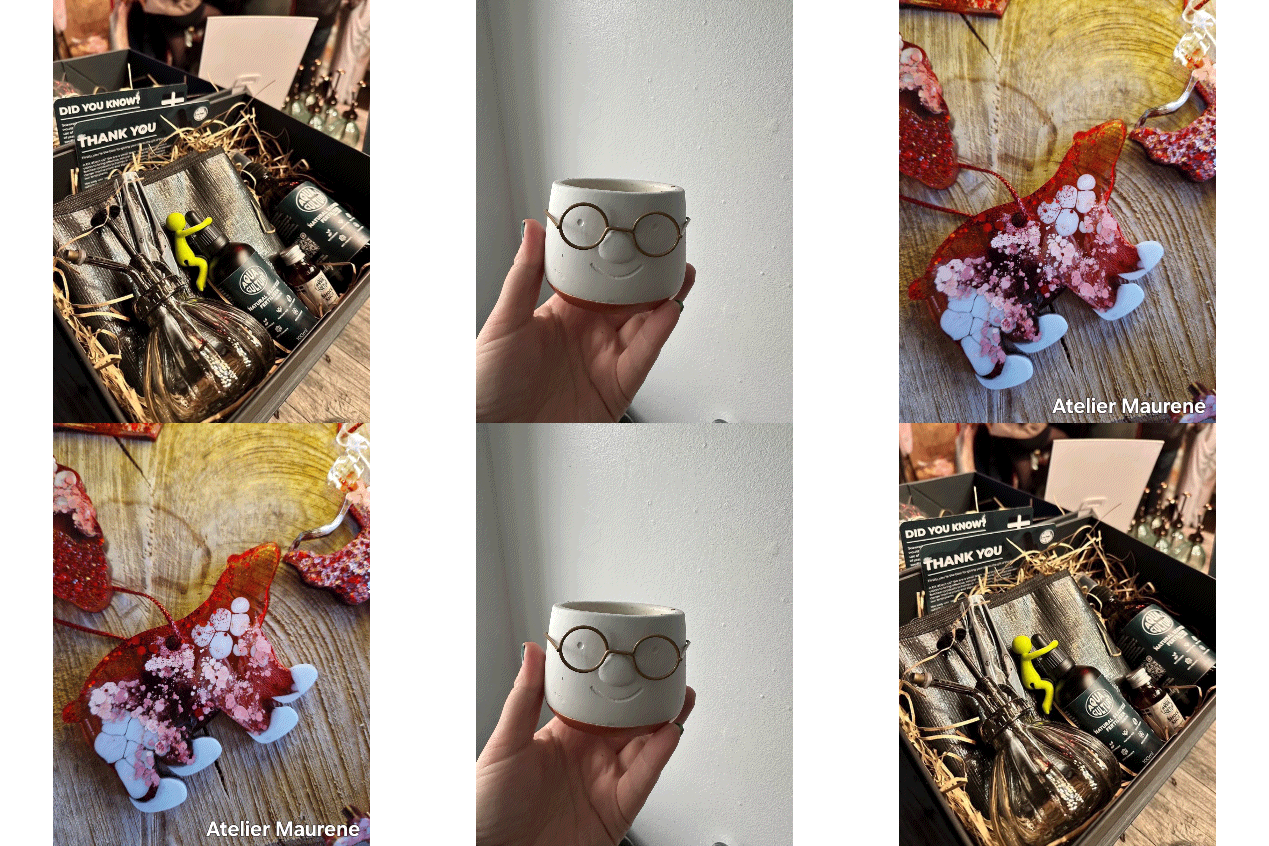
Resin Art or clay is a popular amongst plant lovers one of the two artist like this I recommend is atelier.maurene she produces there unique pieces of art with resin, dried flowers and each piece comes with its unique design and use. I’ll share some of her work for the EU readers again.


Another great idea for plant lovers is crafty, handmade plants made from paper or other materials. A standout option is Nicole’s Jungle, which offers a subscription box where you can create your own paper plants. These aren’t meant to go in plant pots, but they make delightful decorative pieces for plant lovers to enjoy. The best part? They add to the collection without requiring any care—a perfect solution for those who love plants but might be short on time or space for more live greenery.


One brilliant artist who paints incredible plant pots and other ceramics is FoxBerry Ceramics. She has an exceptional eye for detail, and anything she creates would make the perfect gift for any botanical lover. Her creations include painted watering cans, pots, leaf decorations, and beautiful botanical cards. I have personally purchased a few items from her, as pictured below.


Plant Pals and Novelty pots


Plant Pals are adorable little creatures made from various materials that can hang on plant pots or, if lightweight, climb the stems of plants. They make a fantastic stocking filler for any plant enthusiast—something even my plant-loving friends on social media have raved about! Personally, I’m on the fence about them. I received one in a Secret Santa once and wasn’t too thrilled, but it’s still happily perched in my big Monstera pot, so it does add a bit of charm.
Some Plant Pals are not just cute but practical too! For example, some include a moisture meter, which is a handy way for plant lovers to check if their plants need watering. It’s a gift that’s both decorative and functional—a win-win!
Do you have a plant lover thanks also obsessed with a particular animal, movie or show. Another great gift for the plant lover is those cute novelty pots.
One Business I recommended is ingadi.ie they make a couple of designs but there most popular pot being the Happy pots. The good thing about these is that they are all 3D printed.


Little Pricks has a exstensive collection of Novelty pots like Gurgu, Disney, polly pocket, Simpsons, Pokemon and animals.


Practical Gifts For Plant lovers
propgation stations:
Here’s a example of a propagation station ⬇️

Every plant lover enjoying growing baby plants and its often requested to have some lovely ways to do this. Some plant lovers like to grow there cuttings and snips in water therefore a big request from plant lovers is some lovely glass to grow there snips and cuttings from.


There are lots of different types out there some with test tubes in wood, Mushroom shaped Glass, small pretty glass vases in various sizes, shapes and colours. Generally tend to be small in size. which is what works for a lot of plant lovers. I recommend that you don’t wrap up a large empty gin or wine bottle.
I found some of these cute from a pop up shop in Manningtree Essex or you could go to a charity shop, Vintage and Antique shop and find some pretty ones just make sure you clean them really well before wrapping up. For the EU readers the resin ones were made by 𝐑𝐞𝐬𝐢𝐧 𝐚𝐫𝐭 𝐛𝐲 𝐌𝐚𝐮𝐫𝐞𝐧𝐞 you can click on the images of the two resin green ones to find out where you can get them from and the last one is a called a propagation plate which Blad.en.beton sell and so do Soil ninja. Shell on Earth Also have some propagation stations to including the mushroom vase, test tube rack and a set of small vases.
Labels, and other nifty planty accessories
As a plant lover myself, I enjoy identifying each plant, understanding its unique needs, and discovering how to help it thrive. Building my collection is such a rewarding process, and I know I’m not the only one who likes to label plants, encourage their growth, or explore the best tools and techniques for their care.
Whether it’s talking to them, using snips to propagate, or investing in the perfect self-watering pot, plant enthusiasts like us are always on the lookout for nifty tools to make plant care easier. Clear or transparent pots, for example, are perfect for monitoring root growth.
Soil Ninja is an excellent place to find many of these helpful accessories. Including soil checkers, aroid tower pots, watering cans, soil and substrates. Or if you don’t know what practical things the plant lover needs a soil ninja voucher will make any plant lover happy.


Grow Lights
I’ve heard countless plant lovers express their wish for a grow light as the perfect gift! Choosing the right one can be tricky, so I’ve shared suggestions and reviews on my blog to help. For those in the UK and parts of Europe, I recommend checking out UK-made grow lights like the Pianta and Claria, both of which are featured below. These make fantastic gifts for helping plants thrive year-round! On my Affiliate link you will Receive a 10 percent discount.
Also for a grow lights in a more world wide sense Sansi have a variety of different styles of lighting one I personally recommend is there pot grow light. Code: JungleFloorC32 (32% off on SANSI site) Pot light check it out.


3D printed Moss Pole or Moss habitat
If you know your plant lover has climbing plants, this gift will surely impress them! Climbing plants thrive on moss poles or supports that encourage healthy growth and larger leaves. Often, plant lovers create makeshift moss poles or leave their orchids unmounted.
These stylish and practical gifts can elevate their indoor jungle beautifully. Available in various colors, Mythos 3D Design moss poles and trellises are made from PLA biodegradable plastic—an eco-friendly choice that looks great and supports the environment.
Use Koto as a horizontal table top moss cradle, a stunning plant centrepiece, or wall mount it for a truly unique piece of plant art.

The plant picture frame, mini moss habitat that will let you display your favourite wall-flower (or any other wall hugging plant) just about anywhere.

3D Print Moss
There are two types of moss poles you can gift: D-shaped and round poles. For something unique, check out Mythos 3D Design for printed options in various colors. I highly recommend the Monstera Pattern Trellis: D-Shaped Moss Pole "Beautiful Barbara"—it's extra special and sure to impress any plant lover with its thoughtful design.
terrarium’s Ready made or make you own
“the plant lovers”
A "make-your-own terrarium" kit is a perfect gift for plant lovers, combining creativity, nature, and personalization. It includes everything needed to craft a unique miniature ecosystem, offering a fun and relaxing hands-on experience. Terrariums are low-maintenance, ideal for all skill levels, and add greenery to any space. This thoughtful gift grows and thrives over time, serving as a lasting reminder of the joy of creating something special.
you can get this sort of thing just about anywhere and you can by them ready made by someone like Aloe my lovely Succulents or any plant shop close buy. I know that Shell on Earth has some terrarium glass and kits.


To add something more extra to a terrarium these pieces of glass from MyFrond would make a awesome gift for a plant lover.
Plant books


Gift Sets


PPotting Mats and Other Jungle Floor Products
I almost forgot to mention this one! But here it is—one of the last (and best) gifts any plant lover would absolutely appreciate. A potting mat is an incredibly practical gift because it’s not just great for the plant lover but also for anyone they share their home with. It helps contain the mess during repotting sessions, making cleanup a breeze.
You can choose a general potting mat or go for something extra special, like a Jungle Floor botanical-themed potting mat. Not sure which print they’d love? A gift voucher is always a safe bet so they can pick their favorite design and colors.
At Jungle Floor Creative, I also offer a range of gifts perfect for houseplant enthusiasts. From leaf cushions, blankets, and soft plant cloths to soil scoops, botanical-themed bags, drink bottles, and more, there’s something for every plant lover. And don’t forget—gift vouchers make a thoughtful and flexible option for anyone still deciding!
Wrapping Up
Lastly, let’s talk about one of the most-requested gifts: vouchers! Many plant shops offer gift cards, which are ideal for plant lovers who enjoy choosing their own treasures. Whether it’s plants, specialty soil from Soil Ninja, or curated bundles from Blad.en.Beton, vouchers give them the freedom to find exactly what they want.
I truly hope this guide has given you plenty of gift ideas for the festive season or any special occasion. A huge thank you to everyone who shared their businesses and contributed to the gift suggestions.
No matter why you found this blog, I hope it’s helped you discover some thoughtful and unique gifts. Wishing you a joyful holiday season and happy celebrations ahead!
Plant Support

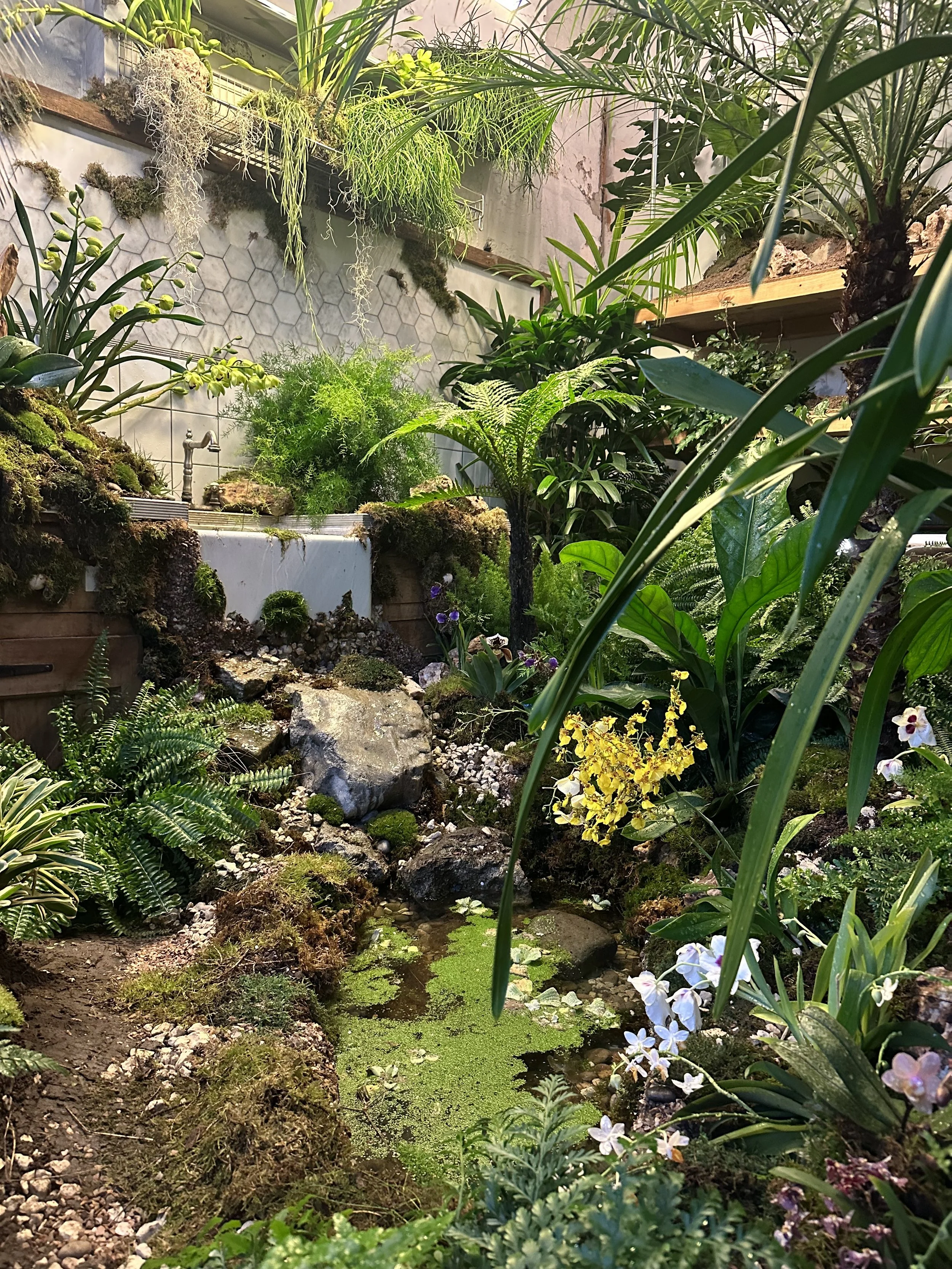
I’ve recently been experimenting with the growth of my Rhaphidophora Tetrasperma, also known as the mini monstera. I don’t know if you’ve seen this, but it’s growing in such a cool way that makes my jungle look even more like a real jungle. The problem I’ve been having recently is trying to train it to stop attaching to my ceiling and potentially damaging itself. I often find myself wondering if I’m doing the right thing, but I must be, because it seems to be loving life!
Plants need support beyond just the regular “Come on, you’ve got this—I’m rooting for you!” Although that encouragement is great too, it’s not quite what I mean when I talk about plant support. There’s more to it than just watering them. Some plants climb, some don’t, and some have enough strength in their stems to stand upright on their own. Others trail happily downwards, and some even crawl along the soil. As a plant parent, the advice I’m giving you is to think about what support really means and how you can help your plants thrive, beyond just cheering them on.
Things to Consider Before Using Physical Support Tools:

Not every plant needs support. Some plants naturally have long stems that grow outward without needing help.
Some plants are strong enough to stand on their own and need space to move freely to receive enough light for photosynthesis.
Some plants crawl across the substrate. You can often tell by the way their stems grow sideways rather than upwards.
There’s no one-size-fits-all solution. Different plants prefer climbing on different surfaces, so it’s important to match the support to the plant’s natural growth habit.
What works for me might not work for you. Each plant has its own unique needs and growing conditions.
Support doesn’t always have to go upwards. Some plants prefer trailing or crawling, so they don’t need vertical structures.
Not all plants need to be put on poles, even if they’re sold that way in stores. For example, orchids are epiphytes, which means they naturally grow in tree canopies. They absorb moisture and nutrients directly from the air and surrounding debris. Try taking the pole away and watch them grow..

To ensure that stems are strong and resilient, it's crucial to provide holistic care for the plant and its needs. Plants store water in their stems and can lean towards light as needed. Restricting their movement can adversely affect their growth. However, when supporting a trailing or climbing plant, training the plant is often necessary. Without proper support, indoor plants might damage walls, which is an important consideration for renters. For example, I've seen aerial roots on a Monstera plant growing beneath objects in search of water.
To provide some support and training for plants, here is 5 plant support ideas.
Before I begin, I’ve decided that there’s no "right" or "wrong" way to support your plant, since every plant has its own unique growth habits. Rather than overwhelming you with endless options, I’m going to focus on the plant supports I personally use in my collection. I’ll also mention one type of support that I haven’t tried yet but am excited to experiment with—especially since I love growing orchids and ferns. So, without further ado and in no particular order, here are five methods of growth support I’ve come across as a houseplant lover.
One: cane or the trellis


I have previously used a trellis for my Scindapsus and currently use canes for my begonias, specifically the bamboo cane variety. Over the years, I’ve found both of these methods useful, though I believe bamboo canes are more environmentally friendly, especially knowing that bamboo can be grown in this country. Similar options include coir poles, plastic green poles, thin wooden poles, and the latest introduction to the plant world, the Kratiste:
"Crafted from a blend of potato starch and Elephant Grass, this support plank provides natural-looking support for houseplant climbers and viners. Its rough, textured surface not only adds to its visual appeal but also serves a practical purpose by retaining water and offering a stable structure for plants to grasp onto as they grow.”
I’m sure there are countless other types of poles you could use. I mainly use these for plants with thin stems that generally have one main stem. In the case of my Begonia, I just wanted it to start growing upwards instead of flopping onto the soil. I also have a few climbing plants that would benefit from a cane, like my Rhaphidophora tetrasperma, Cebu Blue, and Philodendron Ghost. The Kratiste could also be great for plants like Monstera Dubia and Monstera deliciosa.
Trellises can be made from strong wire bent into shape, 3D-printed, or even created out of coat hangers. You could also let your plants climb up a shelf! Keep in mind that this works well for plants like Hoya, Cebu Blue, and smaller vining Monstera varieties.
Here’s where I talk about my thoughts on these methods. I suggest reading up on how these types of plants grow naturally, as they may have different climbing habits that don’t adapt well to some supports, like a trellis. For example, orchids are often sold to us on a cane in stores, but after doing research into this genus recently, I discovered they are naturally epiphytes. They grow in the wild on tree canopies, receiving their moisture and nutrients from the air and surrounding debris. Based on this, you might find that removing the cane makes them look even prettier.
Both methods—canes and trellises—are great for providing support, but it’s important to consider how aerial roots play a role.
Imagine using bamboo sticks, wooden trellises, or even cool branches you find outside—your plants will climb them like they’re in the wild! These organic supports make it easy for your vines and creepers to latch on and grow strong.
I can recommend Squircle Trellis - 10 cm across, 1 cm thick by Mythos 3D


Two: Trailing or Letting It Climb
Some plants don’t need support and are perfectly happy trailing. For example, string varieties like String of Hearts or String of Turtles naturally trail beautifully. Another reason to let a plant trail could be that it simply prefers this growth habit. Trailing plants look amazing cascading from bookshelves or hanging in macrame hangers, adding a lush touch to any space.
That said, some plants can produce larger leaves when they’re supported as they grow. For instance, I have a Rhaphidophora tetrasperma that I’ve allowed to climb freely along my bedroom wall. It’s vining towards the window and growing across the wall, but it often needs a bit of training to prevent damage—it loves to grow toward the ceiling, resulting in leaves getting bent or torn.
Certain plants don’t require support to thrive. They might trail down naturally, or their leaves will fan out towards the light source. However, if you want to encourage climbing, you can try plant supports like moss poles or even wall-mounted options.
Three: Organic Options
There are countless ways to support climbing plants using organic materials. While some methods have already been mentioned, here are additional organic options you can try:
Kratiste plant poles, planks, and sticks
Coco coir poles
Untreated wooden planks (great for shingling plants)
D-shaped moss poles with live moss (DIY versions are popular!)
Round moss poles with live moss
Each of these methods not only supports plant growth but also enhances the aesthetic appeal of your space. Organic materials blend beautifully with plants, giving your home or garden a natural, earthy look—far better than a plastic stick or chopstick! Using organic options can feel like bringing a piece of nature indoors.
If you’re feeling adventurous, you can even go for a walk and find unique pieces of wood to repurpose as plant supports. This simple addition can be incredibly beneficial for your plant’s growth and create a truly one-of-a-kind display.
Examples of Plants Using Organic Supports
A Monstera with large, green, split leaves climbing a thick, round pole made from coconut husks.
Another Monstera with slightly smaller leaves, also supported by a coco coir pole.
A Rhaphidophora tetrasperma with curvy, split leaves climbing a white wall with the help of a bamboo stick.
A Monstera with large, veined, green, split leaves growing sturdily along a bamboo stake.


Four: 3D Printed Moss Poles.
I believe this is one of the coolest ways to help your plants grow! Of course, there are both pros and cons to using a 3D-printed pole, but there are several different methods to explore.
For plants with aerial roots, like Monstera and Philodendron, using organic climbing supports (as mentioned above) can provide many benefits. The main advantage is that it mimics the plant’s natural environment. Think of organic materials as a natural jungle gym for your climbing plants! Here’s why they’re awesome:


Why Organic Climbing Supports Are Great
1. Moisture Magic:
Using materials like moss poles or coconut fiber (coir) gives your plants an extra bonus—humidity! These materials retain moisture, creating a spa-like environment for climbing plants like Monstera and Philodendron.
2. Healthy Growth, Naturally:
Organic materials are excellent for plants to grip onto, encouraging upward growth. The better they can climb, the more light they access, resulting in larger leaves and more vibrant "jungle vibes."
3. Eco-Friendly:
Organic materials are biodegradable and much kinder to the environment compared to plastic or metal poles.
For a budget-friendly alternative, you can also find 2D net prints that convert into 3D poles, offering a cheaper solution.
Cons of This Method
Cost:
Organic moss poles or 3D-printed options can be expensive, especially if you have many climbing plants. While the 2D net options are cheaper, I haven’t personally tried them to provide detailed feedback.
Honestly, the price is my only downside when it comes to 3D-printed moss poles.
Five: Mounting Plants
Some plants, like epiphytes, naturally grow on trees and take nutrients and moisture from their surroundings. Orchids, certain fern species, and moss are great examples of epiphytes.


Definition:
An epiphyte is a plant that grows upon another plant or object for physical support without harming its host.
To cater to epiphytic plants, there are various mounting methods to choose from:
A wooden chopping board
Any block of untreated wood
3D-printed moss habitats
Driftwood
When mounting, it’s important to consider the plant’s specific care needs and humidity levels to ensure a healthy environment.
I hope you found this blog helpful and inspiring! If you have other creative ideas or methods to support your plants and help them thrive, please share your experiences and suggestions in the comments below.


Images Moss Habitats mounts, black trellis and yellow D-shaped moss pole by Mythos 3Design and the rest Jungle Floor Creative
Soil and Componenets
Discover soil and the many components you can use and understand why there my favourite components.
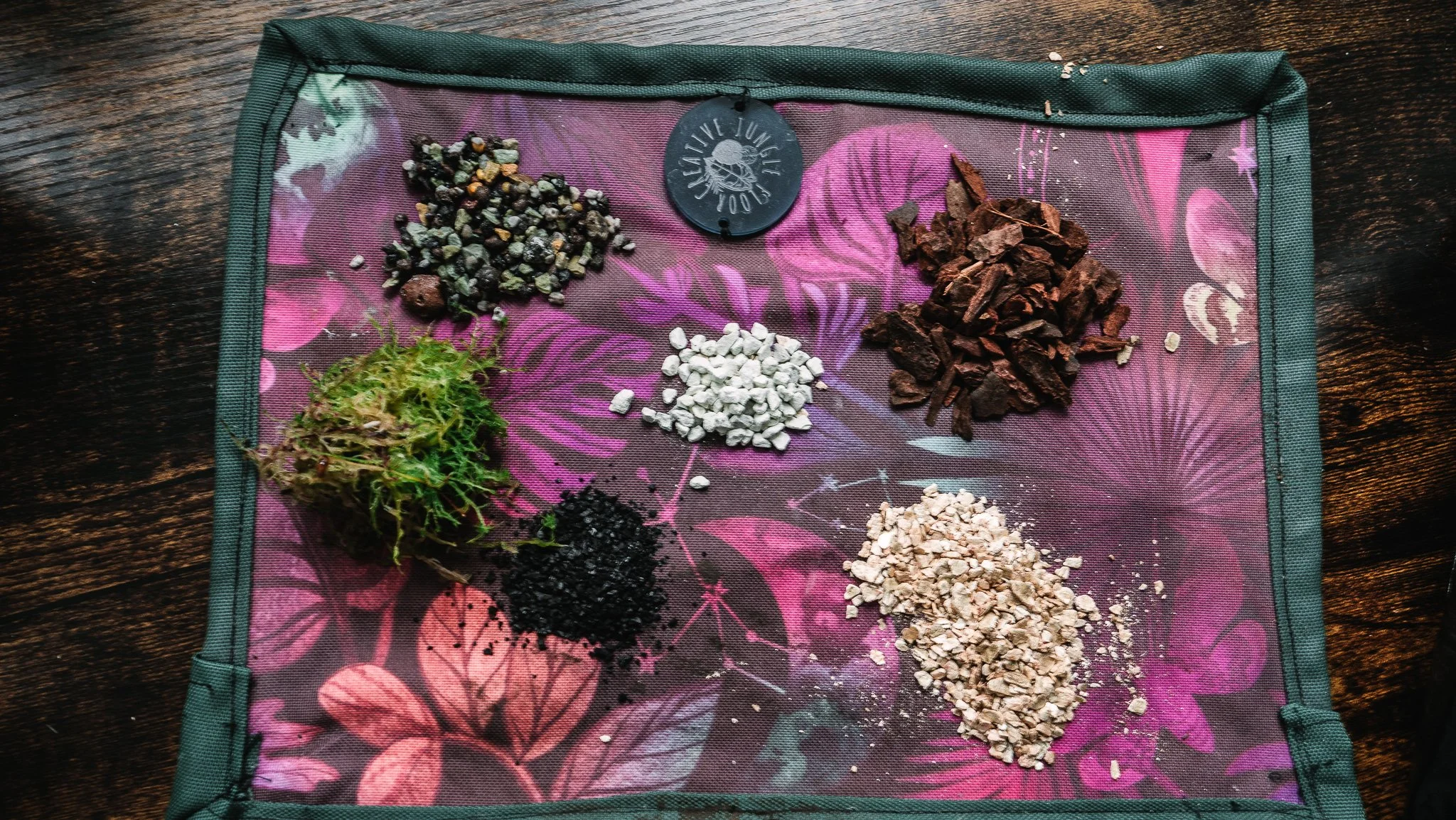
Substrate and Components. top left Soil.Ninja Semi Hydro, Middle top Zeolite, Top Right Fine Bark, bottom left Fresh Sphagnum, Middle Bottom Activated Charcoal & Bottom Right Vermiculite. All Place on a small Jungle Floor Shelfie mat.
I often hear people discussing their preferred methods of plant propagation and growing techniques. For me, I discovered the Soil Ninja soil method about three years ago. Previously, I had been using Westland House plant Mix, not realising that it was not the best option for my plants. The Westland mix contained mostly peat compost, which caused the soil to retain too much water or not enough. Also when I started collecting for real alot of House plant composts were only just changing the peat free. Because Peat or having just coco coir lead me to frequently over watering my house plants or not watering them sooner at they would dry out to quickly. Which was not making it easy to look after plants like Maranta, Alocasia, and Begonia that can't tolerate drying out. That's when I discovered Soil Ninja. They taught me to research where the plant is from and not rely solely on the tag's instructions, which they often say same, thing: bright spot, water once a week.
I started looking at various plant types and realised Soil Ninja didn't have a mix for each plant, but they did have a plant index which was helpful.
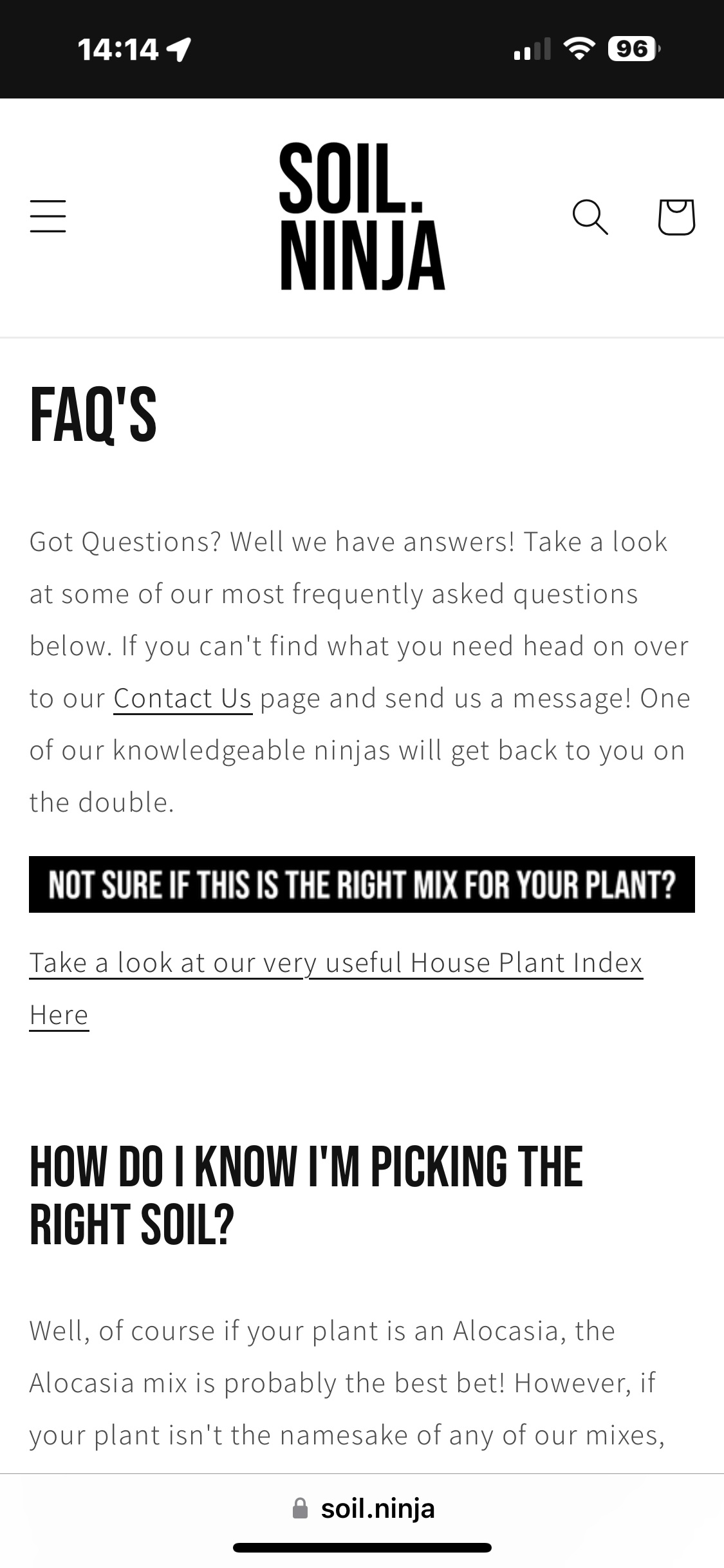
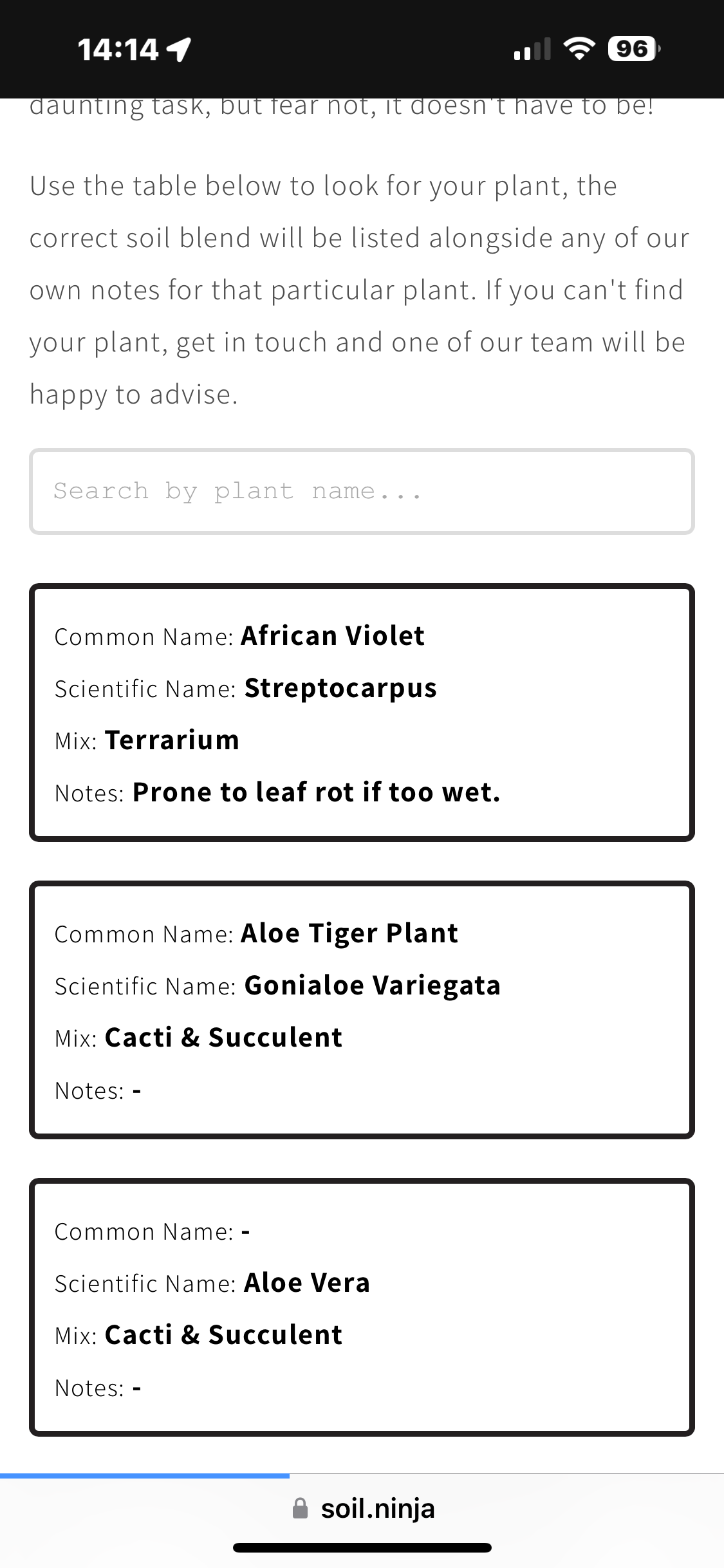
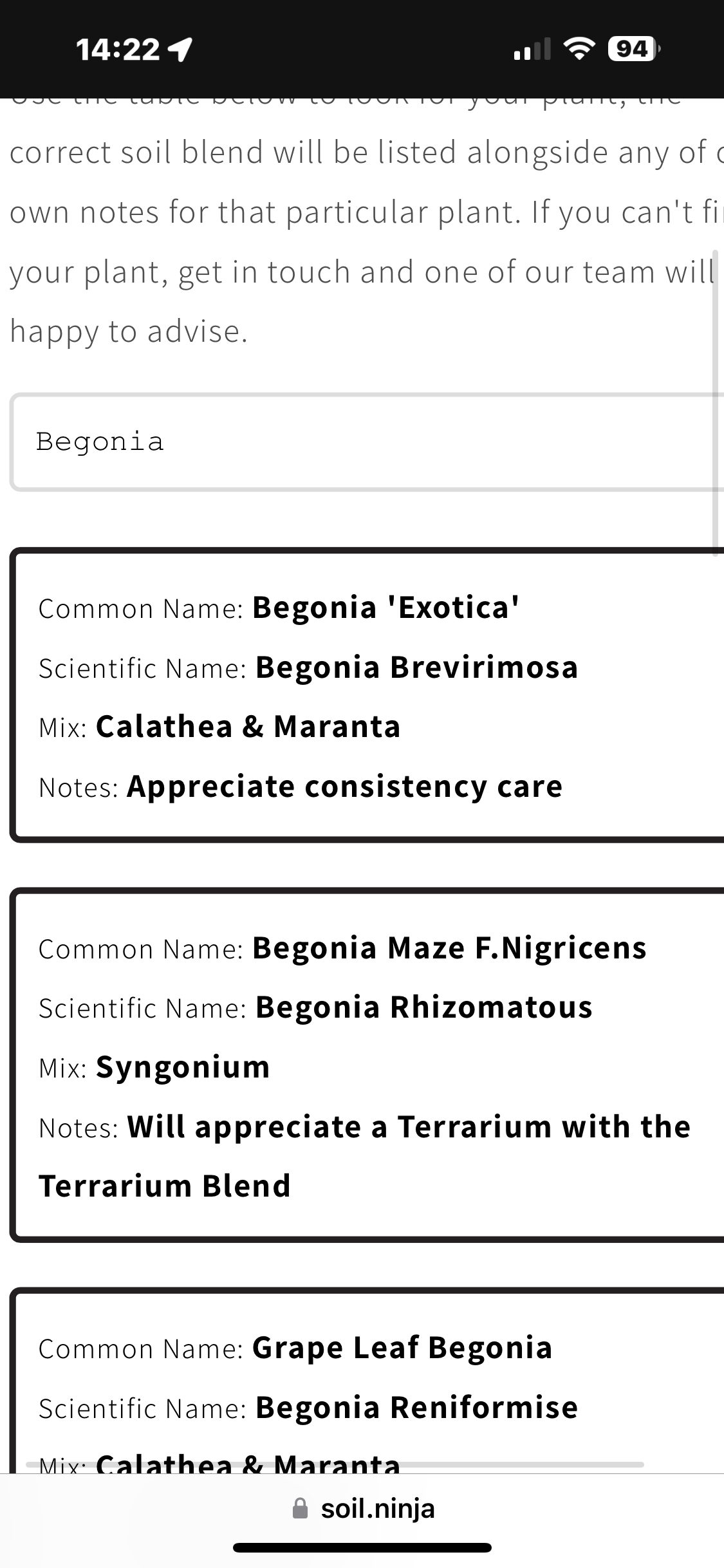
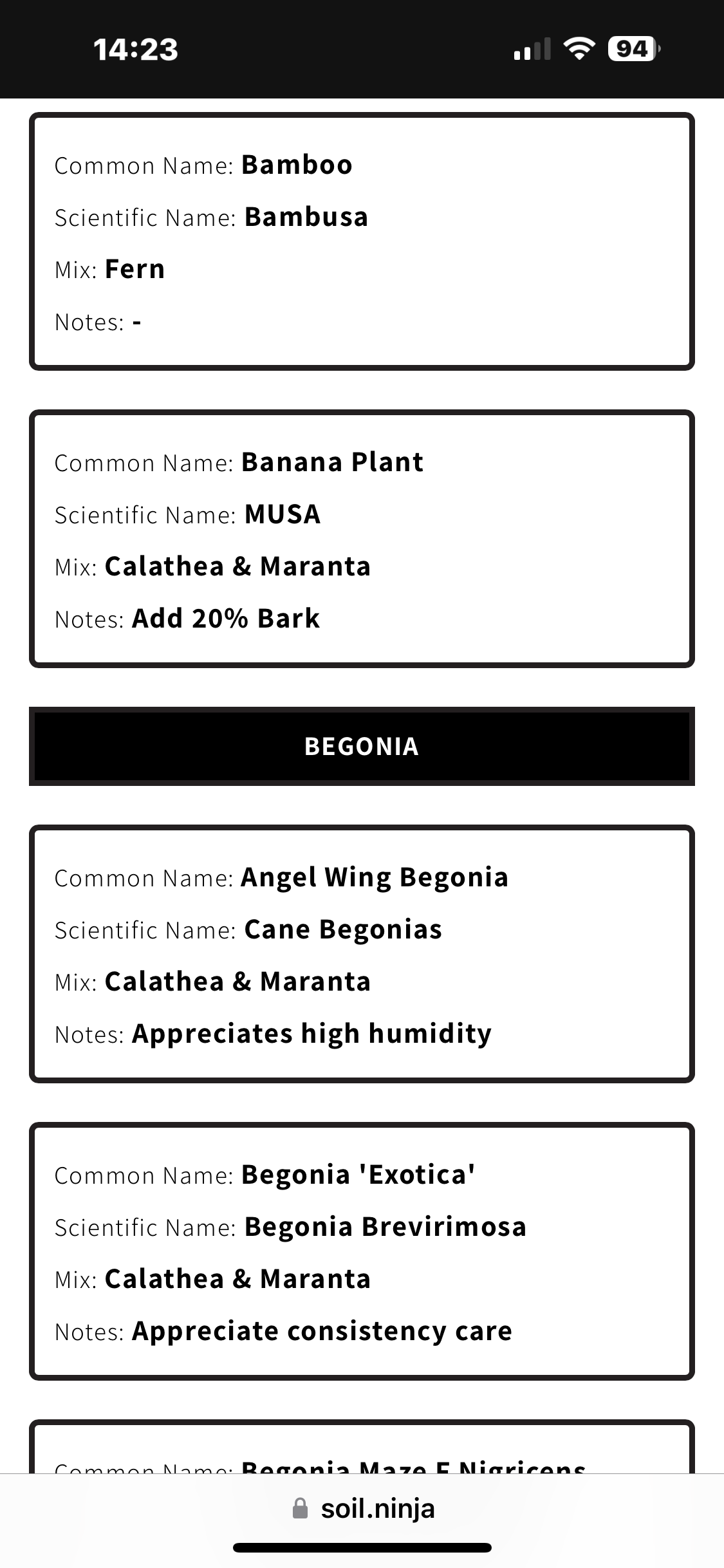
The list of plants on the index is impressive and helps to understand the best soil mix for your house plant Genus or species. Over the years, they have put in a lot of work to adapt to the soil quality they naturally grows in. I would highly recomend checking this plant index out to help you understand the soil that you plant needs.
By mimicking the environment of our house plants, we can help them adjust to growing in an environment that is vastly different from their natural habitat. However, it's important to note that my advice and understanding come from a UK grower's perspective in the Fens, a very humid part of the UK that can get cold during the winter. If you live anywhere else, please keep in mind that my advice may not apply to your specific location. I would like you to consider whilst reading this is your house might be old like my house was in Cambridge and it was either so cold or super hot. Everyone has there own plant environment and this is something for you to consider before continue to read this blog. I have used my own UK grower experience as well as knowledge and research from others.


Whilst researching for this blog, I decided to introduce myself to the environment in my back garden and the environment of different soils around me exploring what I observe from that sample and checking on the PH of the soil also. The way I did this was using my potting mat I took a few different Samples. First Sample I took was the soil in my back garden. Firstly I took note that it was very grainy and fully of stones and rubble. It appeared to have the texture of clay when wet. I tested the PH of this soil concluding that it was very Alkaline and would struggle to retain moisture. I noticed this over the next few days with the rain and even a few days of rain it didn’t look like the soil had be wet previously.
A cactus enjoys one big watering every now and then and no water during the winter, as it gets too cold for the cactus to actively grow unless you can replicate its ideal environment. Many cacti come from dry environments with soil that is often made of sand, silt, and porous stones like pumice. They tend to prefer soil that is neutral to slightly alkaline in pH. I decided to measure a cactus mix myself to add to this understanding. I discovered the Soil Ninja Cactus mix to be more alkaline, with a pH of 9.0. This is likely due to sodium content, which makes the soil dry out easily.
The recommendation for your plant mix will be very different depending on the natural environment your plant would normally grow in. Lets Explore a few examples of plants and there environment.

Alocasia
Plants grow predominantly in primary and secondary forests, early regrowth areas, open swamps, on the forest floor, in leaf litter, and sometimes in humus deposits on rocks. They are usually found in lowlands, in ever-wet conditions, and in deep shade. Focus in on the Alocasia Zebrina which grows naturally in the Philippines which has generally two seasons wet or dry, soil would be peaty and wet.* Volcanic Ash may likely be present, meaning the soil would very fertile, retaining a large amount of moisture. Philippines is a place of lots of little islands this will make for a very humid environment with low land rain forests and
Chamaedorea elegans Aka Parlour Palm
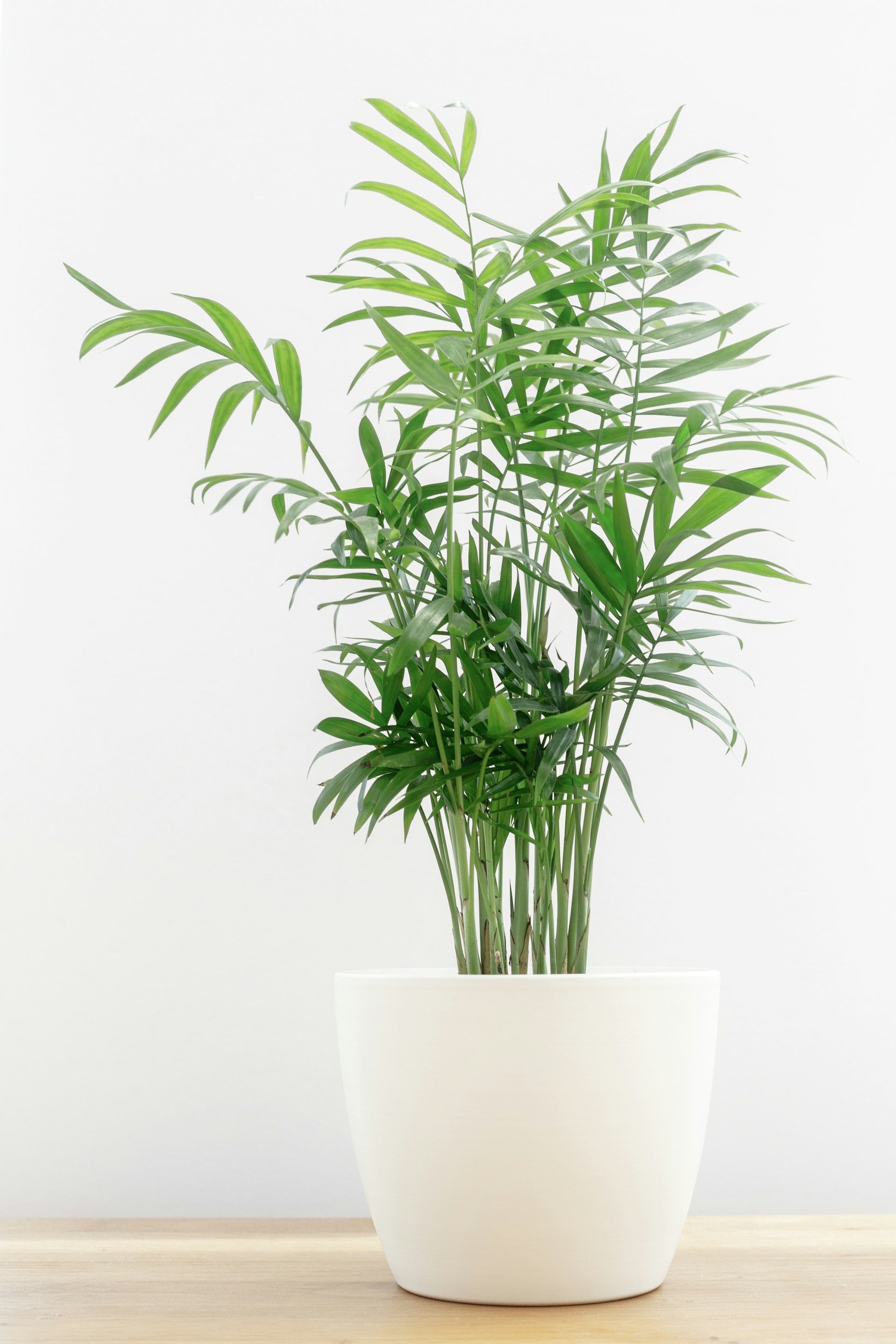
Plants like the Chamaedorea elegans, also known as the Parlour Palm, grow natively in Southern Mexico and Guatemala. These regions have high humidity, thin soils, and volcanic activity, resulting in very fertile and stony soils with limestone. This is due to the prevalence of steep slopes and deforestation. By exploring this information, you can understand the type of soil suitable for this plant. Volcanic soils can range from very acidic to neutral, and they are likely to hold a lot of water while still allowing air to flow to the roots. some of these plants may be closer to the ocean with water on both sides and sandy beaches.
Monstera Deliciosa
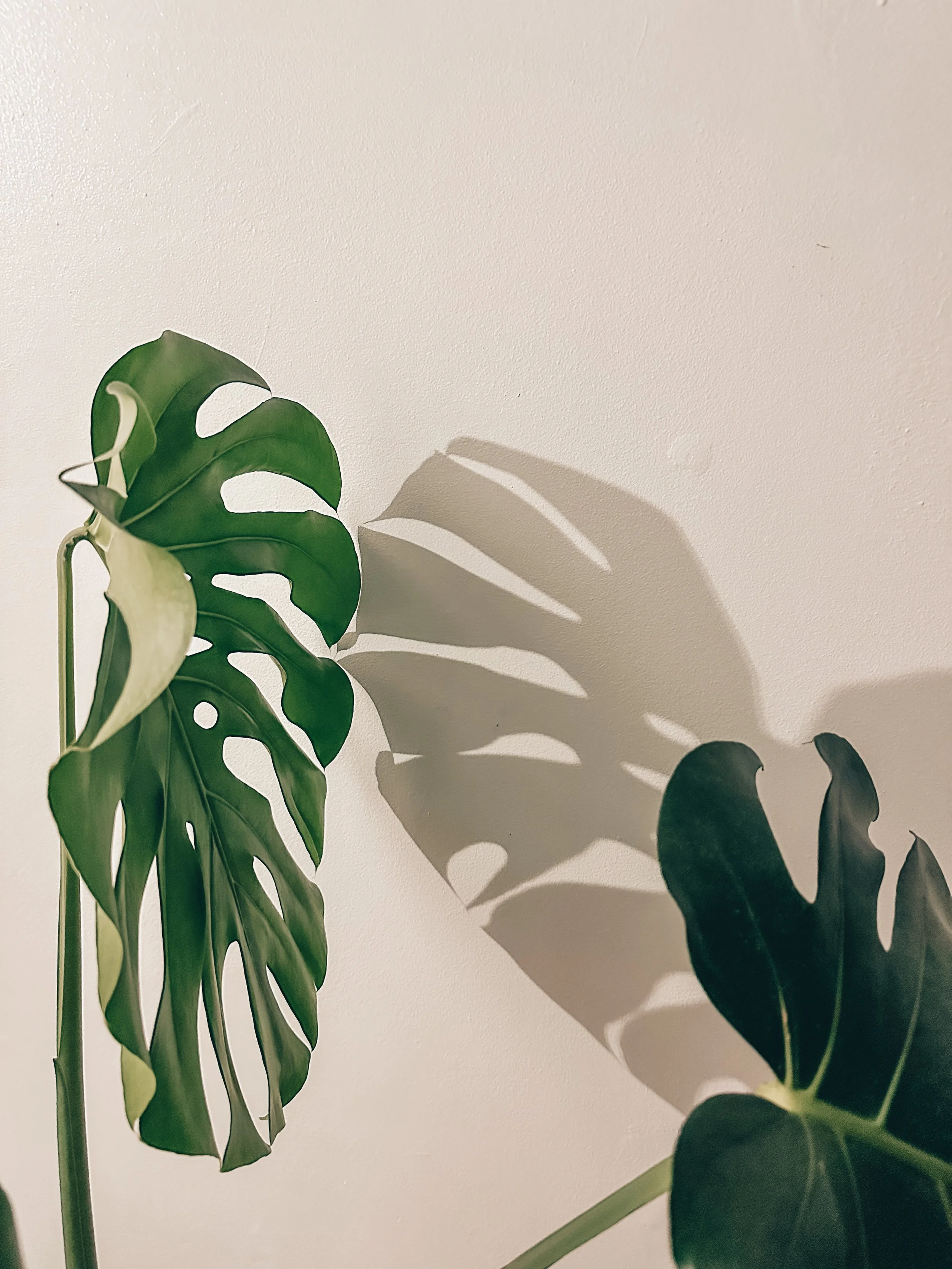
In its native habitat, it can reach 20 m as it climbs up trees, by means of aerial roots, in search of light. The aerial roots hang down like curtains from thick, fibrous stems. * Because these plants are set to climb this would mean that they like the humdity but don’t mind drying out. I’ve explored and research the soil they like best would be well draining as they climb. A lot of places they naturally grow well can Be sandy soil and are consider if in the shade can deal with lack of water every so often.


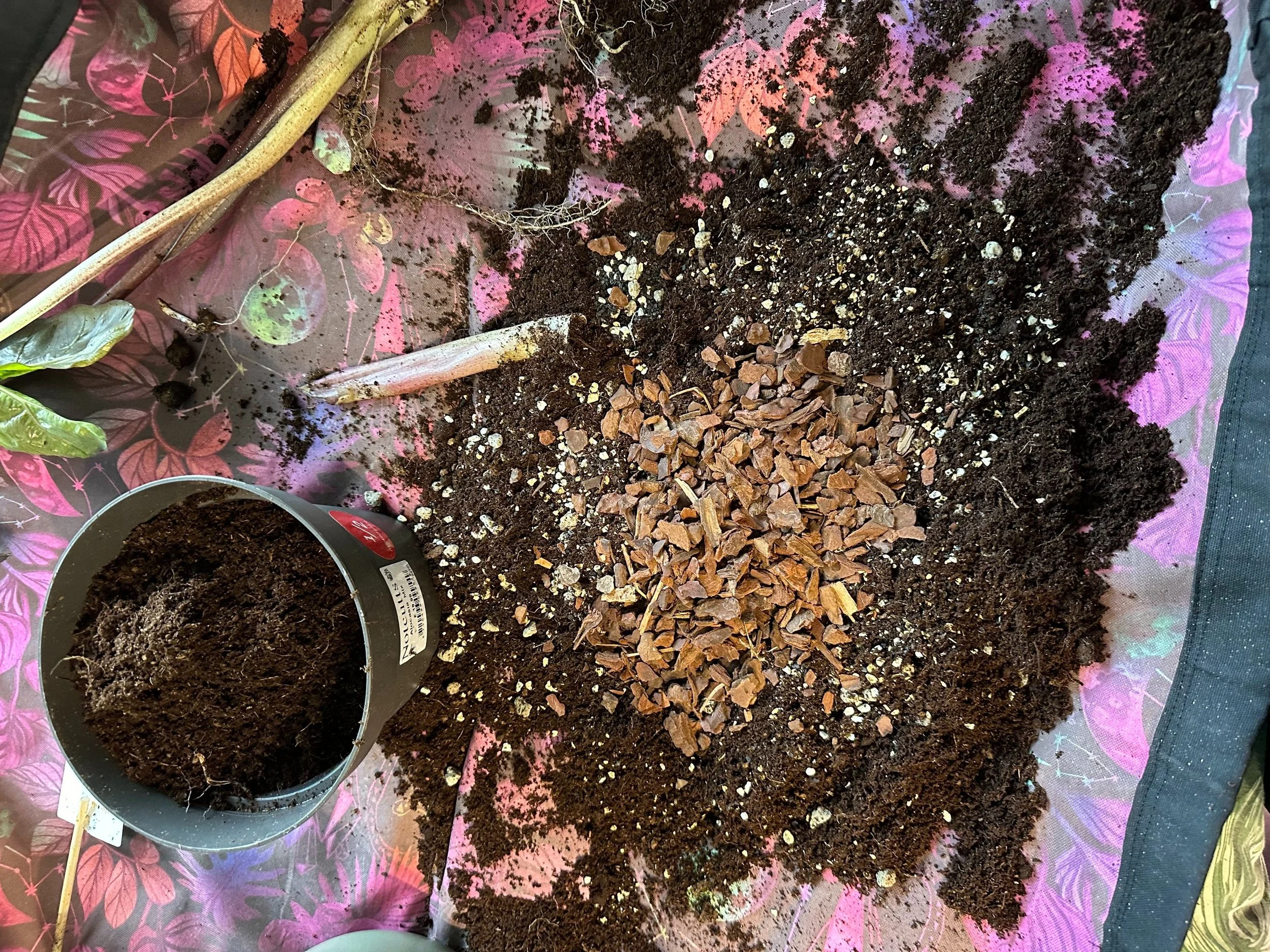
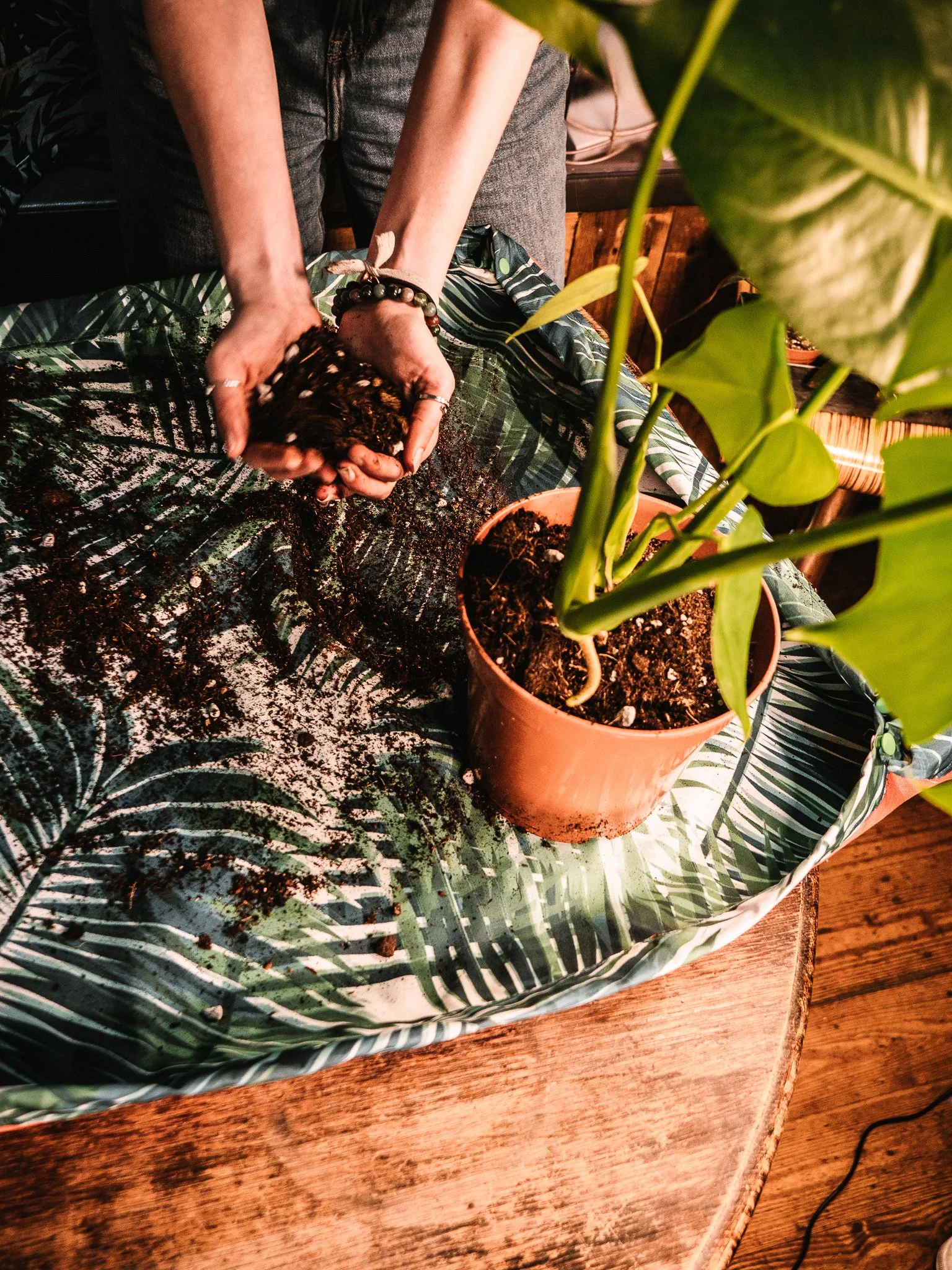
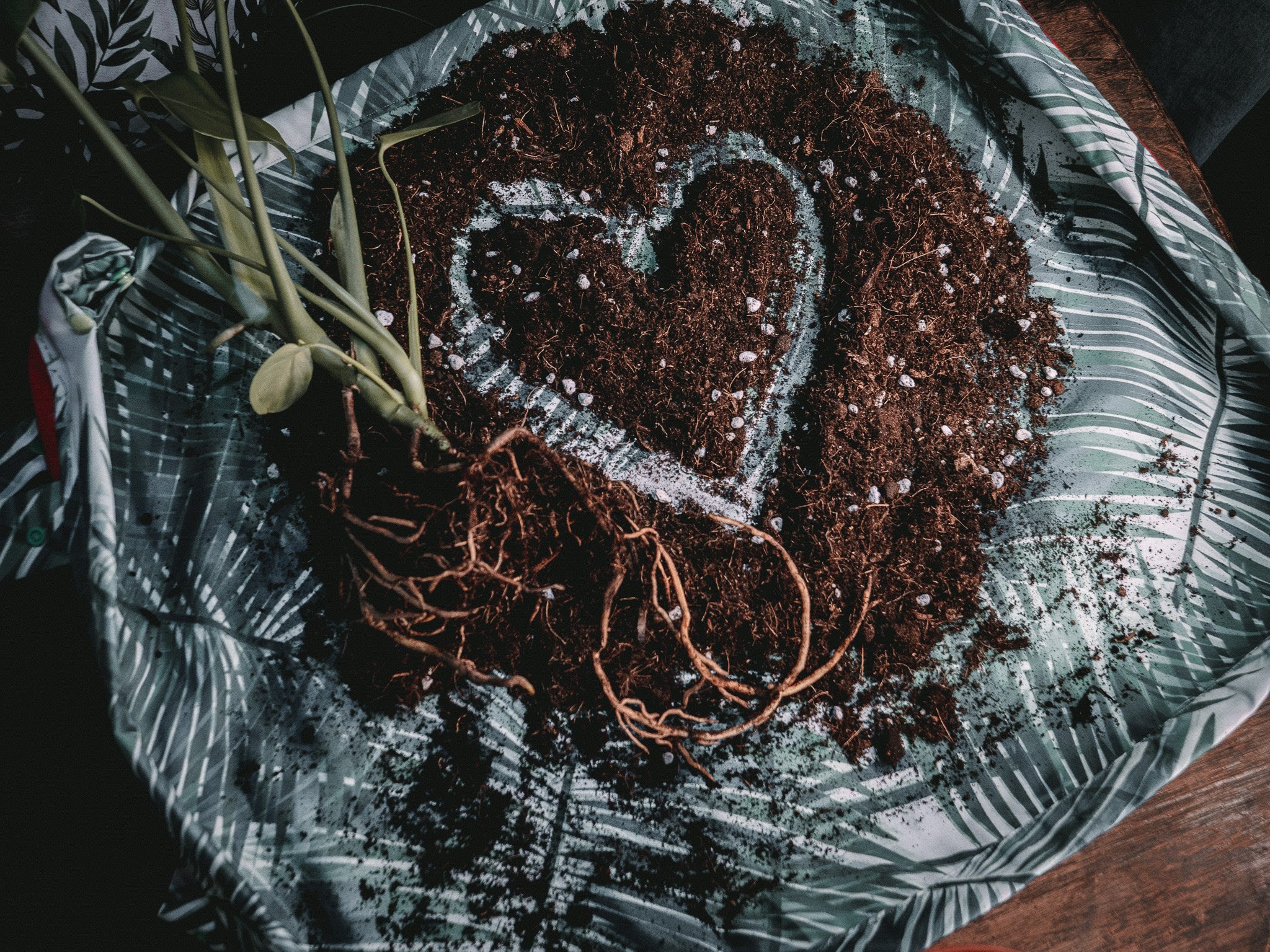
Here in these photos I was Exploring different soil types in the hopes to help you understand the research I have done personally in writing this blog. I explored Cacti Soil, Garden Soil. Standard Compost, Alocasia mix that I had made they need to be mixed with water so i could measure the ph of the soil and Show you the composition for the soil. (Photos include the Philodendron Potting Mat).
So lets Talk Soil! Top Five Components.

Vermiculite

Wet Vermiculite
I love using Vermiculite its a great product that holds a lot of moisture great for getting seedlings growing. Soil Ninja says ‘The small, brightly coloured component will expand with moisture in what can only be described as an 'accordion' fashion. It's small movements in a soil blend help with aeration but above all else, this fabulous material maintains moisture for extended periods of time! Slowly releasing water and nutrients back into the soil - even days after it was watered.’* its another one of those versatile components I honestly love adding to my Alocasia mix if I’m creating my own of course. I also find its great for growing corms in to and I often use it as a lower layer in my prop box as it holds so much water. I found it to be useful in many parts of being a house plant lover.
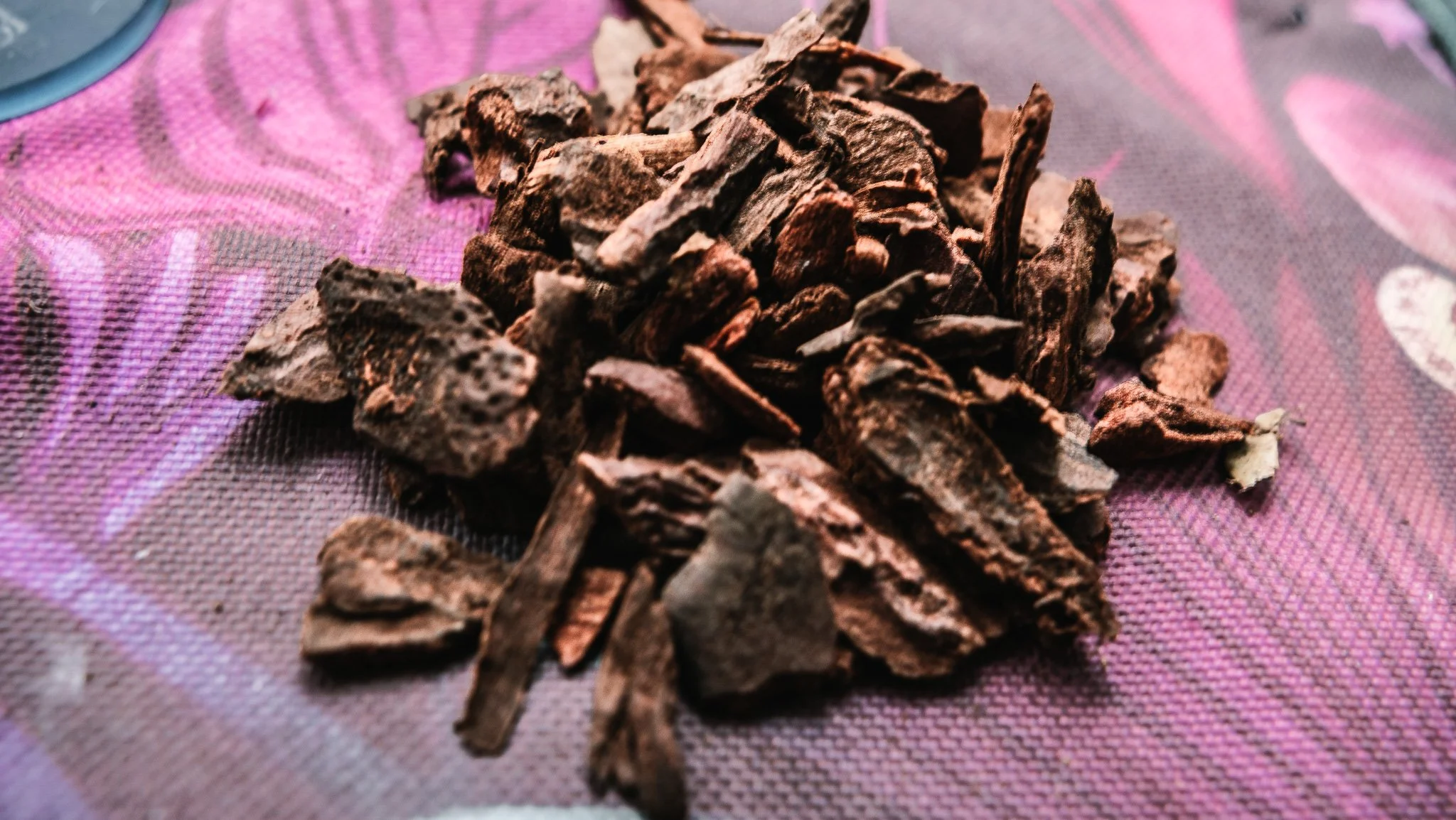
Fine Bark
Fine Bark is a great addition to a aroid mix not only does is smell line a pine forest it also its a great for orchids to. Holds moisture and releases Nutrients into the substrate mixes. ‘Bark is a brilliant medium for inoculated mycorrhiza! The slightly acidity balance is the perfect colonisation ground for them to aid your plants with up-taking macro nutrients and out competing bad fungi!’*

Activated Charcoal
Has the ability to clear out impurities and bad bacteria, to hold moisture allowing air flow in the Substrate mix. Keeps the roots free of rot. Can balance out the ph in a largely alkaline soil. Great for a drainage layer and it provides air to move around the roots.
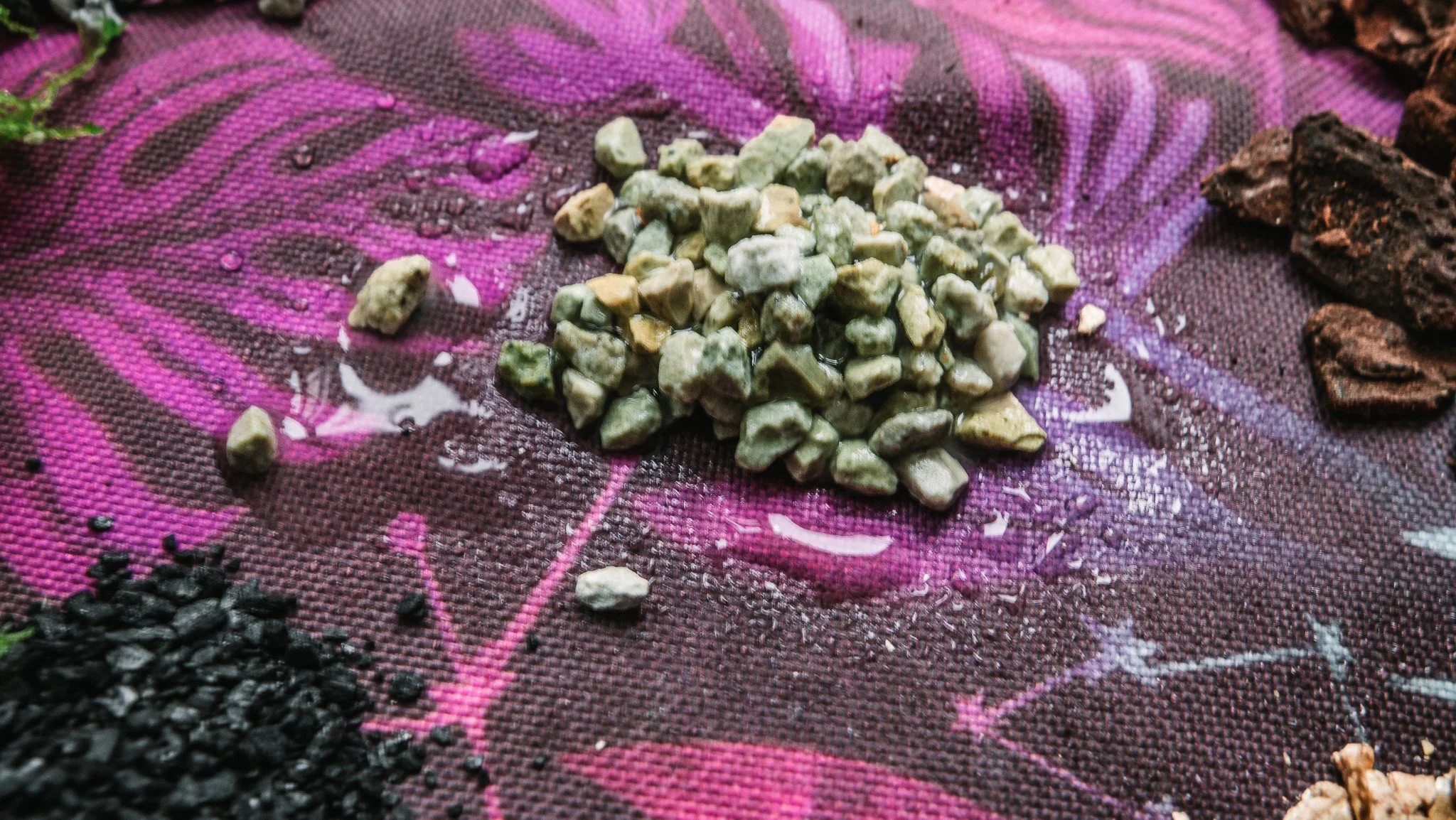
Wet Zeolite


Zeolite
I love this component so much and its one that totally blows my mind.. it changes colour when wet. (picture left) Its porous component with properties to transform the soil mix to prevent rotten roots. Making sure that the roots are gaining the water and nutrients the plant needs without overloading the plant. This component slowly releases the nutrients to the plants roots over time keeping the Ph balanced.
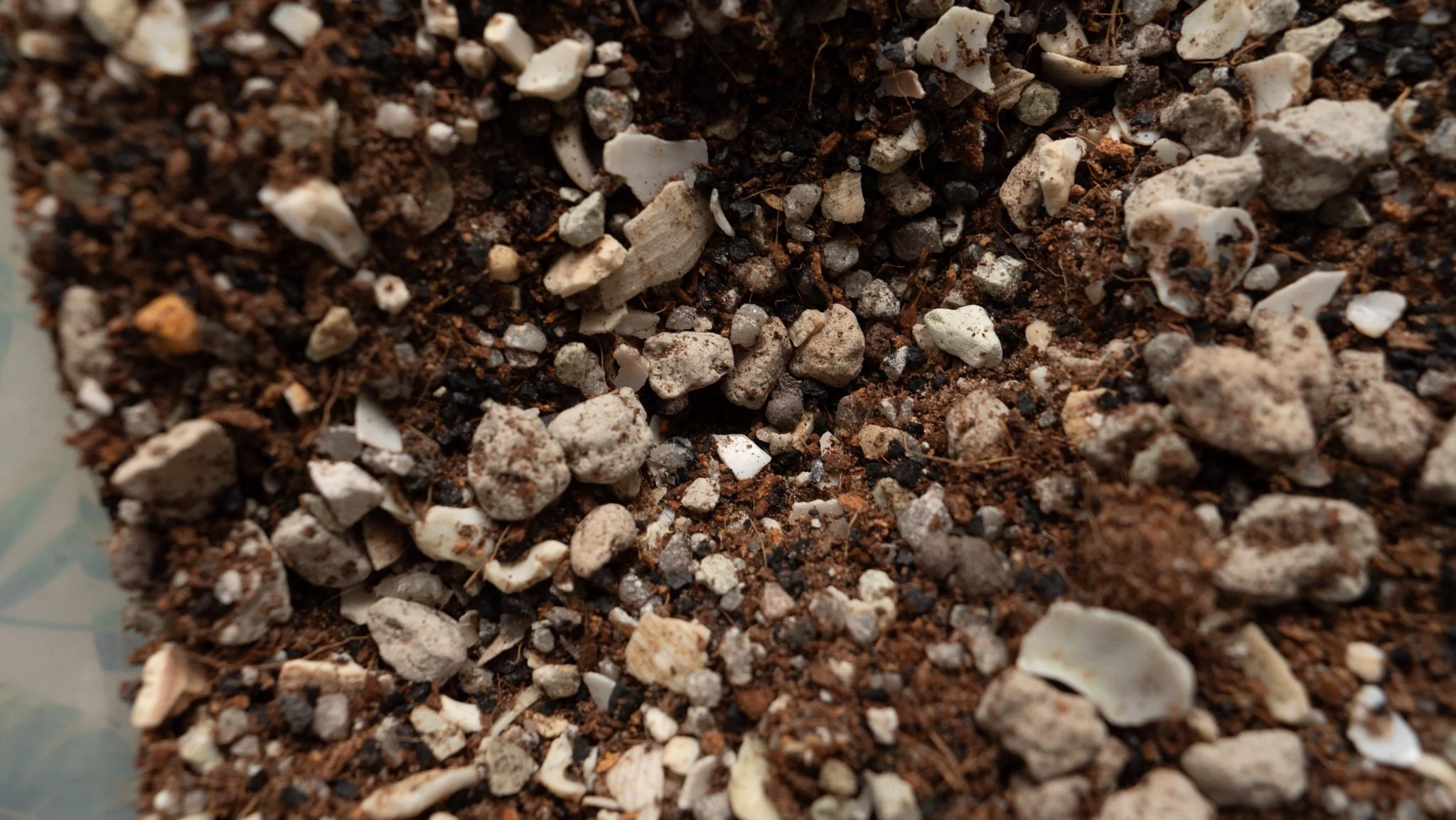
Cactus soil with grit, pumice, clay, shells, sand, coco coir and activated Charcoal.
Sphagnum Moss


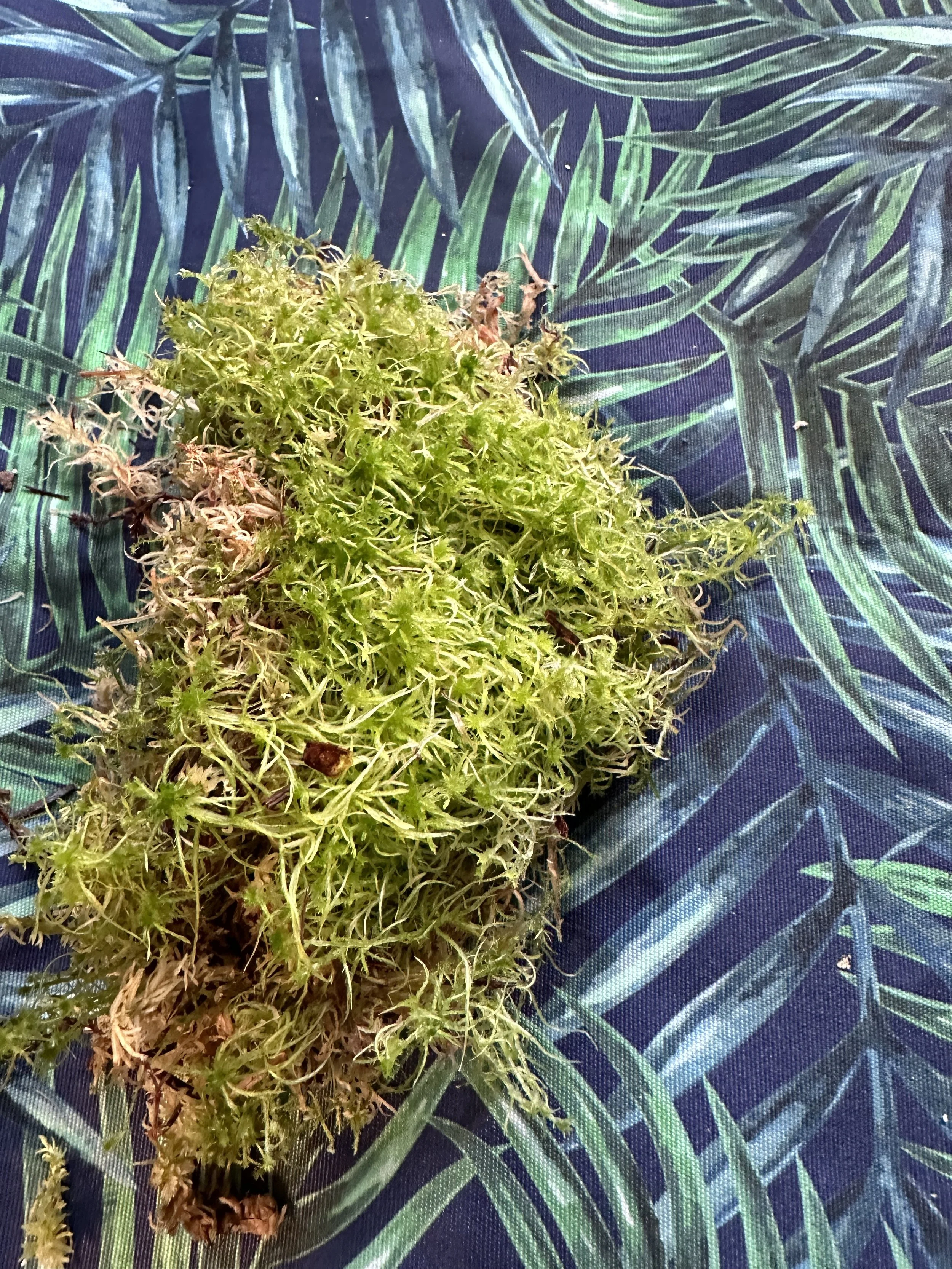
Fresh is best !
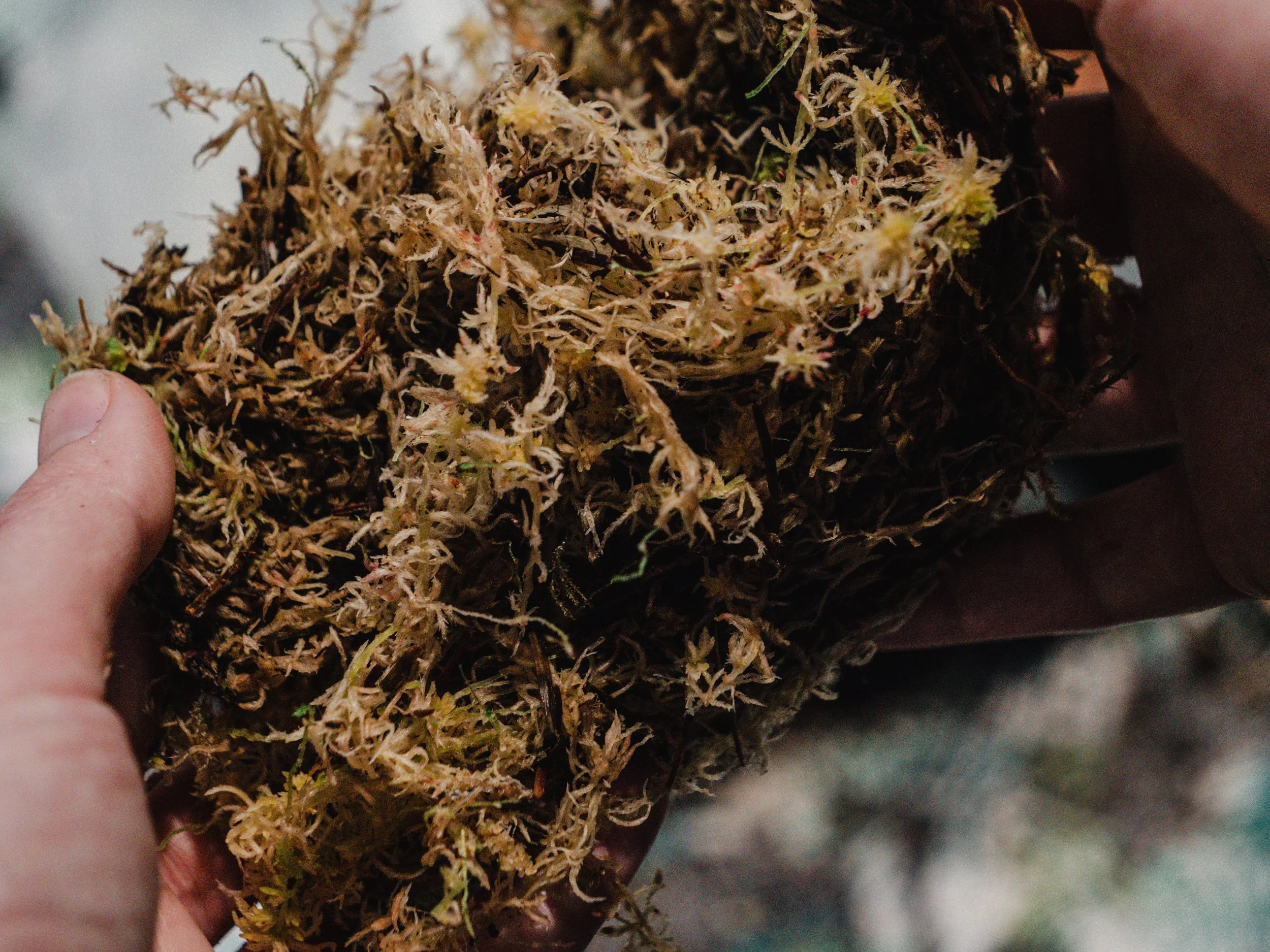
I want start by saying that without a doubt I prefer fresh Sphagnum Moss, this is because when I use fresh moss I’ve found its less likely to Deteriorate, go mouldy and is Resilient if it starts to dry out. It bonces back with a quick water. This substrate is great for propagation of your baby plants or in you moss poles. Orchids, Anthuriums and Alocasia love it as part of there substrate. If I am mixing it in soil sometimes prefer rehydrated works better for those Carnivorous plants. Sphagnum Moss is said to hold 20 times its weight in water. The Fresh moss is full of great microscopic plants and animals. ‘Sphagnum mosses grow from spores which are produced in fruiting bodies called capsules. When the spores are ripe, pressure builds up in the capsule until its lid is blown off, sending the spores shooting into the air.’* This fantastic substrate is great for walls in you terrariums for increasing Humidity and helping your plants to get water from the moss pole as it climbs. In this component its full of friendly microorganisms. That can benfit the plant in many different ways.
When repotting you plants heres a couple of things to consider:
What type of house plant is it look at how it grows Naturally does it look like it climbs or trails?
Before bringing home take a picture on the google app to see where the plant originally comes from.
Do not use soil from outside with your house plants as this can be very Alkaline and the Compost mixes can be to rich and hold to much moisture.
When repotting check for plugs around the base of the plant as these can often restrict growth. and store up to much water causing root rot.
Many people, including myself, often make the mistake of using pots that are too big or repotting plants too soon. Most houseplants like to be snug in their pots. Just because you want your plant to grow bigger doesn’t mean a larger pot will help.
Don’t just take my word for it or any influencers its so worth doing your own research. As well as learning from other peoples experiences.

This was the early days of Soil Ninja !! now they have these super awesome resealable bags that you can reuse and recycle. This photo was also taken before I created Jungle Floor Pottings Mats.
If you would like to know more about my recommendations on Soil Ninja check out my blog. You will Also find some if not all the Components mentioned in this blog on Soil Ninja’s Website link below. I included some of the places I gain research whether this was through citation or direct quotes and further reading is below.
Citations and Research resources:
Recommended Components: https://www.soil.ninja/collections/soil-components
Cited 22/4/24 https://www.sciencedirect.com/science/article/abs/pii/S014019632030224X , Soil attributes and the quality and yield of ‘Gigante’ cactus pear in agroecosystems of the semiarid region of Bahia, Matos, Laudiceio Viana, Donato, Sérgio Luiz Rodrigues, Kondo, Marcos Koiti, Lani, João Luiz , Aspiazú, Ignacio, 22 September 2020.
Cited 23.4.24 https://www.aroidpedia.com/alocasia, HABITAT: SUBSTRATE:,
Hernandez, Carolina G. , Cullinane, Michael and Borlaza, Gregorio C.. "Philippines". Encyclopedia Britannica, 1 Aug. 2024, https://www.britannica.com/place/Philippines. Accessed 1 August 2024.
Soil Ninja, 15th October Understanding Activated Charcoal, https://www.soil.ninja/blogs/dojo/activated-charcoal Cited 17/06/2024
Horst, Oscar H. , Stansifer, Charles L. , Anderson, Thomas P. and Griffith, William J.. "Guatemala". Encyclopedia Britannica, 31 Jul. 2024, https://www.britannica.com/place/Guatemala. Accessed 1 August 2024.
M. Nanzyo, S. Shoji, R. Dahlgren, Chapter 7 Physical Characteristics of Volcanic Ash Soils, Editor(s): Sadao Shoji, Masami Nanzyo, Randy Dahlgren, Developments in Soil Science, Elsevier, Volume 21, 1993, Pages 189-207
MONSTERA GROWING IN THE FLORIDA HOME LANDSCAPE, Jonathan H. Crane, January 7, 2020, https://edis.ifas.ufl.edu/publication/HS311, Cited 06/08/24
Quotes
* Soil.Ninja understanding Vermiculite, written 15th October 2021, Quoted 17/6/2024, https://www.soil.ninja/blogs/dojo/vermiculite
* Soil Ninja Understanding Bark, Written October 2021, Quoted 17/6/2024, https://www.soil.ninja/blogs/dojo/bark
*Irish Peatland Conservation Council, Sphagnum Moss , Action for Bogs and Wildlife in Ireland, Quoted 31/07/24, https://www.ipcc.ie/a-to-z-peatlands/sphagnum-moss-the-bog-builder/#:~:text=Sphagnum%20mosses%20can%20hold%20up,their%20own%20weight%20in%20water.
BRAHMS Online Copyright © 1985 - 2024 Department of Biology, University of Oxford Monstera deliciosa Liebm. (Araceae), Oxford University 100 plants, Quoted: 06/08/24